
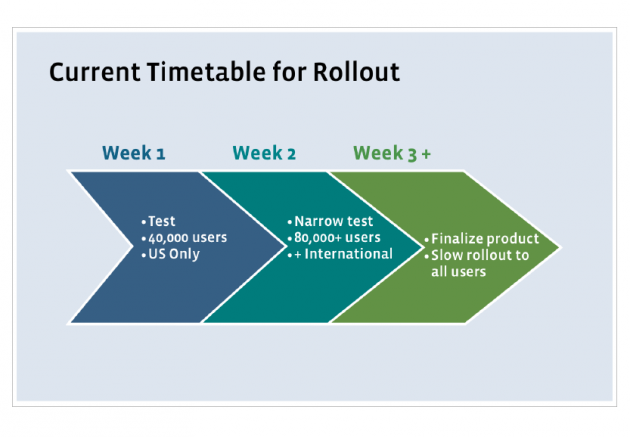
 This morning Facebook is holding a conference call/web share for press outlining changes the site is making to its privacy options. Facebook hasn’t given us much of a heads up as to exactly what they’ll be changing, but there’s a good chance it will have something to do with the ‘Everyone’ sharing settings the site has recently been toying around with, which takes the social network one step closer to mimicking Twitter’s functionality. There’s also a chance Facebook will be overhauling its convoluted privacy control pages. The call begins at 10 AM PST.
- Here to discuss latest privacy settings on Facebook. Rolling out some tests in the following week. Here to brief us are Chief Privacy Officer Chris Kelly and Leah Pearlman
- Facebook’s mission is to give people the power to share. Privacy controls enhance this mission.
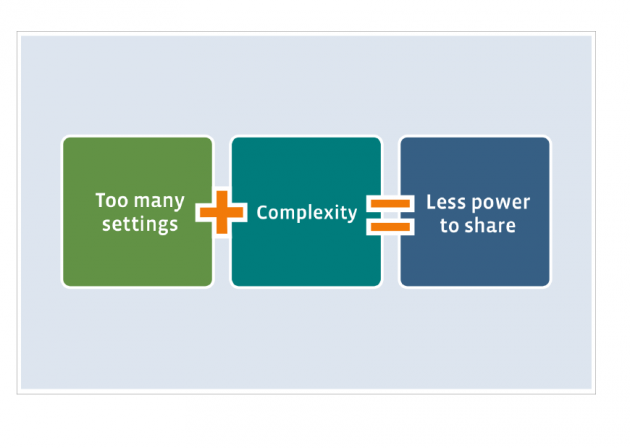
- Facebook is acknowledging how its current privacy settings have become confusing.
- When people can control who can see their content, they share more meaningfully.
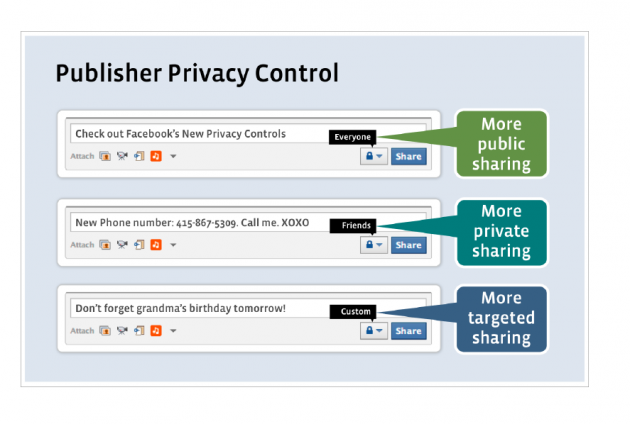
- The publisher privacy control that’s currently in testing is proving quite effective. Anyone anyone wants to share with the public can share more broadly.
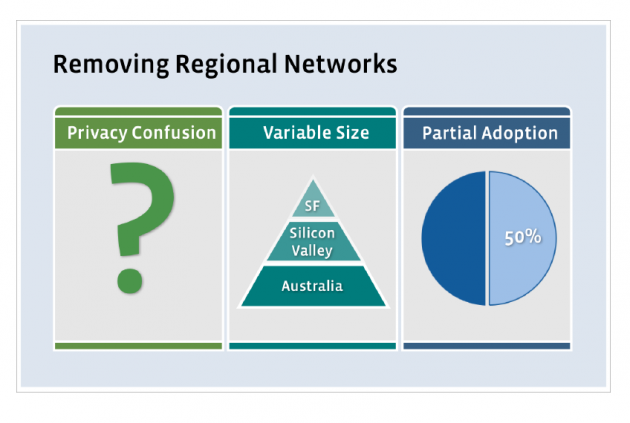
- Facebook is removing regional networks. Initially when Facebook started, networks were the ‘bedrock’ of privacy. When they extended beyond colleges/work networks, they opened up regional networks. These generated a lot of confusion. Fragmented the user experience, some networks were far larger than others (SF vs. Australia). 50% of users aren’t in a regional network.
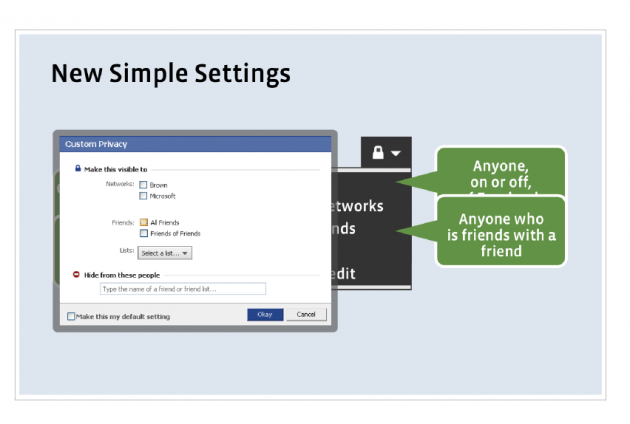
- Facebook is launching new simple settings. FINALLY.
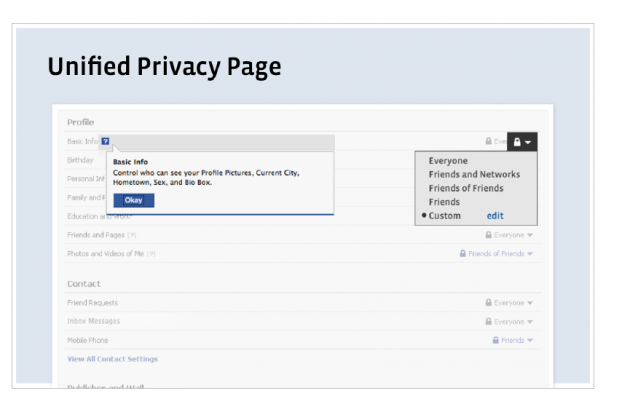
- Anywhere people set privacy on the site, they’ll be able to choose from the same sets of options. There will be a consistent set of options: Share with ‘Everyone’. Can share with ‘Friends and Networks’. Share with ‘Friends of Friends’ (FB says it’s good for photos, restaurant recommendations,etc ). “Share With Friends”. And finally, “Customize”, which lets you specify who can see a certain item.
- Consolidating six different privacy pages into one simple privacy page. There’s a little question mark next to every item so you can see what the section pertains to.
- Third part of these changes are the way people connect. Balancing way people access information with their desire to connect. Now testing ways to opt-in to these new settings.
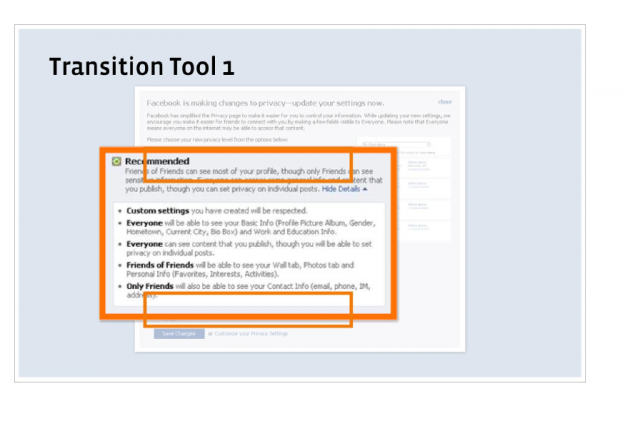
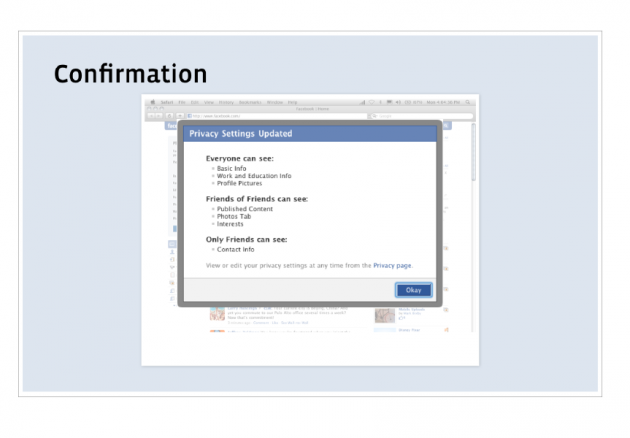
- The Transition Tool: Facebook wants everyone to know what’s going on, so people understand. Explain to people that if they open key pieces of information, it can make the experience “richer”. Three options people can select for in this Transition tool (there are six different transition tools in testing internally, they’re not sure what the final one will be).
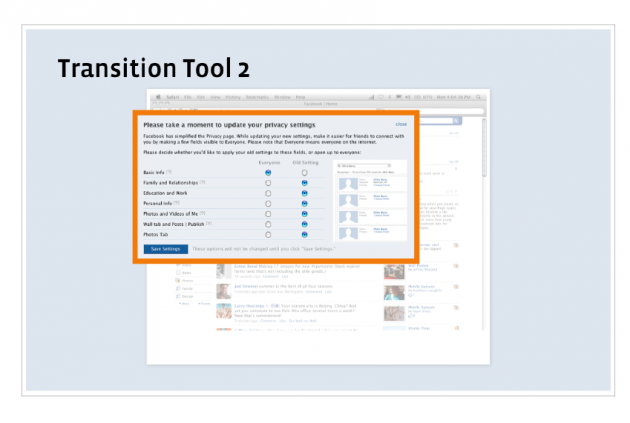
- Transition Tool 2: Users can be usually placed in two categories — one that likes to use granular privacy settings, and another that does more broad settings. This allows them to perform these broad privacy settings.
- The Transition tool is a “Powerful opt-in” to make changes that lets users change how they’d like their privacy settings to default (whether it be public or private).
Q: It seems you’re encouraging people to share more information with everyone. Is that the case?
A(Schrage): Trying to manage the digital tension between sharing and privacy. People should be as open or closed as they want to be. We think we can accommodate that.
A2 (Pearlman): Many people who sign in to Facebook, it’s tough for people to disambiguate themselves when they have the same name. We’re encouraging people to be more open in some cases.Q: It sounds like things shared by everyone will be indexable by major search engines, right?
A (Pearlman): It’s certainly something that we’re talking about. But it’s not like that at this time.
A2 (Schrage): We want people to be sensitive to this sharing, so we’re defining it in the broadest sense, so people in the test experience it before we make these changes (with the search engines).Q: How are you going to educate people about the impact of sharing with ‘everyone’?
A(Schrage): We think one of the reasons people don’t use settings is that they’re not simple enough, so we’ve spent a lot of time talking with users about making these more simple. And making these changes in real time as they are publishing.
A2 (Pearlman): When people decide to publish to everyone by default the first time they do it, a dialog will pop up warning them. Trying to catch people when they’re actually about to post.Q:Friend of mine is a therapist, some of clients are popping up in ‘people you may know’, which she thought was creepy. Also, you comment on advertisers, wondering how this will play into open stream initiative.
A (Schrage): Because someone pops up in people you may know, doesn’t mean any information is shared, often results from contact importer. Doesn’t mean there’s that actual connection, just hit the ‘x’ to erase it. With regard to the streams, Facebook isn’t changing anything about the way we share data with advertisers (we don’t share it without user permission).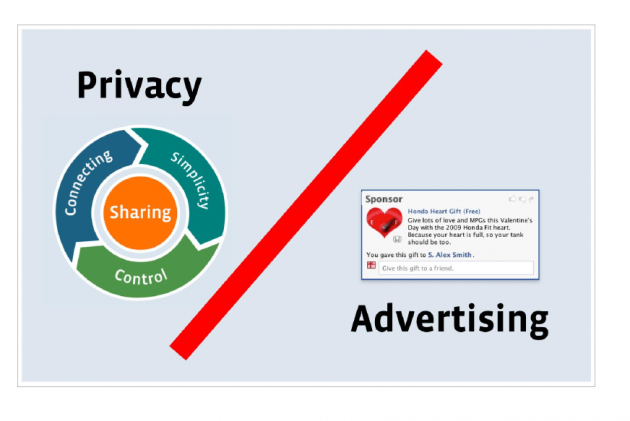
Q: How are Facebook ad settings for local businesses that may have used regional networks to target their ads?
A: We’re going to be mapping current regional network information, move to current city. So they may not be in the network, but they can look at their current city. Also have previously used other methods like IP targeting to ensure that ads are delivered more effectively.Q: When you roll out the transition tools, will there be one for everyone, or will they be assigned by the bucket a user is in?
A: We’re going to initially be testing six of them, will probably settle on two different designs that will roll out to everyone. Overall committed to help users reflect settings they have already chosen.Q: What will now be public by default?
A: Historically users have always had control over how they connect and share information. Only can see name and profile picture unless you share more than that.
















Comment