Evernote
Evernote and Meetup owner Bending Spoons raises $155M in equity financing
Bending Spoons, the owner of popular apps and services like Evernote and Meetup, announced today that it has raised $155 million in a new equity financing round at a $2.55…

Days after Evernote started testing with limited users a free plan with access to only one notebook and 50 notes, the company has now made this its new default free…
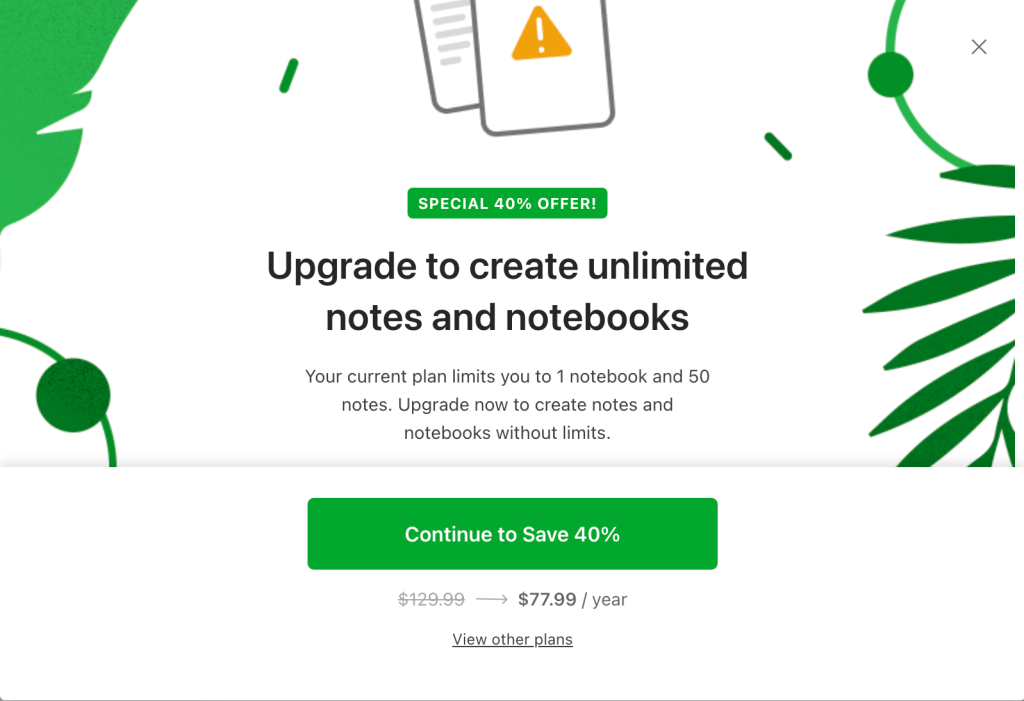
Evernote pushes users to upgrade with test of a free plan limited to only 50 notes
After making steep cuts to personnel earlier this year, Evernote’s Milan-based owner Bending Spoons is now experimenting with a new plan that would push more users to upgrade to paid…

Months after acquiring Evernote, Milan-based app developer Bending Spoons has made steep cuts at the note-taking and task management app. Layoffs took place at Evernote on Friday, February 17, an…
Evernote, the note-taking and task management app founded over 20 years ago, has been acquired by Milan-based app developer Bending Spoons. In a post on Evernote’s newsroom, Evernote CEO Ian…
ZMO.ai secures $8M led by Hillhouse to create AI generated fashion models
With breakthroughs in machine learning, it’s no longer uncommon to see algorithmically generated bodies that can move and talk authentically like real humans. The question is now down to whether…

Google, Microsoft and Yahoo back New York ban on controversial search warrants
A coalition of tech giants, including Google, Microsoft and Yahoo, have pledged support for a New York bill that would ban the use of controversial search warrants that can identify…

Papier inks $50M Series C to in a run to lead the online stationery market
Papier, a startup leveraging technology to bring very non-tech products into the world, has raised some funding to continue expanding its business on the heels of strong demand for its…

Evernote quietly disappeared from an anti-surveillance lobbying group’s website
In 2013, eight tech companies were accused of funneling their users’ data to the U.S. National Security Agency under the so-called PRISM program, according to highly classified government documents leaked…

Mmhmm raises $100M, which is a fun thing to say to people who don’t follow tech
If you’re a frequent TechCrunch reader, you probably already know about mmhmm, the startup with the name you likely either love or hate. It’s Phil Libin’s second act after Evernote,…

This Week in Apps: The year’s best apps, 2020’s biggest downloads, the App Store’s newest hire
Welcome back to This Week in Apps, the TechCrunch series that recaps the latest in mobile OS news, mobile applications and the overall app economy. The app industry is as hot as ever,…

The Freewrite Traveler is an outstanding, but expensive, dedicated portable writing laptop
As a hardware startup, Astrohaus stands apart because of its unique offerings focused specifically on writers and writing. Its debut product, the Freewrite, looked like an old-school travel typewriter with…

Featured Article
The reMarkable 2 improves on the original in every way, but remains firmly in its niche
I’d been asking for something like the reMarkable for a long time before it showed up out of the blue a few years ago. The device was a real treat, but had a few problems and an eye-popping price tag. The reMarkable 2 builds on the first, with a more beautiful, streamlined device and several…

Work collaboration unicorn Notion is blocked in China [Update: It’s back]
Notion, the fast-growing work collaboration tool that recently hit a $2 billion valuation, said on Twitter Monday that its service was blocked in China. The productivity app has attracted waves…
![Work collaboration unicorn Notion is blocked in China [Update: It’s back]](https://techcrunch.com/wp-content/uploads/2020/05/notion-front-page-hero-e1590381965272.png?w=1024)
You’re working on launching a new VC fund; congratulations! I’ve been a traditional equity VC for 8 years, and I’m now researching revenue-vased investing and other new approaches to VC.…

Mailchimp’s Ben Chestnut on bootstrapping a startup to $700M in revenue
The well-known tech startup routine of coming up with an idea, raising money from venture capitalists and other outside investors in increasing rounds as valuations continue to rise, and then…

Evernote fixes macOS app bug that allowed remote code execution
Evernote has fixed a vulnerability that could have allowed an attacker to run malicious code on a victim’s computer. Dhiraj Mishra, a security researcher based in Dubai, reported the bug…

In this week’s startups newsletter: Uber files its S-1, Defy Partners nabs $262M and the Vision Fund backs a travel business.

Ian Small, former head of TokBox, takes over as Evernote CEO from Chris O’Neill
Former TokBox head Ian Small is replacing Chris O’Neill as CEO of Evernote, the note-taking and productivity app company said this morning. In a blog post, Small said that the…
Evernote just slashed 54 jobs, or 15 percent of its workforce
It’s no secret that Evernote, the productivity app that lets people take notes and organize other files from their working and non-work life, has been trying to regain its former…
Google will struggle if it re-enters China, says its former country head
The odds are stacked against Google if the reports are true and the company is trying to bring its services back to China, according to the former head of Google…

Evernote lost its CTO, CFO, CPO and HR head in the last month as it eyes another fundraise
Evernote, the productivity app with 225 million users that lets people take notes and organise other files from their working and non-work life, has been on a mission to reset…

When you’re working in a key business tool like Slack or Salesforce, you don’t want to switch focus by opening up another application to pull additional information. Evernote Business has…

Box announced today that it has acquired Butter.ai, a startup that helps customers search for content intelligently in the cloud. The terms of the deal were not disclosed, but the…

Evernote is spinning out its Chinese business and it plans to take it public
Here’s a unique approach to Western companies doing business in China. Today, Evernote — the U.S. note-making service — span out its China-based unit into an independent entity with “full…
MrOwl is a new app by Arvind and Becky Raichur that lets you store, sort, and share data. What kind of data? All of it. The app is what would…

Fertility startup Carrot raises $3.6 million to make IVF and egg-freezing more affordable
Two years ago, at the age of 34, Tammy Sun decided to freeze her eggs. Though larger tech companies like Apple and Facebook had started offering this service as a…

Phil Libin exits General Catalyst for All Turtles, a new AI ‘startup studio’
AI is one of the buzzwords of the moment in the world of tech, with startups coming at the concept from all angles — computer vision, machine learning, unstructured data inference…

Milanote bags $780k seed to tool up its ‘Evernote for creatives’
Milanote’s visual workspace platform feels part Evernote, part Pinterest — offering users digital spaces (“boards”) paired with a drag and drop interface that can be used to add and position…

Evernote attempts to simplify with its new iOS app
Did anyone really love the Evernote mobile app? No? Well, good news then: the company is giving it another crack today, introducing what it hopes will be a simpler, more…