Is LinkedIn ripe for disruption? There have been various attempts in the past, and now New York-based Workfeeds, launched today, is throwing its hat into the ring – and they have a good chance of making LinkedIn at least nervous. (Unlike Branchout or Identified, Workfeeds doesn’t piggyback on Facebook profiles or log-ins, but is a full-fledged, standalone service.)
Workfeeds’ hypothesis is simple. LinkedIn may be the world’s biggest business social network and obviously offers value to people, but users aren’t really into the experience: recruiters (not members) are the key constituency of the site, the UI has become too cluttered over time, and – most importantly – LinkedIn is just a vast collection of user resumes, and not really social or networking-oriented.
Workfeeds, on the other hand, tries to be “like LinkedIn if it launched now” (and not in 2003). Resumes only play a secondary role.
Instead, the idea is to focus more on social and networking aspects than LinkedIn does by allowing users to join vertical networks on the site, each with feeds that offer specific content that’s actually relevant to members of the same professional circle.
Workfeeds doesn’t want to be a one-size-fits-all network like LinkedIn but eventually develop into an ecosystem consisting of “thousands” of highly specific networks that are based on how professionals actually affiliate, for example by similar industries or job functions.
Software engineers can interact within their own vertical network, media professionals can set up a separate feed, while venture capitalists or tech CEOs may choose to set their network to “invitation only”: you get the idea. What’s interesting here is that similar to Ning, users can suggest and create vertical networks by themselves, too, eventually leading to a site structure and value proposition that would be totally different from that of LinkedIn.
A vertical network specifically set up for “Hedge Fund Investment Professionals” is the only one that’s currently live (Workfeeds co-founder Kir Kahlon tells me other networks will follow in the next few days).
Here’s how your home page looks like after logging in:
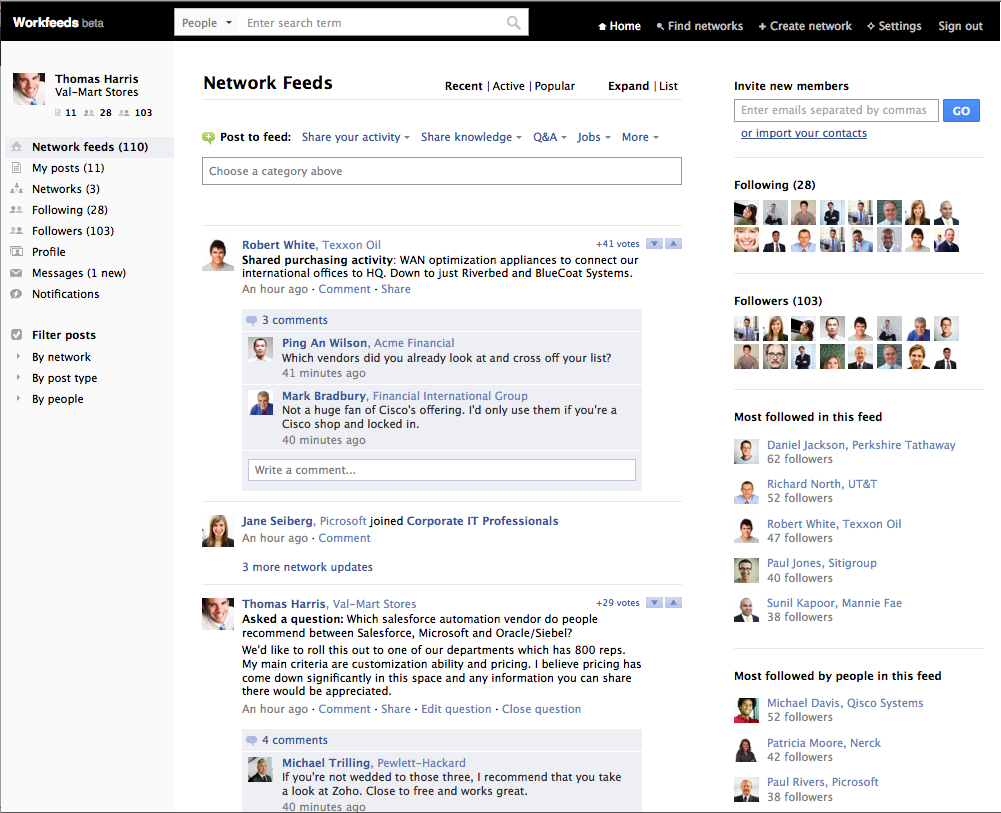
Another difference to LinkedIn: within each network, Workfeeds puts “structured” feeds (and not resumes or single feeds) front and center. Users can choose between 20 different categories when they post to feeds, for example “I’m working on”, “Asking a question”, or “Need an expert”.
Different types of posts:

Example of a job posting:
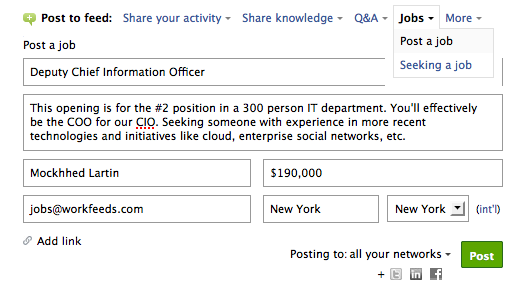
In other words, users can find everything important on Workfeeds in a network’s structured feed: Twitter-like status updates (but professional only), new job opportunities, recommendations, events, Q&A, link sharing, etc. Needless to say, it’s possible to join and then track/filter multiple networks and feeds (like in a centralized “social inbox” that pulls all the content in real-time).

In the feeds, individual curators are supposed to control the quality of the content and keep spam to a minimum (a big problem in quite a few LinkedIn groups currently), with Workfeeds making active members who contribute high-quality posts stand out of the crowd through votes and other social measures.
There are too many other differences to LinkedIn (a followers/following system for people wanting to connect, a much cleaner user interface, etc.) to list up in this post, so I suggest you simply give Workfeeds a try to see for yourself.
Workfeeds spent two years developing various LinkedIn alternatives before they arrived at the current version: let us know in the comments how far you think it can come in challenging LinkedIn or becoming a “Facebook for work”.