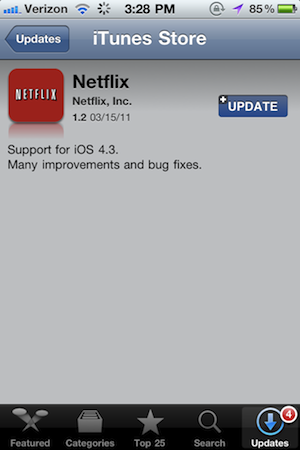
 Remember when everyone was freaking out over the Apple in-app subscription changes? You should. It was just a month ago. And while some of the fears that arose do appear to be very real, the two things most people focused on were Amazon’s Kindle app and the Netflix app. Well guess what? Both received updates today, and neither includes the supposedly mandatory changes.
When Apple first announced the in-app subscription option, the wording seemed to indicate that any app that offered a subscription outside of the app would now have to offer it inside the app as well — which Apple would take a 30 percent cut of. The same was said to be true for in-app purchases. If you sold content outside of the app (on the web) to be used in that app, you were supposed to offer it in the app as well (and with a best-price match guarantee). But again, a month later, Netflix and Amazon keep getting app updates and neither includes these changes.
Following the initial uproar, Apple CEO Steve Jobs supposedly responded to some emails sent his way saying that the in-app subscription policy was meant for “publishing apps, not SaaS apps”. But we’ve heard numerous reports of Apple rejected non-publishing apps on the grounds that they’re not offering the new in-app system. It’s a bit confusing.
It’s certainly possible that even the App Store reviewers were confused by the rules at first and started rejecting some apps that should have been let through. It’s also possible that Apple saw the initial uproar and quietly eased up on the new rules. Either way, it seems very clear at this point that Apple has no immediate plans to begin making Netflix and Amazon follow these new rules. (Even though Sony’s eReader app was apparently rejected for doing what Amazon’s Kindle app does.)
And while Apple had apparently given apps a grace period to adopt the new rules, again, they were already rejecting news apps and app updates that didn’t. That included the Sony eReader app, which they claimed was similar to the Kindle app. But for whatever reason, Amazon and Netflix have avoided this fate. And that could be a very good sign.
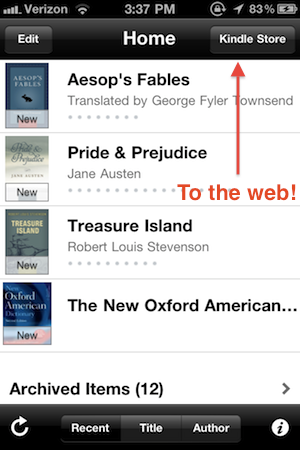
I just loaded up the new Netflix and Kindle app updates, and neither has any features for paying via in-app for a subscription or content, respectively. In fact, the Kindle app still has a nice big button to take you to the Kindle Store, which is on the web.
The big questions: is Apple playing favorites? The Kindle app and the Netflix app are both very popular. Apple forcing them to use the new rules could lead to them to pull their apps from the iOS platform (you have to believe that Amazon would not be cool with paying Apple a 30 percent cut), and that would hurt Apple. Or is it just that Apple eased up on the rules after the initial uproar? Or are they just waiting to drop the real hammer until after a grace period is over? Or is it just that everyone was freaking out over nothing to begin with?
It’s still wait-and-see, but this looks promising.
Update: A number of people keep pointing out the June 30 grace period date mentioned above, and since Kindle and Netflix are existing apps, they’re fine to keep doing what they’ve been doing until then. But why on Earth would either keep actively assigning resources to these apps if they know that in a few months they’re just going to pull them? Again, I see this as a promising sign. At the very least, you can be sure all the sides are still talking.