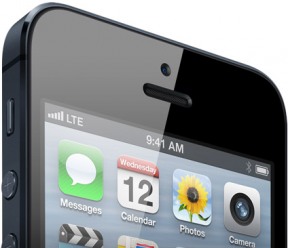
Today during Apple’s Q1 2013 conference call, CEO Tim Cook was asked about whether Apple was concerned about Apple’s overall market share in smartphones. No one mentioned the A-word (Android, that is) but over the last several years, Google’s platform, led by Samsung, has widened its lead in the smartphone market and, as of last quarter, accounted for over 72 percent of smartphone sales (up 20 percentage points on a year before), to Apple’s 14 percent (down by 1.1 percent).
As Apple’s share price continued to drop during the conference call, Cook avoided the question directly, but did offer a clue as to how Apple might gain some points off Android in the future:
“The most important thing to Apple is to make the best products in the world to enrich customers’ lives,” said Cook, echoing comments made by marketing chief Phil Schiller in China. “We’re not interested in revenue for revenue’s sake. That’s not what we’re here for. We want only to make the best products.”
Part of why Android has been running away from Apple has to do with the sheer number of handset models that are on the market, but it is also because a lot of those handset makers are making very inexpensive devices. Deloitte forecasts that half a billion smartphones will be sold this year for less than $100 each, many of them Android.
Cook did not state outright that trying to compete with cheaper, or lower-end devices would be a part of Apple’s strategy, but he did note this:
“We have had a great track record on [selling] iPods at different price points,” he noted. And he also mentioned how offering different models of the iPad has been a success. “We could not build enough iPad minis,” he said.
This quarter international revenues made up 61 percent of Apple’s overall revenues. It’s emerging markets like Asia and the Americas and parts of Europe that represent the biggest growth opportunity in smartphones, and so that could end up being the engine that drives Apple to applying that iPod strategy to its iPhone line eventually, too.
