
 Earlier today, we ran a “TechCrunch 2010 In Review” post featuring some key data WordPress.com sent our way for 2010. Interesting stuff all around. However, as some people have noticed, in our top referrers for the year, Facebook is nowhere to be found. Further, Google Reader, an RSS reader, comes in number three!
Is Facebook dying? Is RSS reborn? Nah. It would appear that referrer data is just a bit screwy.
I ran that data against our own data coming directly from Google Analytics. The view from there is quite a bit different — and interesting.
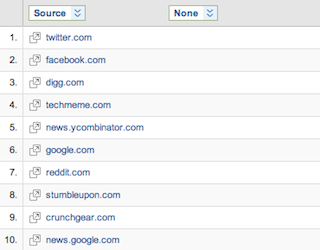
For 2010, according to Google Analytics, here were our top 10 referrers:
- twitter.com
- facebook.com
- digg.com
- techmeme.com
- news.ycombinator.com
- google.com
- reddit.com
- stumbleupon.com
- crunchgear.com
- news.google.com
As you can see, like the WordPress.com data, Twitter is number one, but the rest are switched around. Facebook pushed Digg to number three. And Hacker News (news.ycombinator.com) swapped with Techmeme. Google Reader, meanwhile, is nowhere to be found in the Google Analytics data. Actually, it is — it’s a subset of the google.com traffic (which doesn’t include search traffic, which is far above any of these referrer sites).
Drilling down, Google Reader was actually the number 11 overall referrer to TechCrunch in 2010. Further, it was way down from 2009 — nearly 50 percent. In other words, yes, RSS is slowly dying. At least when it comes to the most popular feed reader sending traffic to TechCrunch.
So what rose up in Reader’s place? Well, here are the top 10 referrers to TechCrunch from 2009, according to Google Analytics:
- digg.com
- google.com
- twitter.com
- techmeme.com
- facebook.com
- news.ycombinator.com
- stumbleupon.com
- reddit.com
- crunchgear.com
- crunchbase.com
Again, Google Reader was a subset of the google.com data. Drilling down, Reader would have been number 6 by itself, just ahead of Hacker News (again, news.ycombinator.com) and just behind Facebook. Of all the properties in the top 10, Reader had by far the most dramatic fall.
Twitter an Facebook, meanwhile, saw the biggest rise in 2010. That makes sense since those are the two most often associated with the slow death of RSS. Both shot through the roof when compared to 2009. Twitter nearly doubled as a referrer to TechCrunch and Facebook more than doubled the amount of traffic it was sending.
Techmeme, Hacker News, StumbleUpon, and Reddit all had nice bumps in sending us traffic. Digg fell quite a bit, though not nearly as far as Reader.
Now, a part of all of these bumps is simply because TechCrunch had more content overall in 2010 when compared to 2009. But that makes the Google Reader drop even more interesting. Sure, people can read TechCrunch through Reader without clicking through, but why the huge drop unless fewer people were actually reading it that way?
We’ve reached out to WordPress to see why their data seemed to over-count Reader while massively under-counting Facebook (which was number 20 on WordPress’ list).
A couple other interesting data points:
- In terms of new visitors to TechCrunch, StumbleUpon sends by far the most (percentage-wise), followed by Google News. Techmeme sends the least, followed by Hacker News. That latter two seem to share many common readers with us — no surprise there.
- But for average time on site, Techmeme dominates, followed by Facebook and Twitter. StumbleUpon is the worst here, followed by Reddit and Digg. In other words, people visiting from Techmeme, Facebook, and Twitter actually seem to read the content.