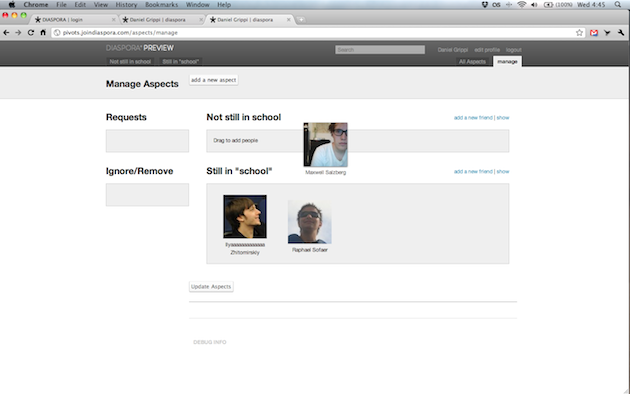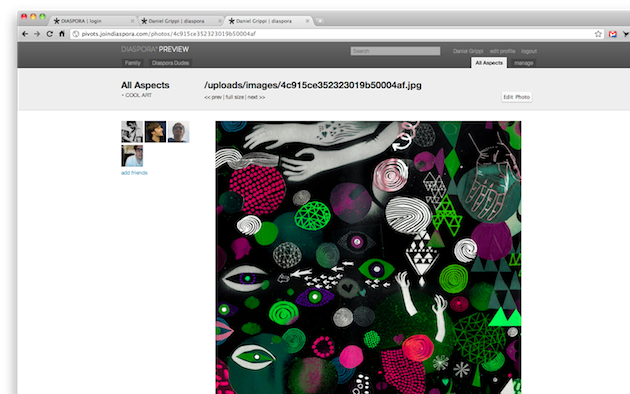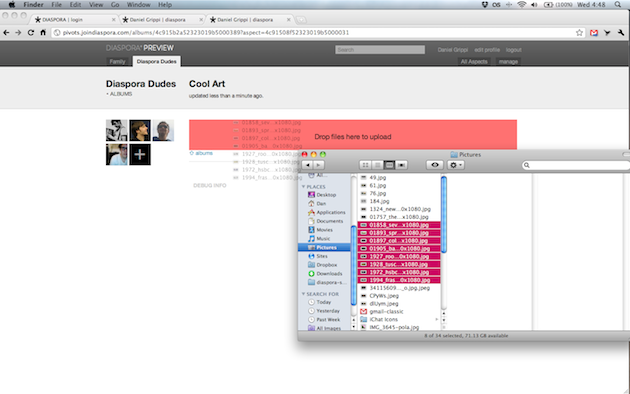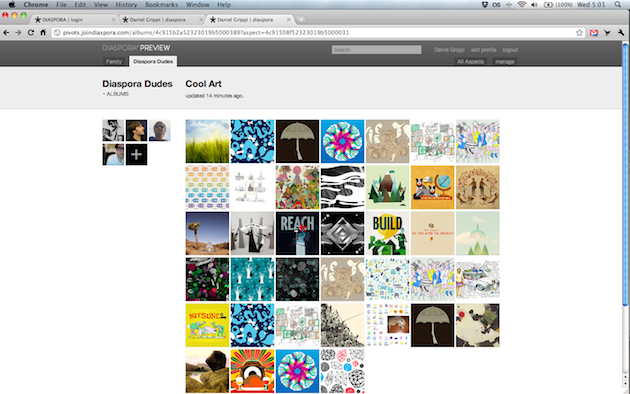
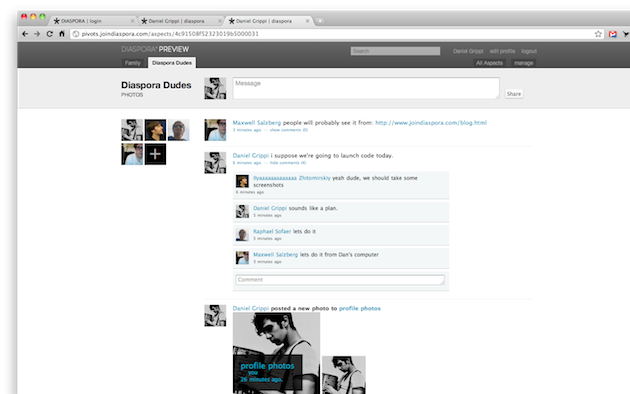
A post has just gone up on Diaspora’s blog revealing what the project actually looks like for the first time. While it’s not yet ready to be released to the public, the open-source social networking project is giving the world a glimpse of what it looks like today and also releasing the project code, as promised.
At first glance, this preview version of Diaspora looks sparse, but clean. Oddly enough, with its big pictures and stream, it doesn’t look unlike Apple’s new Ping music social network mixed with yes, Facebook. A few features they note:
- Share status messages and photos privately and in near real time with your friends through “aspects”.
- Friend people across the Internet no matter where Diaspora seed is located.
- Manage friends using “aspects”
- Upload of photos and albums
- All traffic is signed and encrypted (except photos, for now).
But no matter what Diaspora looks like now, the point is to have many different versions hosted all over the place. Some will look different than others — so it make sense to have a simple, clean base to build off of.
The team notes that the public alpha of the project is still on course for October, and will include Facebook integration off the bat, as well as data portability.
“Getting the source into the hands of developers is our first experiment in making a simple and functional tool for contextual sharing. Diaspora is in its infancy, but our initial ideas are there,” the team writes today. “Much of our focus this summer was centered around publishing content to groups of your friends, wherever their seed may live. It is by no means bug free or feature complete, but it an important step for putting us, the users, in control,” they continue.
Diaspora is a particularly interesting project because it was first unveiled at a time when Facebook was facing a lot of user backlash due to privacy issues and changes being made. This helped the project raise over $200,000 in crowd-sourced funding via Kickstarter.
Of course, Facebook continues to grow and is now well past 500 million users, as much of the controversy that existed a few months ago has died down — as expected. The project also faces the hurdle of trying to popularize an open source project — these projects often sound great on paper, but doesn’t work too well in practice. That said, Diaspora is still interesting, and we’re rooting for these guys to pull it off.
Developers, get building — you can find the code on github here. But note their warning:
Feel free to try to get it running on your machines and use it, but we give no guarantees. We know there are security holes and bugs, and your data is not yet fully exportable. If you do find something, be sure to log it in our bugtracker, and we would love screenshots and browser info.