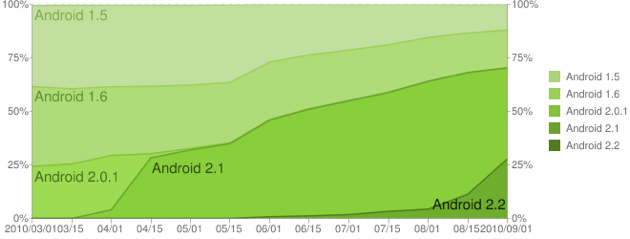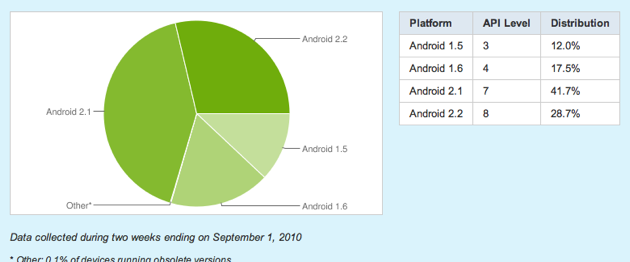
Slowly but surely, Android users are getting their first taste of Froyo, the latest version of Google’s mobile OS, which was announced in May and began broadly rolling out to select handsets (namely, Google’s Nexus One) in June. The OS includes a number of key new features like Flash and big speed gains, but has only been available on a tiny fraction of Android devices for months. Now Google has just updated its Platform Versions chart which shows there has recently been a surge in the number of devices running Android 2.2: it’s now running on 28.7% of handsets.
That may not sound like much, but it’s a huge gain over the 4.5% Google’s dashboard was showing just a few days ago. The reason for the surge? Some of Android’s most popular phones, including the Verizon Droid, have been upgraded to 2.2 in the last month.
Still, there’s a long way to go. Over 70% of handsets are now running Android 2.1 or higher, which is a major improvement over five months ago when that figure was only 27.3%. But carriers and handset manufacturers are taking their sweet time in rolling out upgrades, which leads to frustrated users (and developers who can’t leverage the latest-and-greatest features because many handsets can’t use them yet).