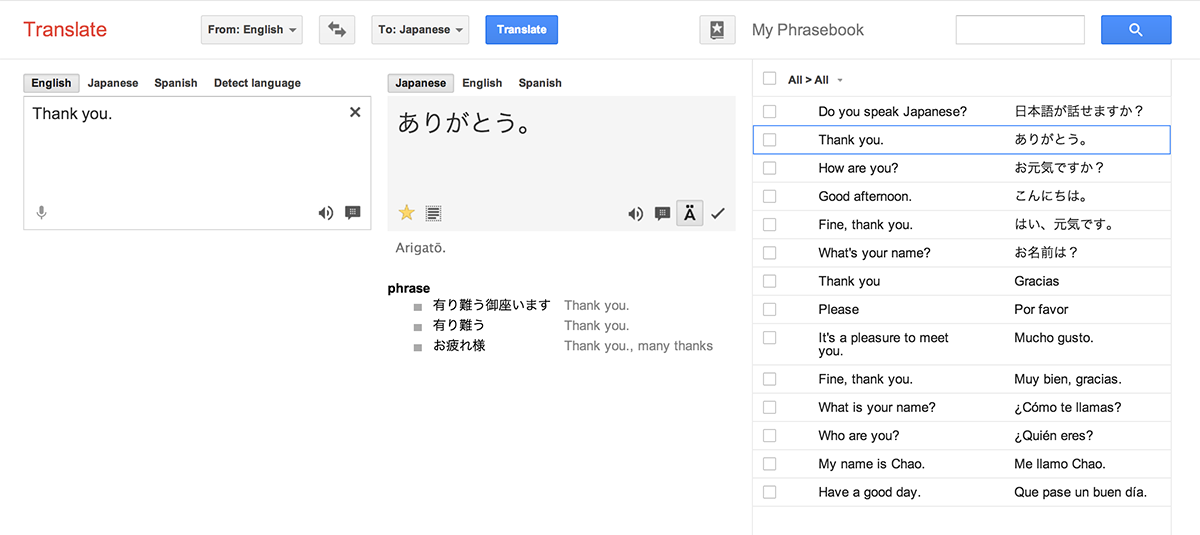
 Google Translate just added a cool new feature that allows you to easily create a personalized phrasebook with the phrases and sentences you want to memorize and/or find yourself translating repeatedly. As the Google Translate team notes in today’s announcement, the idea here is to allow you to jumpstart the process of committing the translation to memory by “allowing you to save the most useful phrases to you, for easy reference later on, exactly when you need them.”
Revisiting these phrases regularly, Google argues, will help you turn these translations “into lasting knowledge” (just like those rote drills from your Latin classes back in the day).
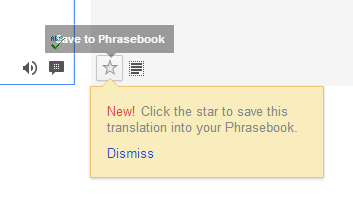
The new phrasebook is now enabled by default, and you can access it through the little book icon in the top right corner of the Google Translate screen. To save a phrase, simply press the new star icon underneath the translations.
The phrasebook itself is pretty straightforward, with one language on the left and the translation on the right. You can filter phrases by language pairs and – just like across the rest of Google Translate – there is a text-to-speech feature that allows you to listen to each phrase.