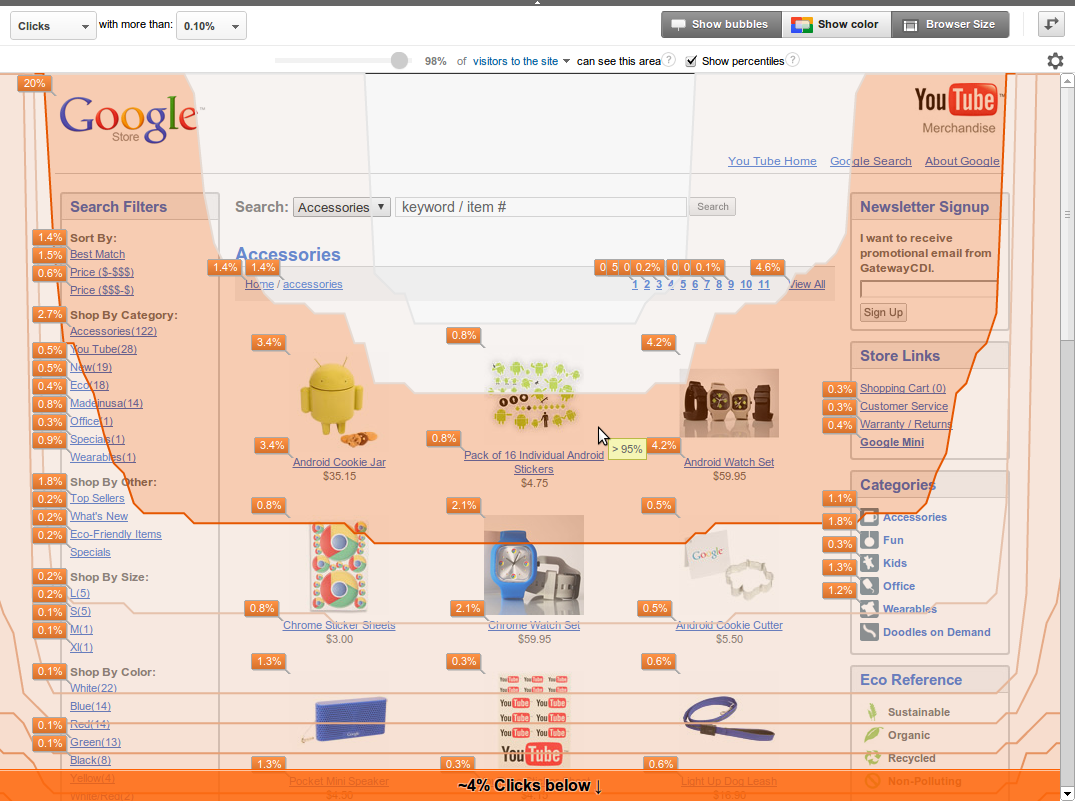
Google just added a small but interesting new feature to its Google Analytics product. You can now see how much of your site your visitors are really seeing based on the new browser-size analysis the company just added to Google Analytics. With Analytics, Google already knows what screen sizes your site’s visitors are using, so it is now combining this information with its previously released browser size tool from Google Labs. Google is rolling this new tool out slowly, so chances are it will be a week or two before you see it in your Google Analytics account (it’s already live in my personal accounts, but your mileage may vary).
Once it is live in your account, just head to the Content section of Google Analytics and look for In-Page Analytics. There, Browser Size is now among the existing options to see click-through percentages on your site.
As Google notes, thanks to the plethora of mobile devices with different screen sizes, the days where your visitors just used a few standard screen sizes are long over. Given the size of modern desktop screens, you can’t even draw any real conclusions from your users’ screen sizes anymore either because “for many people, the visible portion of the web page is much smaller than the screen resolution, because of excessive toolbars and other clutter.” Conversion rates, however, are greatly affected by what your visitors see on your pages without having to scroll.