We saw what a commotion it caused when Rovio’s Mighty Eagle intimated that his company would not be developing a version of its newest game, Angry Birds Space, for the Windows Phone platform (some quick statements from Rovio’s CEO put that to rest, although Nokia’s still working as of today to dispel those reports). Now it looks like Microsoft and its biggest partner, Nokia, are taking some steps to make sure that they have better control over how that story develops in the future — on Nokia’s home turf, at least.
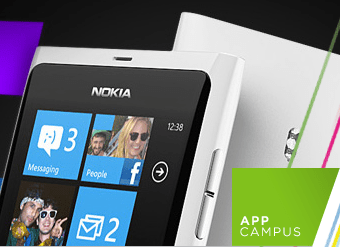
Today the two announced that they are each putting in up to €9 million (around $12 million) into a new mobile apps development program at Finland’s Aalto University called AppCampus — aimed specifically at funding new apps for the Windows Phone platform, but also some of the legacy platforms that Nokia still uses, such as Symbian and Series 40.
The program will start in May 2012, and in addition to the funding from Microsoft and Nokia, “Aalto University will make a significant contribution to the project by providing premises, coaching services, and access to both academic and business networks for budding app developers,” they say in a statement.
The three say it hopes to attract “thousands” of proposals for new app developer startups, not just from Finland but elsewhere, too.
This is not a surprising move for Nokia and Microsoft: the two have been facing some worry over whether the platform will ever have the content muscle to ever grow into a significant competitor against Apple and Google in the mobile space. The incident with Rovio last week was just a flashpoint in that ongoing story.
Nokia CEO Stephen Elop has often spoke of the “war of ecosystems” underway in the mobile space, and getting the apps part of the equation is crucial for the companies to grow.
Currently, Windows Phone has under five percent market share in worldwide smartphone sales, an area dominated by Android and Apple’s iOS. On the apps front, Windows Phone now has 70,000 apps, while Google Play (formerly Android Market) and iOS are each pushing at half a million.
On the other side of the story, this is a great boost for Finland and Europe in the world of apps development.
For better or for worse, much of the apps agenda has largely been set and directed from Silicon Valley, and this is one more attempt to shift that balance. The fact that Finland has produced so many significant companies in the mobile and mobile content space — not just Nokia and Rovio — is a testament to this being a good place to bank such an effort.