Earlier today we saw a significant move from MTV to launch a social mobile TV service and some research out from InMobi today underscores just why these kinds of moves are so important right now for TV companies:
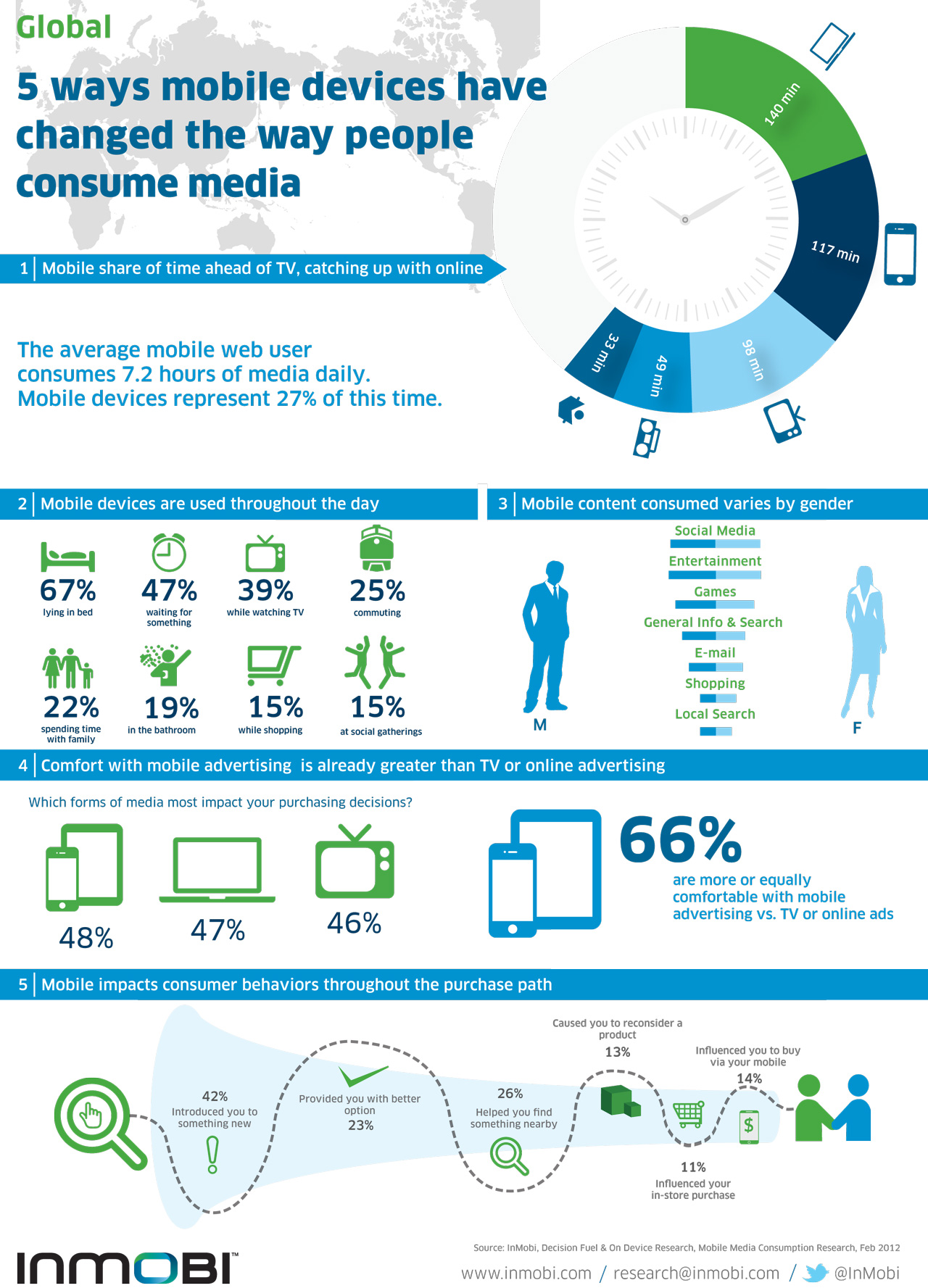
In its most recent quarterly report on mobile media consumption, InMobi surveyed some 20,000 consumers using both feature phones and smartphones across 18 different markets and found that they are, on average, spending 27 percent of their time on the mobile web, while they are only spending 22 percent of their time watching TV. (We’re assuming that’s leisure time, not all time.) PC usage trumps them both, though: they spend 32 percent of their time online.
The findings call this “mobile web” usage, so that means if you factor in other kinds of content — for example videos or music on your handset — there’s a chance that the gap between traditional media like TV and new media like mobile and PC could be even bigger.
InMobi also found that the most-popular categories among mobile web users are social media, entertainment and search. That points to the fact that mobile is seeing very much a dual-track growth in terms of how it is used: it’s for fun, but for practical uses, too.
That speaks to the opportunities that are there not just for media and entertainment companies like MTV but for those who are focused more on information and productivity.
On the latter point, there are some encouraging signs for all those many companies trying to do more in mobile commerce: some 76 percent of respondents said they would probably use their phones to buy services or products in the next year. Of course, that could mean one measly app purchase, but more optimistically it could mean more.
InMobi itself focuses on mobile advertising and marketing — it claims to be the largest independent mobile ad network in the world — so it also drilled downinto how those areas are progressing:
Some 66 percent of respondents said that they were as comfortable with mobile ads as they are TV or online ads. That’s not a brilliant number: turned around 36 percent said they felt uncomfortable with mobile ads. (That’s a problem that was highlighted in another survey last week, from Upstream, which provided a pretty dismal picture for how mobile ads are viewed today.)
Among those that are happy with mobile ads, InMobi’s numbers seem to point to small numbers when it comes to the benefits of these ads: only 14 percent said a mobile ad had influenced them to buy something via a mobile device; and only 23 percent said that mobile ads saved them time and money.
(Photo: stickwithjosh, Flickr)