
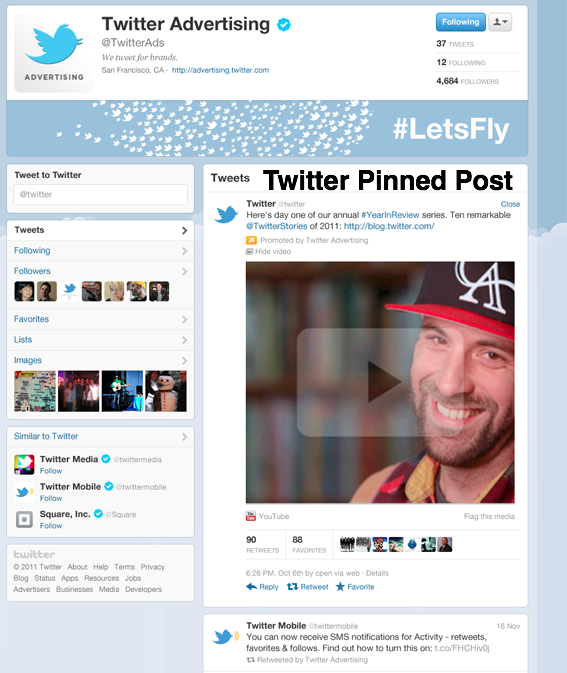
Overall, the new Twitter brand Pages are pretty underwhelming. But one great feature they offer is pinned posts — the ability to semi-permanently feature an expanded rich media tweet at the top of the Page. This help brands customize their Page to drive traffic to a specific link, photo, or video, promote a contest or important news, and make sure first time visitors always see a high quality piece of content. Oh hey, you know who else could benefits from pinned post? Facebook, because its custom Page app platform is too complicated for some businesses, and Google+, because it doesn’t even have an app platform.
Don’t expect Facebook or Google’s morals to stop them from copying this indefensible feature. Hell, it looks like Google+’s whole UI is a stripped down model of Facebook. Meanwhile, Facebook has integrated every G+ feature it didn’t already have — inline privacy controls, asymmetrical following, high status update character limit, easier friend list / Circle creation. Both teams know and reapply good design when they see it, and the option to pin a post is good design.
The feature could solve a big problem for each social network’s brand Pages. To take advantage of Facebook’s iframe-based Page tab application platform, businesses need engineering talent, an expensive license for a third-party Page management solution, or the know-how to pick and use a free third-party tool. That’s no sweat for big brands, but the long tail of small business don’t have resources or knowledge for this development. They’re effectively shut out of custom Facebook Page design.
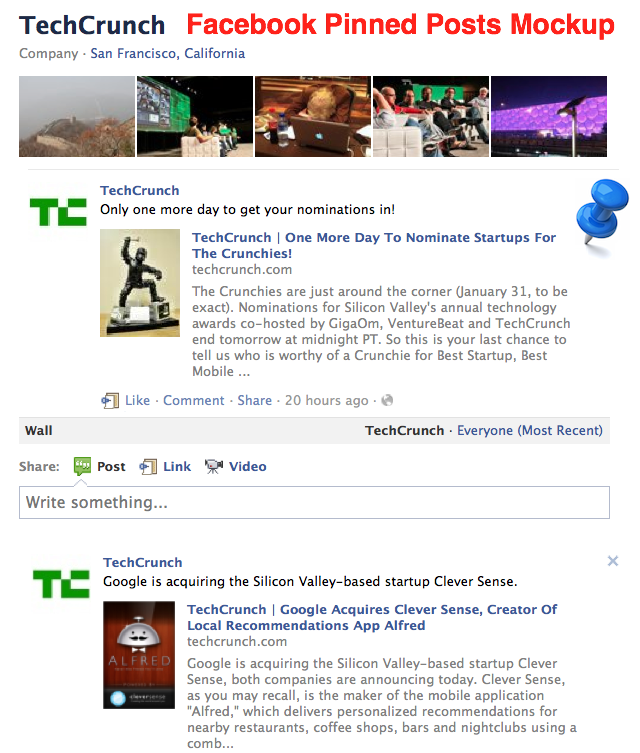
A native pinned posts feature could help. Businesses just carry on publishing content to their Facebook Page, but pick the most compelling post to stay visible. This will allow them to publish more frequently without worrying about burying that link to their website, ecommerce store, or latest promotion. Facebook could display the pinned post above the publisher on a Page’s wall, as shown in my mockup below.
For Google+, pinned posts would give brands their first taste of customization beyond photos. It wouldn’t require Google to build out APIs or even significantly alter its design. Without apps to navigate to, the only way for G+ users to find important content and promotions is to endlessly scroll down the wall.
Facebook may one day bring Timeline to brand Pages, and Google could open an app platform. But until richer, more accessible customization options are ready for launch, pinned posts could be a useful stop gap, as well as an easy way to silence a Twitter talking point.
[Image Credit: Shutterstock]