
By now you must have heard of the ongoing havoc being caused by flooding in Thailand. It’s claimed a few product launches already; Nikon and Sony have both had to delay shipment of new cameras, among others. But the single tech industry that seems to be hit the hardest is hard drive manufacturers. Many factories have been flooded and the production of drives has been seriously impeded.
Due to large inventories being kept by most retailers, the effect of the floods on a commodity like HDDs was bound to be delayed. And now we’re starting to see major rises in the prices of common drives like a Seagate 2TB. Street prices in Japan have risen by some measurements by 200% or more just in the last couple weeks.
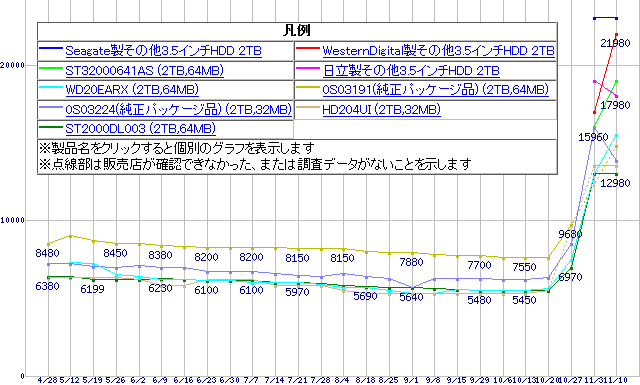
The chart above, from Akiba, shows that the cheapest options for 2TB drives have gone up as much as 400% since late October. And indeed, at American retailers many cheap drives are sold out or selling far above the prices from a few months back.
The prices could come back down as quickly as they went up (some, you can see, are already bouncing back down, having overshot their optimum price), but it has to be a terrifying time to be in the business. A company that produces custom servers, for instance, is put in the uncomfortable position of taking a loss on sales or passing the cost on to their customers.
In essence, it’s the same kind of crunch you see when the stock of any commodity is significantly reduced: LCD panels or printer ink or bananas would have similar ripple effects. Still, storage is an essential part of the PC and consumer electronics world, and everyone involved is hoping for a speedy recovery effort in Thailand. With the waters only just beginning to recede and damage widespread and serious, some are estimating a year or more before the factories can return to pre-flood productivity levels.
Incidentally, you can donate to the Thai Red Cross’s recovery efforts here.