Today during Verizon and Apple’s press conference in New York City announcing the iPhone 4 on the carrier’s network, Apple COO Tim Cook fielded a question that has been on a lot of people’s minds: why won’t the iPhone on Verizon be a next-generation LTE version?
“The first generation LTE chipsets force some design compromises. Some of which we would not make,” Cook said.
That’s a bit vague — “design compromises” could mean a lot of things. Part of what he likely means is that LTE chipsets require more battery consumption (something which has been seen in the 4G Android devices). Another part is that an LTE version of the iPhone would likely have to be a bit bigger because radio engineers haven’t yet learned how to squeeze every ounce of real estate into these newer chip designs.
And there was another reason Apple is bringing a CDMA iPhone 4 to the table first. “Verizon customers have told us they want the iPhone NOW,” Cook made clear. In other words, Apple could certainly do the work on an LTE iPhone — and they undoubtedly will eventually — but in order to get this product out right now, they went with a product they’ve already developed, the iPhone 4.
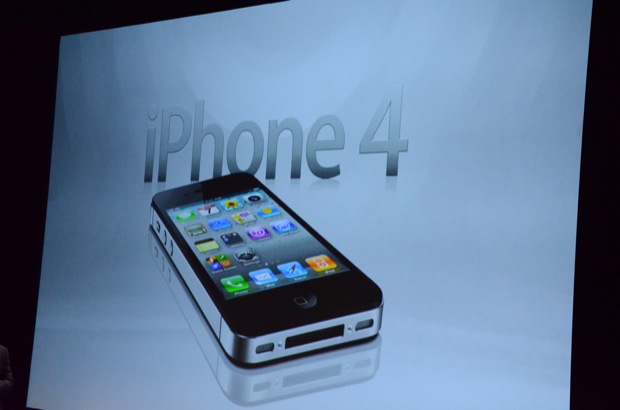
All that being said, as you can see in the image above, the Verizon iPhone does appear to be designed a bit differently than the iPhone 4 on AT&T’s network. For example, look at the two ridges on the left side of the device. When a question from the audience asked if this was about the antenna issue, Cook deflected it, saying that Apple had to make some changes to make the device CDMA-ready.
Earlier in the event, Verizon’s Lowell McAdam revealed that Verizon and Apple had actually been working together since 2008 on this device. Cook later confirmed that. And both noted that this is just the beginning of their partnership.
More Coverage:
- Verizon And Apple Began Working Together To Make The CDMA iPhone In 2008
- It’s Official: The Verizon iPhone 4 Is Coming On February 10th
- So What’s So Special About The Verizon iPhone? Personal Hotspots.
- The Verizon iPhone Product Pages And More Are Alive For Your Ogling
- Hands On With the Verizon iPhone
- Bottom Line: Should You Buy The Verizon iPhone?
- One More Thing: The Verizon iPhone Runs iOS 4.2.5
- How Personal Hotspot Works On The Verizon iPhone (Pictures)