As we all know, the battle between Flash and HTML5 for the future of online video is raging. But what about that other plugin some sites use for video? You know, the one made by Microsoft — Silverlight? A new posting tonight may call that platform’s future in video into question as well. Because arguably their most important client is looking to jump on the HTML5 video bandwagon: Netflix.
A post tonight by Adrian Cockcroft (as noticed by the blog Hacking Netflix), Netflix’s Director of Web Engineering, indicates the company’s intention to embrace HTML5 going forward. The move is apparently spurred on by Netflix’s move to Amazon’s cloud, which will require a re-architecting of the codebase, Cockcroft notes. So what better time to start supporting the latest technologies? “One of these is HTML5, which is raising the bar for cross browser support for advanced user interface features, and is now supported by a large and rapidly growing percentage of the visitors to netflix.com. In addition many TV based devices now embed webkit, which is the HTML5 compatible technology that underpins the Safari and Chrome browsers,” Cockcroft writes.
It’s interesting that Cockcroft never actually mentions the video capabilities of HTML5, instead he talks about the “advanced user interface features.” Still, I think we all know what he means.
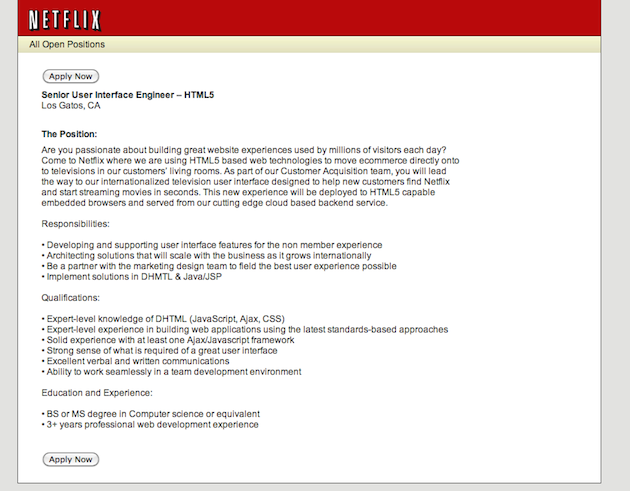
He also points out that Netflix is looking to hire to make this transition happen. The one posting he highlights is for a Senior User Interface Engineer — HTML5. The position description reads as follows:
Are you passionate about building great website experiences used by millions of visitors each day? Come to Netflix where we are using HTML5 based web technologies to move ecommerce directly onto to televisions in our customers’ living rooms. As part of our Customer Acquisition team, you will lead the way to our internationalized television user interface designed to help new customers find Netflix and start streaming movies in seconds. This new experience will be deployed to HTML5 capable embedded browsers and served from our cutting edge cloud based backend service.
This move shouldn’t be all that surprising considering that Netflix was one of the first apps to embrace the iPad, bringing its videos (h264 encoded) to the device through a native app. Still, this is a huge potential win for HTML5, presuming it happens.
Update: Cockcroft has now updated his post saying he wasn’t implying it would be HTML5 video, but rather some other user interfaces. He says that because HTML5 video doesn’t have a viable DRM solution, they can’t use it yet.
So much for his opening about “leaning forward and looking for new technologies to leverage,” I guess. He should have updated that to read, “new technologies to leverage, provided they offer DRM.”