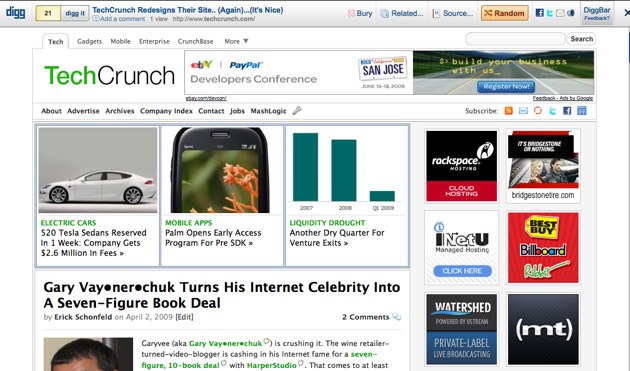
 On his first day since officially taking over the role of acting CEO from Jay Adelson, Digg founder Kevin Rose is making some significant changes. In a new blog post, Rose writes that DiggBar (seen above) is being killed off. And instead of giving the usual “it hasn’t lived up to our expectations” cop-out we often see from the PR machine, he’s being quite candid about it, essentially admitting that it was a bad move. From his post:
“Framing content with an iFrame is bad for the Internet. It causes confusion when bookmarking, breaks w/iFrame busters, and has no ability to communicate with the lower frame (if you browse away from a story, the old digg count still persists). It’s an inconsistent/wonky user experience, and I’m happy to say we are killing it when we launch the new Digg (sign up for the beta here). That said, we will continue to iterate on our browser extensions for Firefox, Chrome, and IE. Look for seriously revamped versions of those in a few months.”
Rose’s candor about killing the DiggBar isn’t without precedent. Last summer, a few months after the DiggBar launched, the site rolled out a highly controversial change that would link Digg shortlinks to Digg.com pages rather than the page you were trying to actually link to. Users were outraged, and Rose started tweeting that he was not aware of the change because he had been on vacation for two weeks, and that he would look into it. It didn’t exactly sound like he was a major proponent.
In the same blog post today, Rose also notes that the site will unban any previously banned domains when the new Digg finally launches. We’ve reached out to Digg to ask if they’d share the underlying logic behind this move.
Update: Here’s what Digg Chief Revenue Officer Chas Edwards had to say about the decision to unban sites:
Members of the Digg community submit quality content they find on professional publications like CNN.com, independent publications and blogs like TechCrunch, video sites like YouTube, or even commercial sites such as Toyota.com or IBM.com. Other readers view these submissions and vote the best of the best to the homepage. In other words, Digg readers care about quality, not whether the publisher is a publicly-traded media company, a Fortune 500 consumer electronics manufacturer, or an independent photographer posting pictures to her blog. Input from 40 million readers combined with Digg’s curation algorithm will always be a better filter than policies enforced by a small staff of humans. It’s another way we’re welcoming brands into the Digg conversation. More ways are coming soon.