Notes on Leadership: Be Like Steve Jobs, . . . And Bill Campbell, And Andy Grove
Guest Author
Mar 14, 2010

Editor’s note: When venture capitalists invest in early stage startups, more than anything else they are investing in the founders of the company and their ability to lead their employees through the most improbable set of circumstances to take an idea from a germ to a real and profitable business. In this guest post, Ben Horowitz of VC firm Andreessen Horowitz explains the leadership traits he and his co-founder Marc Andreessen look for before they invest in a startup. SOme of their investments include Skype, Zynga, Factual, and RockMelt. Before becoming investing partners, Horowitz and Andreessen co-founded Opsware, which they sold to HP for $1.6 billion, and prior to that Horowitz was an executive at Netscape.

At Andreessen Horowitz, we favor founders running the company. The reasons are many (and will be the topic of a future blog post). As a result, we spend a great deal of time thinking about the characteristics required to be a founding CEO. Perhaps the most important attribute required to be a successful founding CEO is leadership. So what is leadership and how do we think about it in the context of the CEO job? Are great leaders born or made?

Most people define leadership in the same way that Supreme Court Justice Potter Stewart famously defined pornography when he said: “I know it when I see it.”

A better definition comes from former Secretary of State Colin Powell who said: “You have achieved excellence as a leader when people will follow you anywhere if only out of curiosity.” For our purposes, we can generalize this to be the measure of the quality of a leader: the quantity, quality and diversity of people who want to follow her.

So what makes people want to follow a leader? We look for 3 key traits:

  • The ability to articulate the vision
  • The right kind of ambition
  • The ability to achieve the vision

Let’s take these in order.

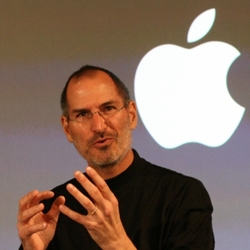
The ability to articulate the vision—The Steve Jobs Attribute

Can the leader articulate a vision that’s interesting, dynamic, and compelling? More importantly, can the leader do this when things fall apart? More specifically, when the company gets to a point when it does not make objective financial sense for any employee to continue working there, will the leader be able to articulate a vision that’s compelling enough that the people stay out of curiosity?

I believe that Jobs’ greatest achievement as a visionary leader so far was a) getting so many super talented people to continue following him at NeXT, long after the company lost its patina; then b) getting the employees of Apple to buy into his vision when the company was weeks away from bankruptcy. It’s difficult to imagine any other leader being so compelling that they could do these back-to-back and this is why we call this one the Steve Jobs attribute.

The right kind of ambition—The Bill Campbell Attribute

Andy Grove once remarked that a company needs highly ambitious executives in order to achieve its goals. However, it’s critical that those executives have “the right kind of ambition”: ambition for the success of the company rather than the “wrong kind of ambition”: ambition for the success of themselves.

One of the biggest misperceptions in our society is that a prerequisite for becoming a CEO is being selfish, ruthless, and callous. In fact, the opposite is true and the reason is obvious. The first thing that any successful CEO must do is get really great people to work for her. Smart people do not want to work for people who do not have their interests in mind and in heart.

Most of us have experienced this in our careers: a bright, ambitious, hard working executive that nobody good wants to work for and who, as a result, delivers performance far worse than one might imagine.

Truly great leaders create an environment where the employees feel that the CEO cares much more about the employees than she cares about herself. In this kind of environment, an amazing thing happens: a huge number of the employees believe that it’s their company and behave accordingly. As the company grows large, these employees become the quality control for the entire organization. They set the standard of work that all future employees must live up to. As in, “Hey, you need to do a better job on that datasheet—you are screwing up my company.”

I call this characteristic the Bill Campbell Attribute after my friend Bill who is the best that I’ve ever seen at this. If you talk to people who worked in any of the many organizations that Bill has run, they refer to those organizations as “my organization” or “my company.” A huge part of why he has been so unbelievably strong on this dimension of leadership is that he’s totally authentic. He would happily sacrifice his own economics, fame, glory, and rewards for his employees. When you talk to Bill, you get the feeling that he cares deeply about you and what you have to say, because he does. And all of that shows up in his actions and follow through.

Ability to achieve the vision—The Andy Grove Attribute
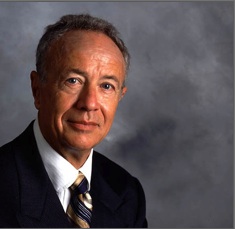
The final leg of our leadership stool is competence, pure and simple. If I buy into the vision and believe that the leader cares about me, do I think she can actually achieve the vision? Will I follow her into the jungle with no map forward or back and trust that she will get me out of there?

I like to refer to this as the Andy Grove attribute. Andy Grove will always be my model of CEO competence. He earned a Ph.D. in electrical engineering, wrote the best management book that I’ve ever read (High Output Management), and tirelessly refined his craft. Not only did he write exceptional books on management, he taught management classes at Intel throughout his tenure.

In his classic book, Only the Paranoid Survive, Grove details the story of leading Intel through the dramatic transition from the memory business to the microprocessor business. In doing so, he walked away from nearly all of his revenue. He humbly credits others in the company with coming to the strategic conclusion before he did, but the credit for swiftly and successfully leading the company through the transition goes to Dr. Grove. Changing your primary business as a 16 year old, large, public company raises a lot of questions. As Andy describes in an incident with one of his employees:

One of them attacked me aggressively, asking, “Does it mean that you can conceive of Intel without being in the memory business?” I swallowed hard and said, ‘yes, I guess I can.’ All hell broke loose.

Despite shocking many of his best employees with this radical strategy, ultimately the company trusted Andy. They trusted him to rebuild their company around an entirely new business. And that trust turned out to be very well placed.

So, are great leaders born or made?

Let’s look at this one attribute at a time:

  • Articulation of the vision—There is no question that some people are much better story tellers than others. However, it is also true that anybody can greatly improve in this area through focus and hard work. All CEOs should work on the vision component of leadership.
  • Alignment of interests—I am not sure if the Bill Campbell Attribute is impossible to learn, but I am pretty sure that it is impossible to teach. Of the three, this one most fits the bill “born not made.”
  • Ability to achieve the vision—This attribute can absolutely be made; perhaps this is why Andy Grove’s tolerance for incompetence was legendarily low. Indeed, the enemy of competence is sometimes confidence. A CEO should never be so confident that she stops improving her skills.

In the end, some attributes of leadership can be improved more than others, but every CEO should work on all three.

Advertisement
Advertisement
  • Ilan Ben Menachem

    Vision is a main part in Leadership.

  • http://www.facebook.com/profile.php?id=1033582029 Rizki Harit Maulana

    So, Bill Gates an overall player then? :D (i’m trying not to be cynical)

  • http://matthew-schmitt.com Matthew Schmitt

    These skills and abilities must be built on a foundation of trust, or no one will follow you, no matter how clear the vision. Great article here, keep it up!

    Matthew Schmitt
    http://matthew-schmitt.com

  • http://www.facebook.com/profile.php?id=594153546 Clint Pee

    I think i will just be like myself and out work and preform all them old cats above.

    The Padrino
    http://www.thepadrino.com

  • http://michaelkimsal.com/blog/thoughts-on-successful-companies-and-their-leaders/ Thoughts on successful companies and their leaders | Michael Kimsal’s weblog

    [...] is a response to a recent TechCrunch post on leadership qualities and my own experiences working with startups and small [...]

  • Luke

    Alignment of interests: fake it till you got it. Even if you don’t really care, go through the motions and do what a caring person would do. Who know? You may just become a decent gal.

  • http://churn-news.blogspot.com Amitabh Mukherjee

    Presence of all these attributes are undoubtedly essential for a great leader but to guess the presence of ‘alignment of interest’ and ‘ability to achieve’ must be extremely difficult, if not impossible, while investing as a VC. If I were a VC I would look at the team of senior management, not just a leader. Too often too much importance is placed on one man. Too often the leadership qualities are derived ex-post facto. We all suffer from survivorship bias.

  • Alex

    This is exactly why the VC people are in the middle of nowhere right now – because of THESE misconceptions (I didn’t use the right word – forms of idiocy, expressed in these patterns of thought, did you notice?).

    Go on. PLEASE, go on! I didn’t laugh like this for a long time. :) Every word is just a treasure and begs to be included in a golden book ‘How NOT to think in these turbulent times’.

  • Dontwantgoogleindexme

    HOW ABOUT BEING YOUR SELF. BE COMFORTABLE IN YOUR OWN SHOES

  • Michael Washington

    If you look at MSFT I think it shows that Bill Gates was obviously doing something right. It would be interesting if someone could make a valid argument otherwise.

  • http://www.sorcim.com Nauman

    In my view venture capitalists and investors are more serious about management skills rather than the leadership skills. But this article tells a different story.

  • Mark Dobson

    Good article and points but as mentioned above, is Bill Gates just a run of the mill or does he meet ALL the above traits?

    Also curious if there was some esoteric reason or maybe just typo’s for using “her” & “she” where it should be “him”, “he” and “his”.

    “the quantity, quality and diversity of people who want to follow her.”

    “A CEO should never be so confident that she stops improving her skills.”

  • http://arturthecoach.wordpress.com/2010/03/14/being-a-coach-being-a-leader/ Being a coach, being a leader « Artur The Coach's Basketball Thoughts

    [...] comments At a popular technology blog, TechCrunch, Bob Horowitz from VC firm Andreessen Horowitz wrote an interesting piece about leadership, which applies well to coaching. A coaching position is primarily a leadership [...]

  • shitcaller

    sounds like you have all the answers then. why don’t you step up and write a blog about how it *should* be done, Alex? what’s your experience with trying to analyze potential leaders to invest in?

  • Alexander

    So you’re saying a good CEO shouldn’t be able to articulate the vision, shouldn’t put the company’s interests above their own, and shouldn’t be competent? Are you a troll or just an idiot?

  • Mike Kingston

    Great article. You make some very good points. I also think that a lot of creativity and drive comes out from a person in times of necessity.

  • http://www.ostraining.com Sam

    I really appreciate the time taken to share these insights, especially as it’s by someone who not only has a great track record but who also puts their money where their mouth is.

    Ben, my question is if you were to recommend one resource for each of the three points, what would they be? I’m not the next Steve Jobs, but what you are saying makes a lot of sense to me and I have a strong interest in doing all I can to improve my abilities in those areas.

  • pwb

    I like Ben’s posts. And also wish that Marc would write more.

  • http://www.facebook.com/profile.php?id=1268769937 Mark Beckwith

    I think this use is just a reaction against using the masculine form. But of course using the feminine is even more wrong since the masculine has been used for both throughout history.

    If using masculine really bothers people, they should just use the plural and avoid the issue altogher:

    “CEOs should never be so confident that they stops improving their skills.”

  • http://www.facebook.com/profile.php?id=32402425 Adam Lawrence

    This post articulate many prevalent leadership theories; everything from Collins to Posner suggests that vision, ability and ambition are the most important traits for a leader.

    The most important characteristic is the right sort of ambition. No leader manages to build an organization without leading in a humble, company centric way.

  • Anonymous

    The problem with this article is that it is one giant conflict of interest. What do Andy Grove, Bill Campbell, and Steve Jobs have in common? Access to billions of cash on their respective company balance sheets that can and has been used to overpay for acquisitions and secure life’s finer things for the author as well as the venture capital community in general….and therein lies the rub!

    This rub is one of the biggest issues in Silicon Valley – the fact that public company leadership teams are buddy/buddy with all of the venture capitailists that they are sitting across the table fromwhen they negoiate purchase prices for M&A transactions.

    Given this dynamic which is rampant in the Valley, it’s really hard to take articles like this one seriously.

  • Nothing actionable here

    This article has no substance. A good CEO should have:

    1. an ability to articulate the vision
    2. put the company’s interests above their own
    3. should be competent

    Wow! Breaking news. Nothing different than what you’d see from a business school academic in terms of insight or actionability.

    And while you’re at it, be like Steve Jobs, Bill Campbell and Andy Grove – all once in a generation type leaders. And then we’ll fund your seed round. Great.

    Also, remember there was a time when Steve Jobs wasn’t the golden child he is now. The best strategies are written after the fact. As it seems are inane navel-gazing, see how smart I am articles like this which really do zero to help entrepreneurs in any meaningful way.

  • Eman

    So are leaders born or made?

    Back to this question, I think some leaders are born with special gifts and in the right environment will outshine. Others however, can be made if these were lucky enough to find the tools and the environment to florish if they have the persistence within.

    For these both types of leaders , meeting the right mentor in their lives (whether inpirational, knowledge or experience wise) will help shape these leaders to become what they are in the future.

  • Eduardo

    Bill Gates?
    - vision: among many examples, he imagined a PC in every desk way early in the 70′s; I think he at least matches Jobs in this trait
    - the right kind of ambition: how about the Gates Foundation? hard to think of anybody topping this one
    - ability to achieve the vision: hard to think of anybody more successful than Mr. Gates and Microsoft

  • Tom Estes

    Yeah, the whole “she” and “her” was annoying because no one really talks that way when speaking in generalities. We always use “he” or “him”. I don’t want to speculate on “his” motivation for writing this way, but I have a pretty good guess.

  • http://www.facebook.com/profile.php?id=506017534 Suleman Ali

    Really great post! Thanks for sharing!

  • Marston Gould

    Nothing against Bill/Andy – but what Steve Jobs has done with Apple hardly compares to anything the other two have.

    Apple is now the 3rd largest company in the US as they just passed Walmart in market capitalization – selling high end products in one of the greatest recessions of all time.

    You’d be hard pressed to find any stock with the 1 year, 3 year, 5 year returns of Apple. The reason for this is Steve Jobs.

  • http://www.facebook.com/profile.php?id=513778563 Armand Der-hacobian

    Love these guest editorials whether it is Ben Horowitz or Vivek Wahda on TC or Robert Reich on Huffington Post.

  • Stanley

    Agreed. And in in the off chance the writer used “she” and “her” to get us to stop thinking about leaders as male only, it seems a better way to push this would be to actually pick a, say, female to highlight as an example? Keeping on using “she” and “her” when all the examples in the article are male seems quite odd and disingenuous.

  • http://pdxbrian.wordpress.com pdxbrian

    While short, I think this is one of the best articulated arguments of what a leader is. This applies to leadership in business, communities and politics.

    There’s some interesting talk about Bill Gates but it didn’t get too much analysis. Can a TC writer propose a few examples of those who truly excel at all 3 components?

  • http://technewscampus.wordpress.com technewscampus

    Tom, everyone does typically use “him” or “he”, but that doesn’t make it more correct that using “her” or “she”. The writer is obviously trying to correct for gender bias.

  • http://technewscampus.wordpress.com technewscampus

    I would argue that all of the above traits are part of the charismatic or transformational leadership model (which I like, in case anyone was wondering).

  • http://www.facebook.com/profile.php?id=710381247 Stan Oleynik

    Great stuff! Thanks!

  • http://pdxbrian.wordpress.com/2010/03/14/notes-on-leadership-be-like-steve-jobs-and-bill-campbell-and-andy-grove/ Notes on Leadership: Be Like Steve Jobs, . . . And Bill Campbell, And Andy Grove « life of brian

    [...] Notes on Leadership: Be Like Steve Jobs, . . . And Bill Campbell, And Andy Grove [...]

  • http://maksimideas.blogspot.com Maksim T

    I would be very curious for you to elaborate on this conflict between confidence and competence; it’s one that a lot of scientists face implicitly, yet don’t seem sure enough to talk about it…

  • http://maksimideas.blogspot.com Maksim T

    Rather than appreciate someone trying to show you a new idea, you complain that it’s not what you’re used to hearing and seeing. Great attitude to life you’ve got going!

  • Rohit

    I don’t want to *feel* like the CEO has my interests in mind. I want to *know* that the CEO has my interests in mind.

    Interesting that you use the word feel, because it sort of implies that it’s okay if the CEO works to build that illusion rather than reality.

  • Seth

    He did do something right. He knew the right people, was in the right place, said the right thing, and found a cheap way to mass deliver a product that he copied. Doesn’t make you a great leader, but make’s you bloody rich.

  • chen

    I was hoping to see the 3 fundamental keynotes of Bill gates here.

    *Being in the right place at the right time. (You could well be already there ).

    *Have a vision of where the industry / business you’re working in is going.

    *Taking Massive and Immediate Action. (It is time to act).

    All of our successful CEO today knows this and in some point of their life, have done this.. The question is, why aren’t we (normal people) not doing the things said above?

    Off the record: the only CEO whom I think isn’t fitted here, is her

  • kaiynne

    Seems like being yourself for you means running around shouting everything you say. How is that working out for you?

  • http://pouncer.com.au kaiynne

    Would have been better to use the general, they or them.

  • http://careermitra.com/ Srikanth Krishna

    I believe the foremost trait for leadership is uniqueness – having his / her own style of thinking, understanding & executing the task.

  • Grammar Police

    Unfortunately the English language doesn’t have this feature.

  • Maksim T

    That’s very wrong. Uniqueness is in fact a bad quality in a CEO.

  • http://www.vembu.com Sekar Vembu

    I think this is an absurd post from the usually “feel good” type of people who feel jobless after making their billions. The modus operandi of these “feel good” type of rich dudes is:

    Look for successful company and its leaders, co-opt their seemingly “appeals to the heart” qualities, forgetting the fact that the devil is in the details, and start giving useless “free advice” to the bunch of entrepreneurs who are toiling hard producing something useful.

    My own “free advice” to everyone is to ignore these rich dudes “free advice” and instead to “follow your instinct and focus on what you do best”.

    Sekar

  • http://www.jessyoko.com/blog/2010/03/15/happy-pi-day-314/ Happy Pi Day! (3/14) — jessblog

    [...] It’s hard to believe that Polyvore has come so far over the last 2 years! Not so long ago we were 5 people working out of Pasha’s house. Also, there’s nothing more rewarding than working on a product you love with a community who loves you back, on a team that’s like a family. A huge thank you to Pasha, who I would follow to any other company, even if only out of curiosity. [...]

  • http://andirog.blogspot.com Anil Gupta

    “Andy Grove will always be my model of CEO competence. He earned a Ph.D. in electrical engineering …”

    Andy Grove has PhD in Chemical Engineering.

  • ACA

    What a delightfully insightful article :-)
    Thumbs up!

  • http://www.brekiri.com/blog Greg

    You don’t think this is actionable? What’s so hard to understand about whether the CEO can get people to follow the vision and can get things done? It’s a very clear litmus test. The purpose of the article isn’t to provide a how-to guide for entrepreneurs, it’s to explain what they base their investment decisions on.

  • http://www.kidmercuryblog.com kid mercury

    lol great diss kaiynne

  • Prashant

    You are missing something,

    He was great visionary himself, He lead company with vision to bring computing to millions. He got smartest people to work for him and created good (might not be best) products which reached millions (this is important) and changed millions of life.

  • http://www.kidmercuryblog.com kid mercury

    i thoroughly appreciated the blog (thanks ben) but i have to agree with stanley here. the use of the masculine pronoun is a linguistic standard. this may be unfortunate, but to deviate from the standard creates a distraction — an interpretation cost, so to speak. i also don’t think using the masculine pronoun is anti-women. if one is really concerned about gender bias, “he/she” would have been most appropriate, IMHO (or “she/he”, or better yet, alternating).

  • Kapil Poojari

    Leadership in the context of Vision, Ambition and Achievement is ok. There is also a case for putting people at the heart of all Leadership decisions. Should the people aspect not be highlighted more directly.
    In recent times, Employees at the heart of business success has increasingly been spoken off, as is evident in this

    http://www.nytimes.com/2010/02/14/business/14cornerweb.html

  • http://www.startup-patterns.de/2010/02/13/die-idee-alleine-ist-nichts-wert/ Startuppatterns

    Die Idee alleine ist nichts wert…

    Hier ist die schmerzhafte Wahrheit: Millionen von Menschen haben täglich Millionen von guten Ideen für neue Produkte, lukrative Geschäfte, vielleicht so gar für eine bessere Welt. Es ist sehr einfach sich etwas Gutes auszudenken. Nehmen Sie sich 10 Min…

  • Matt S

    Uh…. you all realize that Bill gates was a Software Architect, right? The CEO of Microsoft is, was, and probably always will be the invincible Steve Balmer. he’s the one with the all the gusto and brains you are talking about… all Bill could do is code (and code he did).

  • Matt S

    I agree with this… it’s actually why I came to comment….

    The article was written by a man, it never once even makes a slight reference to any female executive (of which there are a handful who could have been exampled for this piece)….

    So yes, for the article itself to be such a sausage fest and then have the words “she” and “her” used as general-pronouns is a bit of an oversight… it might even be seen of as snide or wink-wink-smicker-snicker to some uber-femenist types…

    Good article, bad choice of pro-noun. (And yes, it is worth mentioning Maksim T… not complaining… just kind of pointing out for future reference).

  • Matt S

    Maybe he has two…

    Either way…. chemicals, electricity…. all i know is I don’t want either one to touch me.

  • S
  • Vincentzio Roman

    This article is indicative of the current investors desire of creating a company and achieving a quick return on their money, and their incapacity to appreciate vision. I wonder whether great inventors like Philo Farnsworth, Nicola Tesla or Edison had any of the described qualities. No wonder that overall the VCs are losing money in the last 10 years.

  • http://www.salesorder.com Nick

    The missing point…

    I worked for Jobs at NeXT for four years and witnessed up close a master at the articulation of vison. So I agree with your assessment of SJ.

    Steve actually inspired me to start my first business and from the outset I had to figure out on my own and put into action all three of your points. But once worked out, It wasn’t a difficult blueprint to make work.

    The result was a business that grew to 254 people with a top line of $33m and a pre-market value of $320m in just four years.

    So again I agree this stuff works.

    We’ve a new business now, the software as a service is built, tested and being used in 24 countries by small businesses – we are taking on Intuit, Sage and NetSuite. In fact some say we might be the next Intuit.

    However, please forgive me for pointing out there’s may be some wisdom missing in your post.

    Your post is in the context of venture capital.

    So it ‘s only fair I point out that understanding and help with some of the finer crucial points of making the business work better and grow safely should be something a leader knows how to identify in a VC before they accept any ‘help’.

    I’ve yet to meet or hear of a VC who brings the people and hands on skills to help leaders create and sustain exemplary businesses in good and bad times.

    So I would like to add that good leaders know how to choose their VCs carefully and have foresight to see what resources they need from their VC down the line.

    So we tried to contact AH months ago on first on the day you announced just to get on your radar – we liked the first post from Marc – you could say it resonated with ‘the missing point’

    …you never replied.

  • Ellen Saminoff

    safe observations about traits…
    I’ve dealt with his VC firm and they bet on hype, same as every other VC firm. True vision means going upstream when everyone is floating down.

  • DavidS

    Great stuff. Keep it up!

  • Josh

    Depends on the place the company is in its lifecycle…

    If you’re a VC looking to seed an early round company, then leadership is the most important thing. But if you’re an investor in an established company (likely public but not necessarily) then being able to manage is more important.

    This is why you see that a lot of early stage CEOs stay with a company too long after it ‘makes it’, and just flounder. Imagine Mark Zuckerberg trying to run IBM, or Sam Palmisano trying to run Facebook. This also accounts for the success of Microsoft in that Gates and Ballmer were able to balance the two skills, and shift the limelight as the company transitioned from a focus on new products to sustaining/expanding product lines.

  • st

    Breaking News: “At Andreessen Horowitz, we favor founders running the company.”

    How many VC would think that way? How many companies with the founder running the company under current VC environment? No wonder the formula is 10 investment, 2 break even, 1 good bet and 7 rats. (VC demand 10 to 1 ROI min. other wise, it would be called “boring”). With VC drop some MBAs to “teach” the start-ups. Ha.

    Good article, a bit too late with current environment of the “lesson learned”, body scattering battle field. Few of us with wounds all over the body (death of thousand cuts) left the field. New blood should come in and benefit all the wisdom.

  • Fab

    The run MSFT had from 1990-2000 wasn’t too bad ;-) Could use me one of them right now.

  • Marston Gould

    The economy was in a very different state between 1990-2000 than it has been in 2000-2010.
    2000-2010 includes not one but two significant downturns.

    Apple’s annual return between 2000 and today is 44.5% while Microsoft between 1990-2000 was 42.8%. Close, but no cigar.

  • http://artishev.com/znaniya/what-do-we-look-for-in-entrepreneurs.html What do we look for in entrepreneurs? | АРТищев Андрей Борисович, к.э.н.

    [...] Ben has posted a great essay on leadership over at TechCrunch. [...]

  • Skkk

    “The first thing that any successful CEO must do is get really great people to work for her.”

    The first thing a VC should have when giving advice on management qualities is the confidence not to display their insecurities regarding gender. In an PC attempt to promote equality they fail, instead exposing their lack of acumen concerning executive leadership. Competence is independent of gender, therfore their attempt to be fair and inclusive, overlooks true ability, and misses the most competent. AH = fail.

  • AS

    Born Vs Made : Try really hard on the made thing till you arrive and then claim its a “born” thing to avoid competition.

  • http://www.theskyeclub.com Paul Martin

    Good post. Interesting and informative.

    I’m amused the way some of the comments seem to nit-pick and dog pile on the author about silly issues. Is the whole gender thing that big of a deal? If it is, I think you’re focusing on the trees and not the forest. So the author used “she”
    and “her.” Hmm. . . I don’t think there is some dark, ulterior motive for doing that. Maybe “he’s” just an optimist and sees a workplace where someday, gender roles become archaic. And, if you really believe the author is being too sensitive to gender, does that render the overall message so incomprehensible, that you’re incapable of acknowledging it? If you don’t like the essence
    of the message, great, then perhaps you can elaborate and maybe I’ll come over to your way of thinking.

    And I think it’s quibbling when you protest the simplicity of:

    The ability to articulate the vision
    The right kind of ambition
    The ability to achieve the vision

    C’mon. Do you really think any posting or article will provide the panacea for making you successful in business, love, or life?
    The best selling, success/self-improvement books of all time, all generalize and relate simple concepts. Going back to the 1930′s and Dale Carnegie’s, “How to Win Friends and Influence People” where he says scholarly, earth-shaking things, like:

    Act enthusiastic and you will be enthusiastic.
    Avoid arguments.
    If you want people to like you, emulate the behavior of your dog.

    Really deep thought there, eh? Not enough to excite you or motivate you in your quest to build a successful business? Well somebody was excited, because it’s sold millions of copies and practically every fortune 500 company has sent employees to Dale Carnegie training course that seemingly will go on in perpetuity.

    Nobody is going to give anybody a step-by-step manual of “How to Succeed in Business Without Really Trying.” I assure you, if you read enough self-help/success books by multimillion selling authors like Stephen Covey, Rhonda Byrne, Wayne Dyer, Deepak Chopra, Thomas J. Peters, Norman Vincent Peale, et. al and you’re looking for some sort of “Aha moment” and you expect to find
    total peace and inner harmony, then I think your setting yourself up for disappointment. But I’ll never say never. Let me know when you find that book, and I’ll sart spreading the word. ;)

  • Ilan Ben Menachem

    this is nice article…just loving it….

  • http://www.soshallnetwork.com Andrej Volčanšel

    it might make a nice blogpost, but the reality is on a diferent plane of facts, infact its a different kind of reality that makes things happen nowdays in the good ol era of abundance (of information)

  • http://andrewjstevens.com/2010/03/notes-on-leadership-be-like-steve-jobs-and-bill-campbell-and-andy-grove/ Notes on Leadership: Be Like Steve Jobs, . . . And Bill Campbell, And Andy Grove | Andrew Stevens

    [...] TechCrunch: When venture capitalists invest in early stage startups, more than anything else they are [...]

  • http://gamerius.com Shadowlayer

    I’ve too asked myself why people keep following Jobs no matter what…

    Anyways, great article Marc, good to see you’re no longer AFK

  • http://moralfibre.co.za/valuablerubbish/2010/03/22/all-hail-our-glorious-leader/ All Hail Our Glorious Leader « Valuable Rubbish

    [...] Techcrunch has an interesting article discussing the qualities of a great CEO. It’s written in the context of the IT industry and Venture Capital, but the points they make apply easily to political leadership too. [...]

  • http://www.joonreport.com/2010/03/29/ben-horowitz-on-leadership/ JOON REPORT » Ben Horowitz On Leadership

    [...] can read the article here. linkscolor = "000000"; highlightscolor = "888888"; backgroundcolor = "FFFFFF"; channel = "none"; [...]

  • http://bhorowitz.com/2010/03/14/notes-on-leadership-be-like-steve-jobs-and-bill-campbell-and-andy-grove/ Notes on Leadership // ben's blog

    [...] // Notes on Leadership [This blog post was originally published on TechCrunch on March 14, [...]

  • http://www.facebook.com/profile.php?id=1629131743 Jamyl Marc Cruz

    wow, this is very full of insight for me whose just starting on this things, i think i’ll be committed on training myself and following your insight guys, you really are helping me

  • http://mappingcompanysuccess.com/2010/04/expand-your-mind-traits-of-a-leader/ MAPping Company Success

    [...] TechCrunch did a great post on three people who embody the key attributes that people want to follow. [...]

  • http://www.hudusells.com/2010/05/03/%e2%80%9cshould-i-pick-the-tech-startup-or-the-ceo-or-try-for-both%e2%80%9d/ hudusells.com » Blog Archive » “Should I Pick the Tech Startup or the CEO? Or Try for both?”

    [...] can this CEO do the job?  A competent CEO creates confidence and trust through actions. Read more: http://techcrunch.com/2010/03/14/notes-on-leadership-jobs-grove-campbel/#ixzz0mtQFGdrr Despre autor a scris 3 articole pentru noi.Blog [...]

  • http://bobcanhelp.com Bob Gower

    The debate seems to be whether successful business people are also great leaders. The bar for leadership is having people being willing to follow you not necessarily making a bunch of money.

    What is the relationship then between leadership and success?

  • Ellen

    Are you jealous? Apparently you never worked for Bill Campbell!

blog comments powered by Disqus
Advertisement
Got a tip? Building a startup? Tell us