TechCrunch Disrupt Is Coming May 24-26 »
Israel's Time To Know Aims To Revolutionize The Classroom
by Roi Carthy on Feb 2, 2010


This is the story of Time To Know, an enigmatic Israeli startup that has somehow managed to remain under the radar of Israel’s tightly knit startup scene. What makes this feat wondrous is not only because of the daunting challenge the company has chosen to meet, but that it has quietly ramped to 350 employees and no less than $60M in funding—all without attracting attention.

Time To Know is the realization of a single man’s vision to un-root teaching methodologies from their 19th century origins and thrust them into the 21st century. The entrepreneur is Shmuel Meitar, co-founder of Israeli hi-tech posterchild Amdocs. To appreciate Meitar’s commitment, consider this: He is TimeToKnow’s sole investor. That’s right, the $60M the company has taken in funding all came out of his pocket.

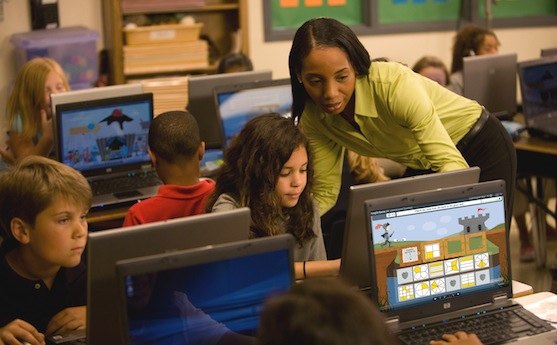
The basic thesis Time To Know is operating under is that today’s current classroom is following a teaching paradigm designed in the industrial age, i.e., a teacher standing in front of a class, a blackboard on the wall and students at their desks. Think of it this way… Imagine time warping a teacher from the 1800’s and implanting her in a classroom in 2010. She could basically hit the ground running with little to no adjustment in teaching style. Quite scary when you think about it.

Time To Know believes there are three main reasons why today’s classroom is ineffective: First, relevancy—or rather, irrelevancy. Kids are living in a digital world with a tremendous amount of stimulus. Expecting them to happily and effectively embrace ‘passive learning’ that requires them to just sit, listen and provide output in exams is simply unrealistic. Second, variance. There no such thing as a homogeneous level of learning and comprehension in a classroom of students. Third, assessment—aka, the feedback loop. In today’s classroom a student could have gotten lost with the material three weeks back, but the teacher would be oblivious to it.

Contrary to partial solutions such as computerized tutorials, or digital whiteboards, Time To Know set out to create a holistic solution designed to migrate from instructional to Constructivist Learning in which learning and knowledge are experience driven.

Due to the nature of the work environment (the classroom), and the content (curriculum), Time To Know has set certain infrastructure and operational prerequisites schools must commit to. These are:

Infrastructure: Every student must be allotted a laptop or netbook with a headset. No more than one student per machine. Every classroom must also be equipped with a laptop for the teacher that is connected to a projector. A WiFi Internet connection is another prerequisite. Ethernet will not do as it restricts inner-class mobility.

Support & Professional Services: Schools committing to Time To Know’s curriculum must be able to provide on-premises technical support. This means that if a student’s netbook experiences technical problems, it will dealt with immediately, rather than having to wait for an IT support professional to make a call days after.

Schools must also commit to provide their teachers with training and support. This sounds obvious, but if mis-handled it could be the Achilles heal of the entire initiative. These services can be provided by Time To Know itself or by a third party.

For all intent and purpose, Time To Know is a software company whose management application, applets and content, all reside on the cloud and are accessible via web browser. There are two main components to the system:

Learning Management System: This is the teacher’s command center, a management application that allows the teacher to review each student’s progress, view trends in the class’ performance, as well as plan for the next day’s lessons.

It also allows teachers to customize learning sequences, assign assessments to students, and create reports of student progress. As each student uses a laptop during class, the teacher can monitor individual progress and communicate with each student unobtrusively.

The application is quite robust, so here are just a few of its many features:

  • Alert Management: Real-time notifications of student progress that alerts teachers on students that require extra attention and assistance.
  • Content Preview & Simulation: Teachers are able to run through lessons at home, allowing them to review lesson plans ahead of class time.

    Once the teacher runs through the lesson in the classroom, the system begins to record data such as what learning activities were used, student achievement, etc.

  • Gallery: Students can submit their work to the shared Gallery area for peer review and class discussion. Teachers can divide students into groups with unique assignments, and then have the groups share and discuss their work in the Gallery. They can also promote collaboration and peer review by encouraging students to write comments on peer and group projects in the Gallery. These can be performed as part of the lesson, or afterward.
  • Administration: Teachers, principals and superintendents can generate various reports to monitor class progress (standard coverage for instance) and achievements (grades). The system allows data analysis, graphing and reporting. The system also comes with an administration component for control of all the technical elements.

The Curriculum: Time To Know designs and produces what it calls ‘full digital curriculum coverage,’ which is a complete year’s worth of lesson plans, learning activities, and homework assignments. To grasp just what an immense undertaking this is, multiply these by the four subjects matters Time To Know targets—math, science, language arts and social studies—and now multiply that by 13 year’s worth of education (kindergarten plus 12 formal years of schooling). To put this into perspective, in a single year Time To Know produces animation with a combined length of one and a half feature films.

The challenge is daunting not only because of the sheer amount of content that requires to be designed and produced, but also because the curriculum has to fulfill alignment to state and country standards. This means that curriculum which received approval in Texas will require tweaking for approval in New York. This explains why Time To Know employees a team of 350 consisting of 120 pedagogy and instructional designers (aka teachers), 60 graphics artists, illustrators and animators and 80 technologists.

To date, Time To Know has produced yearly curriculums for Israeli schools in the subjects of Hebrew, English and math for 4th, 5th and 6th grades. For American schools, it’s produced yearly curriculums for 4th and 5th grades in the subjects of math and language arts. By July 2011, curriculums will be expanded to include grades 3 and 6, with curriculums for science added across all four grades.
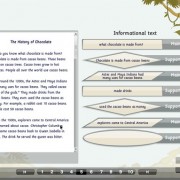
The curriculum combines ‘blended learning’ materials, from movies, to on-screen tutorials, to on-paper exercises. Take for example, 4th grade math aligned to Texas state standards. There are 81 lesson segments, each 120 minutes long. The lesson segments provide a complete coverage and preparation for standardized testing. Lesson segments include:

  • Learning activities based on interactions with Rich Exploration Applets (more on these below). These activities include group, teacher-led, and individual work.
  • Instructional games that directly relate to the concepts taught in the segments.
  • Guided discussions to help teachers motivate and summarize lesson segment concepts.
  • Instructional video clips used to introduce, elaborate, or reinforce lesson segment concepts.
  • Review activities that help prepare students for benchmarks and standardize testing.

Teachers do have flexibility and can mix and match lesson plan modules and exercises. There’s also the ability to add external items such as videos from YouTube for example, or links to sites on the Web. Time To Know discovered from its pilots that American teachers stuck to the structured curriculum, while Israeli teachers took advantage of the flexibility at their disposal and enriched the curriculum with external materials.

The curriculum is presented to and interacted with by the students through ‘Rich Exploration Applets’. These provide guided learning sequences intended to facilitate the development of cognitive learning skills in a sequential and spiraled manner. The purpose of the applets is to motivate students to explore, experiment, discover, and discuss the concepts presented under each subject. Doing so allows students to form deeper understandings of these concepts and how they can be extended and adapted to new situations.
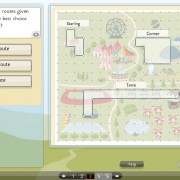
The Geoboard Applet for example (thumbnail on right) is designed to encourage students perform constructive problem solving. It has four areas: The first is the Work Grid in which the student can manipulate different objects, draw lines and polygons, write text, and measure objects. The second area is the Toolbox, which contains different tools for mathematical expressions, drawing, coloring, measuring and entering text. The third area is a collection of visual objects to be placed on the grid. The fourth area is the External Atoms Zone where the student receives instructions and answers different questions regarding his/her conclusions. The atoms, containing the questions and directions, are gradually exposed to coincide with progresses.

If this isn’t compelling enough, the system is also adaptive. A component called PAL, which stands for ‘Practice and Learning’, maps each student’s knowledge in response to answers given in the subjects of math and language arts. As a result, a practice path is then built on the fly to address the student’s specific strengths and weaknesses.

Students also have home remote access so they can go over materials that were taught in the classroom, do homework, or review and comment on items in the Galleries.

Time To Know has been running pilots in four schools in Texas and ten schools in Israel. The expectation for the 2010/2011 school year is for fifteen pilots in the US and around 50 in Israel.

The feedback collected from teachers is quite interesting: 86% reported an increase in instructional time. There was also a decrease in discipline and an increase in individual assistance during class time. Teachers also reported an increased sense of empowerment to guide and support the learning process.

Feedback collected from students showed that they perceived the new learning methodologies as fun and relevant. There was also an increase in motivation and positive attitude to subjects taught. Put differently, the kids started enjoying math(!)

Another dimension was brought from Israel’s Ministry of Finance and Bank of Israel, which both see TimeToKnow’s approach as being able to ultimately increase the GDP.

“LaAsot Kavod LaMedina” is an Israeli expression that sums-up Time To Know’s story. It translates roughly to “to bring national pride” and it’s used to express “bravo, I’m proud to be an Israeli because of ________”. Rarely, if at all, is it used in the context of a startup. In the case of Time To Know though, it fits hand to glove. Respect.

T2K: a Paradigm Shift in K-12 Education from Time To Know on Vimeo.

Advertisement
Advertisement

Comments rss icon

  • >The curriculum is presented to and interacted with by the students through ‘Rich Exploration Applets’.

    Wow, I am glad my kids go a normal school with human teachers…

    • Tim–These are teaching aids, not replacements for teachers. The curriculum is built with the teacher as the focal point of the classroom.

      • Sure, but I once purchased learning software for our kids. That is the most pathetic thing I ever did. My point is: Math book + paper + blackboard >> Software + teacher.

        There are a few things in life were software is bad at. Teaching is one of them.

        • Tim, I’m sorry you had a frustrating experience with some learning software. Education does tend to lag behind other industries, especially with technology. But is that a reason to close the door on all technology use in school? If meaningful improvements are finally happening we should explore them, not ignore them just because of one bad experence early on. I don’t expect technology to ever replace human teachers, but we could sure use a little help preparing kids for the real world… a world now filled with technology.

    • Perhaps the system can teach you to write a shorter article that people will bother to read more than 60 words of

  • Will this ever be possible in the US? I hope so. If a country doesn’t invest in education, infrastructure and in health, then it can’t expect much progress in the future. Israel seems to have all three. Well done.

    • As the post notes, it already is in schools in TX with more on the way in other States.

    • The US doesn’t need to invest more money in education. It just needs to completely reform the system it has. Get rid of the 3 month summer vacation which invites forgetting, make school days longer. Mimic the Asian school systems in key ways, and keep the Western traits that maximize creativity.

      The teacher’s unions are probably a big block to ending the 3 month vacation. I’m sure they love their ridiculously long break.

      • we should also eliminate work vacations at the same time, so people can work 365 days a year, right?

      • >>>>>and keep the Western traits that maximize creativity. <<<<<

        Oo

      • If thats the case than jobs and college should also be year round with no vacations.

        You can forget shit just as easy at a job or in college after taking a break of more than 3 days.

        • Really,,,, you forget as much in three days as you do in three months? The issue with the three month vacation is you spen the first month to two months

        • Really,,,, you forget as much in three days as you do in three months? The issue with the three month vacation is you spend the first month to two months catching back up to where you were in May. That eats up roughly a year of instruction over a k-8 education. Its a pointless waste that only benefits teachers.

      • As a daughter of a school teacher, I can understand the need for the long summer vacation. While in other countries, students have high respect for their teachers, in the US it is terrible.

        I have seen students slap, bite, kick, and punched teachers. Try disciplining the students and their parents come running with the “I’m going to sue you and this school” chants.

        For some teachers, 3 months vacation is a blessing.

        The school system in the US cannot mimic Asian school system if the students and parents will not give respect to the teachers.

        • +1 @Marie and -1 @JP Kab

          American parents need to change and demand that their kids give more respect to teachers, instead of teachers being scared of using a red pen, because it might hurt their “baby’s” feelings. Its horrible, having studied both here and overseas I was shocked to see school kids here chewing gum, eating in the classroom, sometimes using profanity without being punished.

          A private school in the US is equivalent to a regular school in Europe. And regular school in the US is below all European standards.

    • Yeah, Israel is full of progress. Can’t wait til the US is more like Israel.

      Can we designate New Jersey as our own Gaza strip?

    • ??? Have you ever actually experienced the Israeli education or health systems ??? Don’t believe the hype. Israeli are ’smart’ despite the inadequacies of their educational system, not because of it.

      And if you ever get injured in Israel, unless it’s a serious trauma), you’ll probably want to fly to the US for treatment. The wonders of socialized health care… can’t wait for us to get it too.

  • “If this isn’t compelling enough…”

    Sorry, it is not. Sounds like over-kill to me. Students are not doing well because they are most probably distracted by all the technology around them all the time.

    I say we should return not move to the 21st century but rather return to the 5th. Send young boys and girls to isolated education-monasteries far away from any cell-phone tower.

  • An Israeli startup claiming that US must regain its leadership position in education… Cute hutzpah :-)

  • This was definitely worth reading and even going to check out their site. I felt compelled to drop them an email. I can only hope, as a future parent, that a school in my city has implemented this program when it comes time from me to send my kids to school.

    • I can tell you for a fact that when my kid nears 1st grade in a couple of years I’ll be looking for a school with TimeToKnow curriculum.

      • don’t worry, it will be easy to find a school that uses this or some other compu-school garbage. just look for schools that produce consistently crappy students yet always meet their cost goals. look for schools with teacher/student ratios that are worse than stewardess/passenger ratios on a 747. look for schools with inept teachers that have given up and just want to put kids in front of a screen to shut them up until 3:30

        shouldn’t be hard…don’t bother with any of the best private schools, they don’t believe in any of this compu-school bullshit

        • How is the technology supposed to evolve if it’s not adopted??? What of that tech in the future that can tell a story or explain something far better than people?

        • What a load of garbage. Did you bother to read the article at all? You don’t think technology should play any role in education?

          I guess you’re right. What we are doing now is working so well; there’s really no need to change.

          Seriously why wouldn’t people support pilot programs like this? There are some things that education policy cannot change. Uninolved parents and destrucvtive home environments are unfortunately prevalent facts of life in many districts. But there are lots of things that education policy can achieve. It is an absolute national necessity that we look at ways to effectively incorporate technology into the classroom and see if things like year around schooling and longer school days can improve performance.

          • primary school students need interraction with humans.

            until the track record of laptops in the classroom improves from dismal to merely poor, i am absolutely satisfied with not having any computers in primary school classrooms. indeed, i see the lack of computers as preferrable.

            there’s nothing about primary education that requires children on computers…and contrary to what the west coast technotards would have you believe, using twitter is not a life skill

          • TTK blends the use of technology along with the teacher’s personal touch which is hard replace. Staff development and teacher support makes TTK different than other software programs.

            Quote from one our students—It’s way cool to go to school.

      • why would you want to experiment on your kid unless you were forced to?

        sorry, but unless you live in an area with lots of bad schools, I can’t see parents seeing this as a viable option.

  • The trouble with a lot of these education startups is that they are focused entirely on primary education. I would like to see a player in this field offering such a service for high school to college people

    • I built a similar platform and collaborated on the develoent of some of the finest college prep curriculum on the planet – right here in the good old USA. Indeed the company is making significant strides in helping to reform our system. Check out Apex Learning.

      We called the approach ‘guide on the side.’ it really does work well for all involved. The teachers find a renewed sense of delight in their profession as the tools hlep them target instruction. From a business perspective, this is how education can be effectively scaled. Without some level of transformation our current system is destined to fail more and more students.
      Andrew Lippert
      CTO

      • Last year, I took the Apex online health course via my high school to fulfill a graduation requirement. The platform itself looked like it was designed by highly inexperienced developers — for example, it truncated the 18-char password I entered to 15 characters silently, and wouldn’t allow me to log in. The reason I discovered this is because the password-recall mechanism displays your login credentials in plaintext, indicating that they’re stored in a database server-side, which no competent developer would have implemented! This was just one example of the many deficiencies in your platform.

        In addition, the curriculum provided was woefully inferior to any textbook I’ve used. I have an entire document on my hard drive where I copied down the most ridiculous and inane statements in your materials, and when I’m looking for a laugh I sometimes open it up again and read a page or two.

        I appreciate what you and others, including the startup profiled here, are trying to accomplish. I’m sure that computers have the ability to revolutionize and streamline education to a much greater degree than they already have. And like many of the readers here, I’m by nature an early adopter — something being new and untested is generally an incentive for me to try it, rather than a deterrent. But when it comes to teaching young, impressionable minds, I’m about as cautious as they come. We can’t afford to implement drastic changes to our educational system which have the potential to destroy an entire generation based on no more than the preliminary results of a few years. So when I eventually have children, I’ll be taking a long, hard look at the options available, and if the new approach hasn’t *proved* beyond any reasonable doubt that its method is superior, I’ll be sticking with what has seemed to work until now.

  • The biggest obstacle they will face is the Teacher’s Unions. The unions are vehemently opposed to new ideas and anything that means more work for teachers. Also, they have fought assessment tools as that might show that one teacher is more effective than another. Best of luck, though.

  • This is quite possible the largest undertaking of any tech startup I have heard of in a long time. It’s a great idea and hopefully they can get their feet off the ground. Best of luck to them.

  • And whom is going to pay for the notebook/netbooks for

    600 students per elementary and 40 teachers

    800 students per junior high and 40-60 teachers

    1200-2000 per high school and 100-300 faculty

    times all schools in a city or county school district; the price of the note/netbooks would alone be about the price of 6 text books per student.

    • yea, and they have 6 text books to throw out. so throw that garbage out the window. Also, netbooks are practically a hundred dollars each these days….Also throw out a bunch of useless teaching staff too. Teachers in the US are often the stupidest people. There’s plenty of money to budget for this program

      This is an amazing startup. What they’re doing is going to change the world regardless of what backwards people who refuse to change say.

      I’m so thoroughly impressed. I usually do more business oriented startups or fun ones for consumers, but this has me want to quit everything I’m doing and somehow be a part of this. This is the future. I’m pretty young and all i remember is how inefficient school is and how I always managed to teach myself better than any textbook or teacher. There’s so much wrong with it. I look forward to a change.

    • For any full-time student the cost of books – even in city sponsored college – could easily go over the cost of netbook.
      As an example, just in a past semester books for the two classes I was taking (finance and management) cost me around $300. For full-time student buying an iPad with 3G (which totals around $600 – 800) is easily justified since any books are thrown away or sold out at huge discount after the course is over. On the other hand any laptop/netbook has a life span of approximately 2 – 3 years, which makes it much better investment.
      Just think about it :)

    • OIPC ( one IpaD per child) :D . Well maybe a future version of one

  • This is very cool and promising. Any relationship to Ziv Carthy from the management team?

  • Where is the money coming from? I don’t mean the $60 million, I mean the money for implementation by school districts. Being in education, I can tell you there is a move to constructivist education. I saw it at New York University and I see it here at the University of Colorado at Denver. However, it won’t make it into the classroom until there is adequate support for teacher development AND high stakes testing is revamped. Accountability is fine, but the way it is carried out now does not allow for inquiry based, constructivist teaching that lends itself to the digital classroom. Authentic assessments (i.e. projects, not 100 question multiple choice tests) that reflect real world scenarios ought to be the cornerstone of educational practices.

    • Your’e right, cost is an issue, but TimeToKnow is trying to get the pricing down to make it a no-brainer.

      • dude, seriously ffs stop responding to every comment. you are sounding less like a reporter/blogger and more like a shill.

        • I’m willing to risk it, thanks.

          • I think you already did….

            “I can tell you for a fact that when my kid nears 1st grade in a couple of years I’ll be looking for a school with TimeToKnow curriculum.”

            *rolling my eyes*

          • Yo, Unhuh, put your name up. By hiding like that, anything u say means nothing.

            By you’re aversion to technology, it’s clear you’re basically a complete a moron, saying we should send kids to Monasteries like in the 5th century. It’s people like you who refuse to change and grow that hold everyone down–just like ur holding down the author of this friggin article by criticizing the fact that he’s participating and commenting.

            THIS IS ONE OF THE BEST STARTUPS TC HAS EVER COVERED THAT IS ACTUALLY GOING TO HELP PEOPLE.

            YOU’RE A LOSER, SON. GET OUTTA HERE. YOU DONT WANT IT WITH ME.

        • unhuh dude, seriously ffs stop commenting. you are sounding less like an intelligent blog reader and more like a shit- especially the kind that stinks up comment threads everywhere and wastes everyone’s time. ffs fo.

          This is one of the most well thought-out and written articles on TC in a long while and the concept is revolutionary in the way it has the promise of dragging a long-outdated and out-moded educational paradigm kicking and screaming into the digital millennium.

          And it’s also a pleasure to read ‘enlightened’ comments from readers like Eric WIlson who add relevant substance to the comment thread because he’s ‘walking the talk’.

          Just as some people should never be doctors, or judges, or police officers etc., some people should never become teachers (we’ve all had one or more along the way who can be soul-destroying) – and perhaps a ‘holistic’ system such as this can weed out the tumors before they take greater root.

          As ‘Time To Know’ scales over time and expands into other grade levels, and other companies innovate similar models and dashboards for post-secondary education, more students will learn more efficiently in less time, providing a better ROI of time, funds and future benefits to GDP and other markers, and perhaps allowing them even more time to just be kids.

          I’ve never believed in the concept of assigned homework. If a teacher or a study subject is compelling enough, an individual can opt for their own ‘homework’. But kids need time to be kids and an education system should be efficient enough to accomplish instruction and student work within school hours.

          Since technology, and the evolving tools it provides, have become so pervasive, we are immersed in an ‘always on’ knowledge environment and it’s about time education curricula adapted to that. So today’s students are doing ‘homework’ in a sense, even when it hasn’t been assigned because they have more access ramps to new and expanding knowledge sources.

          As for the teachers, it’s an opportunity for them to ramp up their game and feel inspired rather than threatened by breaking free of the generational academic myopia of school boards and unions and realizing they will always be needed to provide context, guidance, supervision and evaluation.

          Thanks for this article Roi – I’m also glad you’re ‘willing to risk it’ to add additional context to the comment thread . TC could up its game by filtering out the moronic interruptions so that the comment threads add substance to the dialogue rather than showcasing the infantile poop stains of the comment trolls whose mothers should never have taken them off the Ritalin.

          • And kudos to James and his comments below (which saved me making the previous response any longer). I recall a boring-as-shit history teacher whose one stroke of unrealized brilliance was to take us to the movie “Cromwell” at the time we were studying British history. It brought the whole era alive in a way that made it an instant ‘get’, rather than listening, half-comatose in class, to the teacher drone on and on from a textbook.

            Think of how James Cameron’s “Titanic” provided a visual sense of the scale of the disaster and its human tragedy in a way a text book never could.

            This is the future – and just think of the portability potential via the iPad, googlePad (and what might have been via the CrunchPad – sorry Michael).

            WTF, math will actually become exciting again.

          • Willem–thanks for the kind words! I really do appreciate it and glad you enjoyed the post.

        • I for one appreciate the input. Thanks for commenting Roi

      • the cost with computers in the classroom has nothing to do with licensing someone’s drivelware, but with replacing and repairing computers on a daily basis

        go ask any teacher in a school system that mandates computer-slavery for students…some students can’t even make it one day without destroying, harming, or selling the pc

  • The problem when a web site like Techcrunch writes about education is that the solution looks a lot like a tech startup, because Techcrunch is about tech startups. However, I’m not sure adding technology boosts education at all.

    • Not true. I’ve learned more and faster from videos on the Science Channel, History Channel, Discovery, etc, than I ever did in School. Well prepared videos make it much easier to absorb and remember a lot of information.

      Interactive content like this is sure to be even better.

      But yes, there certainly is a human aspect. If these games are social networks as well, i.e. where you can interact with other students, then you might just have the perfect combination. It keeps the human aspects and forces it to maintain focus around learning through your avatars, leaderboards and whatnot.

      The bottom line is that anyone fighting technology is fighting a lost cause. i dont even care if the right way is to live at the top of a mountain in solitude learning from my sensei. The technology is happening. It is helping. And unless ur gonna attempt some ambitious goal to bring it all down, ur wasting ur time.

      Technology will help kids learn better, period. It’s not the only ingredient. You need people who care, people (teachers and students) who are inspired to learn around you. You need parents that are proud of your learning, etc. Technology can only bring people together around this endeavor even more, just as Facebook brings people together more than without it.

      • “I’ve learned more and faster from videos on the Science Channel, History Channel, Discovery, etc”

        sorry, but “The Prophecies of Nostrademus” is not what we call serious scholarship

  • School sucks. Kids shouldn’t grow up being surrounded by people being paid to manage them. Born in the hospital, off to daycare, school, office cubicle, nursing home, mortuary.

    A 2 hour a day visit to the library and a little well-designed time online is enough. 3-4 hours a day max. No need to keep institutionalizing kids and experimenting on them. F*** the GDP!

    Oh, and “time to know” is a lame name–typical of education startups. Or maybe Google should change its name to “Time to find”?

    Ugh

    • You may be right but what is the alternative for parents today?
      Someone needs to manage children and the parents are working in environments that disallow the child’s presence. So we hire people to manage our children. A “2 hour a day visit to the library and a little well-designed time online” would require managing as well. If you have children or remember seeing children under 15 at a library you will know that they require some managing regardless of the purpose of the visit.

  • I think the concepts are great. Some of this is in the works at my daughter’s school. The challenge I see is some of the ill-mannered and disrespectful children breaking this equipment. California schools can’t afford that.

    • if you could afford a better private school, your daughter could actually interract with a human instead of a website.

      this will be the big sell for private schools in the future. they’ll be the ones that actually feature human teachers, the public processing day-prisons will be the ones that sit a computer down in front of a screen

      • a healthy balance is possible. one or the other is garbage in this day and age. But to say that this wont be tremendously helpful and will only lead to “processing day-prisons” means nada. It’s up to you and me to make sure that doesn’t happen.

  • dumb dumb DUMB. ask teachers the horror stories about students and computers. first thing, those computers will mysteriously be reported missing within a week, oddly enough at the same time you’ll see them on ebay.

    or the computers get broken. or the students hack them to do IM or surf porn or pokemon or whatever.

    in the end, the teacher ends up being a sysadmin, stuck figuring out a way for Suzie to share with Sammy since Sammy’s dad sold the computer on craigslist for beer money after reporting it “lost”. don’t laugh, this is the reality of laptops in the classroom across the country

    a similar long line of failure followed TV in the classroom. remember channel 1?

    even if these units aren’t broken, lost or stolen, its just a matter of kids zoning out in front of a screen. thats not education. well it is if your goal is ultimately about turning schools into near-zero cost processing factories

    want to know what put a man on the moon? smart guys with sliderules doing math in their head. these guys came out of single room school houses.

    • Who says today’s students couldn’t do math in their heads using a virtual slide ruler on their iPod or smartphone?

      As the prices of portable tablets and other mobile access devices come down over time, out of classroom experiences can more easily be augmented by technology. Whether visiting a museum and accessing relevant historical links, or a retirement home and augmenting the human interaction by things like finding the person’s family tree online, or taking them virtually traveling via Google Earth, there is no need for students to be held captive in “processing day prisons”.

      It takes pioneering and free-thinking teachers, designers, programmers and parents to supplement the tools with human thought and values that provide students with contextual learning experiences.

      As as for mistreatment of computers or surfing porn or pokemon, the root of all that begins at home and the responsibility lies with parents and teachers to instill better values and standards of behavior.

      The sad irony is that many of the sources of ‘knowledge’ kids access online, on TV, in music or at the movies showcase or condone bad behavior and antisocial standards or crowd swarming fear-mongering modes of unethical behavior as purveyed by Fox News, et al.

      Also, how would kids with learning disabilities be recognized in “single room school houses” that are so overcrowded because of impossible teacher-to-student ratios?

      When the day comes that cloud connected tablets are as affordable a component of school-supplies such as backpacks, students becomes less dependent on school supplied hardware and less exposed to the anti-social theft and abuse of other students because of track and trace software.

      Students growing up in this generation won’t settle for just going to the moon.

      • “As as for mistreatment of computers or surfing porn or pokemon, the root of all that begins at home and the responsibility lies with parents and teachers to instill better values and standards of behavior.”

        how’s life in lala land?

        you go to any public high school with a laptop requirement and you try subbing in for the teacher for a month. you are in serious need of a reality check

  • I’ve come across some people who worked for this company and they all still seemed “recruited” to the idea.
    To me, it seems like the right direction to go. Having a kid who attends primary school in Israel i can see how obsolete the current teaching methods are, and how damaging they are to the children’s natural curiosity and eagerness to learn.
    He learns most of his English from using Facebook and playing computer games.

    Seeing the amount of instructive material that has to be produced, it makes me wonder if Time To Know wouldn’t be better off opening their platform and allowing third parties to develop content (that follows certain guidelines, of course).

    BTW the name Time To Know, in Hebrew (et ha’da’at) is a pun for the biblical “tree of wisdom” (etz ha’da’at).

    Good luck for them (and for all of us, if they succeed)

    • It’s no surprise that they feel “recruited.” Teachers hold their value way above what they actually deliver, and couldn’t possibly fathom themselves being replaced by a computer. In reality, most teachers suck and aren’t some fantasy sage of a sensei like in Japan or something. In the US at least, most teachers truly are the least competent to teach. Entrepreneurs have the real ability to teach and more of them should teach. The average person that becomes a teacher cuz they’re too lazy to make anything else happen just don’t have the DNA, brains and passion to teach as well as successful people.

      I’m not the first to say it by any means. And it is a generalization, but it’s true far too often.

      So, again, no wonder so many of the employees of this company feel “recruited.” The company gotta churn out content that match country/state/city standards. So they gotta get instructional design experts that know the game. And the vast majority of these men and woman basically think so highly and what they do that they refuse to see the truth that a computer can and should replace about 50% of them and what they do. Not 100% of them. But 50%.

  • This is great idea… I have worked with number of schools and this type of solution will be of great help.

    There are already many companies that are providing solutions of similar nature but not at this scale and sophistication. Example studyisland already doing this, grockit is trying to do this… Existing solution don’t tie all the aspects of the workflow. I believe there is good potential for TimetoKnow… best of luck to them.

    -Raju

  • Great article, and I think it is great to see the learning process *evolving*. Emphasis for all the haters who think it is being suggested that this completely replace the existing system. There will always be a place for teachers and components of the existing system.

    btw, reminds me of the new Star Trek when Spock was in school and in some type of learning pit.

    • It wasn’t a “learning” pit, it was a “testing” pit. A much better model would be like in Star Wars with Yoda teaching the Younglings…

  • Shouldn’t the question be whether or not the Time to Know method actually works, vs. the relative happiness/satisfaction of the teacher and students? I realize there is likely some correlation between the two, but right now we have no indication that the children in these pilot programs are doing any better or worse – so we’ll need years to assess whether or not Time to Know is providing something that sounds great or actually works.

  • What is the teacher to student ratio?

  • Our schools — our children — need something like this. Great service. Thanks for the article.

  • it is not an article. it is a PR release. at least we know where the 60MM went.

  • The education system is flawed, built on a factory model, and essentially treats kids as prisoners.

    Here’s an excellent interview from The Colbert Report with Cevin Soling, creator of the documentary ‘The War on Kids’:

    http://www.colbertnation.com/the-colbert-report-videos/256926/november-30-2009/cevin-soling

    Time To Know is an excellent concept, and will hopefully reform the education system to be more hands-on and effective.

    As a commenter above mentioned, nowadays you can learn more from Discovery Channel than you can in schools.

    Don’t think an interactive model is on par or better than the traditional model? Take a look at language software like Rosetta Stone, which many people and experts say is a superior and more effective way to learn new languages than classroom instruction.

  • Piggybacking on INTHEWOODS, with a different tack:

    Technology is clearly not the solution to our problems in education. Many of the countries that are leaving US students in the dust, India and China for instance, might not have any technology whatsoever in the classroom. TTK may be a wonderful offering and I wish them success, if the product leads to increases in learning as opposed to folks just being happy with it. At the same time I hope that at some point we will see that the countries beating us, sacrifice to teach their students and they use humans to do it. Until politicians are willing to cut everything in the budget except education, no amount of technology will help us.

    I’d also be remiss if I didn’t add that while this is a tech blog, covering learning assistive technology requires a bit more objectivity and research. A discussion of how this technology stacks up in its segment vs. other offerings would be more beneficial. Ordinarily I would say this post looked more like marketing copy. Quotes from Finance Ministers and claims about GDP are out of place. It seems like a lot of people are proud of this product and that’s good, but an Education Minister or Educational body might be a better and more relevant quote.

  • They talk about the history of learning, but forget a crucial part. Before blackboards there were slates. Each student had a slate at his desk, and the teacher went around helping individual students. Sounds a lot like these laptops, right? Well, then they invented blackboards. Slates were abandoned, because blackboards are better! Moving from a blackboard to individual PCs is a step backwards. What we need are large interactive displays.

    • How are blackboards better? All I can think of is that you can write something on it and everyone can see it. Which can also work with computers. And computers can do a whole lot more than just be a writing surface.

  • I am a daily reader of TechCrunch for years now. I can hardly remember a single article, that spurred such vitriol. Its truly amazing to observe.

    Is source of this ‘river’ the fact that its an Israeli country in the spotlight? Is it that on a personal level many people emotionally relate to the ‘human model’ of instruction? Whatever the answer(s), they run very deep and apparently touch many nerves.

    For those who rant about where is the money going to come from, here a couple of thoughts:

    a) it could possibly be found in the existing U.S. education budget which hovers over $900 billion annually (nearly a trillion dollars)

    b) it could come from within the military budget, which contributes WHAT to the direct development of the nation’s fabric and product (save the diatribe about the Internet being developed by the military- note that I said ‘direct’)

    c) it could come from a tax on gambling. Ever hear of the University of Atlantic City? Truth is legalized gambling has NEVER fulfilled its promise, to pour into the public coffers and help decisively improve the quality of life in the locales in which they operate.

    ————-
    Rio: great article; especially the analogy about a teacher from the Industrial age fitting right in the 21st century. I wonder what such a teacher might say about the staggering drop out rates though (from middle school to high school).

    • What’s an “Israeli country”?

    • computers in the classroom isn’t about spending money, its about saving money. over time it will be much cheaper to sit kids in front of a computer with some institutionalized computer learning system. kids will click and click…no one will get an education but at least they’ll be placated and zoned-out. once the cattle doze off, the teacher can be fired or just downgraded to a hourly wage worker who makes sure the students have their feeding tubes and catheters attached

      and the icing on the cake is that we’ll have to keep importing doctors and engineers from asia where people get a real, no-bullshit education

  • There is no way teachers anywhere accept canned content into THEIR teaching environment, specially if they are constructivists. This sounds like a bunch of software developers with deep pockets who think they know a lot about the educational arena. They’re in for a surprise, I’m afraid.

  • I’m on a school board and I think this is interesting (though it’s not the only out there, of course); I’ll look into it for us.

    But the article really does read like a brochure.

  • Finally a few other real TC readers (as opposed to people hired by the company to flood the comments section) agrees whats up here.

Advertisement

Leave Comment

Commenting Options

Trackback URL
Short URL