I’d probably feel slightly smug, if I didn’t feel so sick.
Smug that after two weeks of me suggesting that social media might not be an unequivocally Good Thing in terms of privacy and human decency, the news has delivered the perfect example to support my view.
Unfortunately it’s hard to feel smug – hard to feel anything but sadness and nausea – when thirteen innocent people are dead.
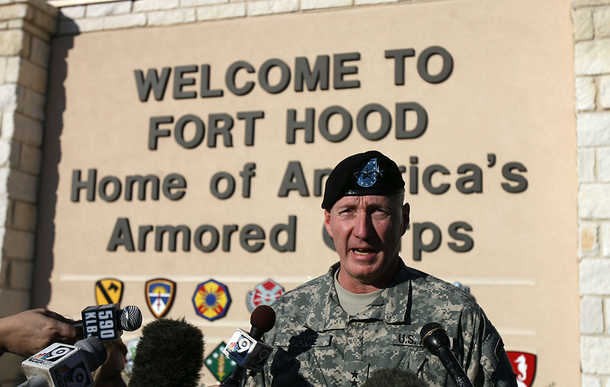
I’m talking, of course, about Thursday’s Fort Hood shootings. Better informed and more sensitive commentators than I have written about the massacre itself and what it means for the US army, and in particular for the thousands of Muslim soldiers currently fighting – and dying – for this country. How do you even begin to process the idea of an American soldier shouting the takbir, before mowing down his comrades in arms? On American soil? At the home base of the Combat Warrior Stress Reset program? Yes, that’s definitely one for the experts to parse.
And yet, the first news and analysis out of the base didn’t come from the experts. Nor did it come from the 24-hour news media, or even from dedicated military blogs – but rather from the Twitter account of one Tearah Moore, a soldier from Linden, Michigan who is based at Fort Hood, having recently returned from Iraq.
When Major Nidal Malik Hasan began his killing spree, commanders immediately put the base into lock-down in accordance with military procedure. Movements in and out were severely restricted, as was the flow of information to the news media. Official statements from army spokesperson Lt. Gen. Robert Cone were the only way for reporters to find out what was happening, while other base personnel focused on treating the wounded, and ensuring the threat had been dealt with. Or at least that’s what the commanders thought was happening. In reality Ms Moore’s was tweeting minute-by-minute reports from inside the hospital where the wounded were being taken for treatment.
Reports like (in no particular order)…
[T]hey just brought a CART full of boxes w/transplant parts in them. Not good not good. #fthood
Ok we just saw a soldier on a stretcher w/2 armed guards walking by He didnt look like he was in great condition.
Maj Malik A Hassan. He shouldn’t have died. He should be in the worst suffering of his life. It’s too fair for him to just die. Bastard!
A FUCKING MAJOR? Are you kidding me? A MAJ! For those of ut hat don’t know, Army MAJ have pretty serious rank. Dick
Someone just started shooting in Commanche 4 which is on post housing. What are these people thinking?!?
The poor guy that got shot in the balls http://twitpic.com/oejh5
That last twitpic link was particularly amazing: it showed a cameraphone image – of a wounded soldier arriving at the hospital on a gurney – taken by Moore from inside the hospital. Unsurprisingly, Moore’s coverage was quickly picked up by bloggers and mainstream media outlets alike, something that she actively encouraged by tweeting to friends that they should pass her phone number to the press so she could tell them the truth, rather than the speculative bullshit that was hitting the wires.
There was just one problem: Moore’s information was bullshit too.
As we now know, Major Hassan was not killed, but rather captured alive. Reports of a second – and third – shooter also now appear to be inaccurate. Whether someone was shot “in the balls” hasn’t been publicly confirmed and, for the sake the of the victim’s privacy, let’s hope it never is – but the point is that many of Moore’s eye-witness reports weren’t worth the bits they were written on. They had no value whatsoever, except as entertainment and tragi-porn.
Two weeks ago, I wrote here about how the ‘real time web’ is turning all of us into inhuman egotists. How we’re increasingly seeing people at the scene of major accidents grabbing their cellphones to capture the dramatic events and share them with their friends, rather than calling 911. Last week I went even further with my doom-mongering, suggesting that the trend of adding people’s homes to Foursquare without permission was indicative of a generation that prioritised their own fun over the privacy of their friends.
In the actions of Tearah Moore at Fort Hood, we have the perfect example of both kinds of selfishness.
There surely can’t be a human being left in the civilised world who doesn’t know that cellphones must be switched off in hospitals, and yet not only did Moore leave hers on but she actually used it to photograph patients, and broadcast the images to the world. Just think about that for a second. Rather than offering to help the wounded, or getting the hell out of the way of those trying to do their jobs, Moore actually pointed a cell-phone at a wounded soldier, uploaded it to twitpic and added a caption saying that the victim “got shot in the balls”.
Her behaviour had nothing to do with getting the word out; it wasn’t about preventing harm to others, but rather a simple case of – as I said two weeks ago – “look at me looking at this.” (I don’t know about you, but if I spotted someone taking a picture of one of my friends or relatives in a hospital then they would probably need a hospital bed of their own. “Tell me, Ms Moore, exactly how did the iPhone end up in your lower intestine?”)
Perhaps fittingly, I posted some of these thoughts on Twitter yesterday, as events were still unfolding. Many people agreed with me – replying with links to the specific military codes that cover what information solidiers can share, and the HIPAA which deals with patient privacy. But plenty of others felt that by criticising Moore I was advocating censorship.
As one reply put it, sarcastically: “Yes indeed, let’s moderate twitter and vet all tweets…” Others pointed out that it was just this kind of photography and ‘citizen journalism’ that ensured that the truth got out during the Iranian elections. What about the global outrage at the famous YouTube video of Neda Agha Soltan, shown dying after being shot by (alledgedly) pro-government agents?
Yes – what of it?
For all of our talk about “the world watching”, what good did social media actually do for the people of Iran? Did the footage out of the country actually change the outcome of the elections? No. Despite a slew of YouTube videos and a couple of thousand foreign Twitter users turning their avatar green and pretending to be in Tehran, Mahmoud Ahmadinejad is still in power. It’s astonishing, really. Despite how successful ten million actual voters marching through Washington, London and other major cities in 2003 were in stopping the invasion of Iraq, a bit of entirely virtual cyber-posturing by foreigners didn’t lead to real change in Iran.
And so it was at Fort Hood. For all the sound and fury, citizen journalism once again did nothing but spread misinformation at a time when thousands people with family at the base would have been freaking out already, and breach the privacy of those who had been killed or wounded. We learned not a single new fact, nor was a single life saved.
What’s most alarming about Moore’s behaviour is that she probably thought she was doing the right thing. Certainly, looking at her MySpace page and her Twitter account (before the army finally forced her to lock it down) we see the portrait of a patriot. Someone who clearly cares a great deal about others, and who – despite the rhetorical question “remind me why I joined the army again” on her profile – is proud to serve her country. In tweeting from the scene, and calling out the media for not reporting the rumours from inside the base, I’m sure she genuinely believed she was helping get the real truth out, and making an actual difference.
And that’s precisely the problem: none of us think we’re being selfish or egotistic when we tweet something, or post a video on YouTube or check-in using someone’s address on Foursquare. It’s just what we do now, no matter whether we’re heading out for dinner or witnessing a massacre on an Army base. Like Lord of the Flies, or the Stanford Prison Experiment, as long as we’re all losing our perspective at the same time – which, as a generation growing up with social media we are – then we don’t realise that our humanity is leaking away until its too late.
As I’ve already said – and I’m even starting to bore myself now – the answer isn’t censorship (which won’t work), but rather in our social evolution catching up with the state of technology. We need to get back to a point as a society where – without thinking – we put our humanity before our ego. With that in mind, and in the hope of hurrying the process along slightly, I’m going to draw these three nay-saying columns to a close, not with yet another appeal to the better nature of social media addicts but rather with two videos that everyone should watch.
The first is a clip from This American Life which I stumbled across on the blog of the comedy writer, Graham Linehan (Father Ted, The IT Crowd). It’s a thing of beauty. And absolutely terrifying. Just watch it.
The second video is much less heartwarming, but far more terrifying – because it’s entirely real. So real in fact, that I don’t want to embed it here. I want you to make a conscious decision to click through and watch it. It’s the video of the final moments of Neda Agha Soltan’s life.
Even if you’ve seen the footage before, you should watch it again. But this time bear in mind the following: the cameraman was not a professional reporter, but rather an ordinary person, just like the victim. And what did he do when he saw a young girl bleeding to death? Did he run for help, or try to assist in stemming the bleeding? No he didn’t.
Instead he pointed his camera at her and recorded her suffering, moving in closer to her face for her agonising final seconds. For all of our talk of citizen journalism, and getting the truth out, the last thing that terrified girl saw before she closed her eyes for the final time was some guy pointing a cameraphone at her. “Look at me, looking at her, looking back at me.”


Enough with the “NSFW” Paul… unless there are boobies.
Is that really all you can say? This was such a serious article, about such a serious issue, and that’s ALL you have to say?
“NSFW” is unserious by definition, especially so when there is nothing on the page to have to worry about.
TechCrunch needs to stop using NSFW as a method of attracting using readers. It’s weak, esp when discussing topics such as this.
NSFW is the name of the column.
That’s another text I liked very much in this column. Paul Carr is every time more sensible and by far not the *social media whore* he claimed to be when he joined TC.
His voice develops into a sorely needed social media conscience. Every week I can’t wait to read his Saturday’s social media sermon.
The painful length of his posts might be part of the therapy: Please read until the end and think a little bit before you comment or twitter about it! And please put that camera phone down.
The title of the article was perfect. And the first few comments just helped prove it’s central point. I’ve gotta admit out of the several dozen stories available at the time, the ‘NSFW’ in the title gave it that advertising edge that compelled me to hit the link. I took the bait only to realize there was much more to the piece. I guess I’m as guilty as the
‘Where’s the boobies Paul ?!?’ crowd.
But ultimately I believe the voyeurism Is just an artifact. An unfortunate byproduct of a new form of communication, and absolutely nothing new.
But here’s where I disagree…
‘What good did social media actually do for the people of Iran’?. Maybe nothing immediately tangible, possibly nothing at all. But at the very least it advertised the positive potential of social media. Clay Shirky gives the best counter argument and some good examples to boot.
http://www.youtube.com/profile?user=TEDtalksDirector#p/search/0/c_iN_QubRs0
You should have used the column title “Ft. Hood shot in the balls”. It would have attracted far more readers.
he uses the f-bomb a lot, so i appreciate the NSFW warning (even if name of the column)
Until the likes of American Idol and Some-people-in-some-country’s-got-talent (I read somewhere that a poll of high school kids said over half of them put “being famous” as their #1 priority) this will never end
.
Was Fort Hood a Criminal act or Terrorism?
http://www.youpolls.com/details.asp?pid=6456
.
It’s NSFW because if you go through the full article + video, you don’t get any work done.
Yeah, that would be true if it wouldn’t be a saturday column
Still about the death of Neda Agha Soltan, important to note there that the bystanders DID do something. The friend of the cameraman was a doctor trying to save her (though I don’t think one can do much using his hands to stop the bleeding) and other bystanders apparently got the shooter as well.
i came for the boobs
This is about innocent people dying. Grow the **** up and have some respect for the people involved and their families.
They weren’t innocent but rather soldiers who fought and killed and got killed by an enemy sympathizer. Lets call a spade a spade shall we?
Wow, what a moron. This is in Texas, not Iraq or even in Obama’s Afghanistan. It’s not even supposed to be an enemy, he wore the same camouflage, the same medals, a fought the same enemy. That is until he snapped and began the heartless killing of several men that were just ready to be through with the war and see their families. A small part of me wishes you were there when it happened. An even larger part wishes you were on the front lines. But, then again, you sound like one of that other moron’s friends… You are a shame to this country and it’s soldiers who died because some lunatic decided he didn’t want to fight as he signed up to do.
I’ll only remind you that not all were soldiers.
@John: It might be good to get your facts straight before calling me out on not calling a spade a spade:
Since when has an unborn child not been considered “innocent”?
How about a physician assistant?
Source: http://news.yahoo.com/s/ap/20091106/ap_on_re_us/us_fort_hood_victim_vignettes
Really dude?! Okay, in reality no one is ever completly innocent, but they didn’t do anything to deserve their deaths. They were fighting on the same side, for the same beliefs. They were brothers and sisters in this battle. They were not enemies; therefore, they were innocent in eachother’s eyes. How are you going to claim these men adn women to be guilty?! Guilty of what?! Fighting for your safety in an unpopular war?! Risking their lives daily for the greater good of Americans?! In that case, yup they are guilty, but to kill these individuals who fight for our safety is ridiculous!
DFTT, remember?
REAAAAAAAAL MATURE!!!!!!!!
Perhaps the answer is education, education, education! The brighter our society, the more they are able to sort out truth from egoism, fantasy, and people that think they are all knowing!
Correct me if I’m wrong, @paulcarr, but I always thought NSFW referred to yourself, rather than the content of this column. Specifically to the fact you are consistently fired from jobs, and are therefore not safe for work. Or am I trying to be too clever?
I was appalled at the images from Vietnam as a youngster – I did not understand how anyone, journalist or otherwise, could stand there and point a camera at a man bleeding or on fire and DO NOTHING.
The rationalization ‘journalists observe’ struck me as the ultimate in narcisisstic cop-outs.
It appears that this pathetic pathology has spread to the general population.
People: if you see someone bleeding, dying, or on fire, GET HELP, DON’T JUST TWEETPIC IT YOU ASSHOLES. Next time it could be YOU.
Just a reality check here. “Professional” media would have been talking photos and trying to interview the wounded had they been present. Even the most compassionate photographer I ever knew shot the photo of the car wreck and THEN went over and ripped up his shirt to stop a little girl bleeding, having arrived on the scene before it was even reported.
I’d love to be able to say a professional journalist would have not spread rumors, but these days that’s a wavy line for a border too.
perhaps you should mention the horrible response from obama and how the major blogs did not cover it?
“I thought the response from Obama was horrible and I wonder why the major blogs didn’t cover it.”
Fixed.
Not that Bush was wonderful, he was far from it, but imagine if Bush had done the same thing… Media would have ripped him a new one… For the record, Bush WOULD NOT have had such a pitiful response.
As a matter of fact, George W. Bush, and Laura Bush, actually secretly visited the victims of the Fort Hood massacre, and they spent “considerable time” comforting the victims.
Where was Barack Hussein Obama? Off cooling his heels at Camp David, apparently.
Disagree all you want about Bush’s policies and conduct while he was in office, but you can’t doubt his sincerity and humanity. For the current occupant of the White House…not so much.
Did you really have to include “Hussein”? My name’s Jack, but I’m certainly no Jack the Ripper. I almost saw your point up until there.
when you talk about W’s “humanity”, you might be overlooking the whole “started a big war in Iraq and directly cost more Americans lives as a result than any other president in modern history” bit…
Oh way to pick and choose.
How about Bush pretending that people weren’t dying at war by not visiting the bodies or going to the funerals as Obama just did recently?
This is such a stupid thing to be judging either President by. I can’t believe you guys are seriously debating this. Neither person is a monster, and neither person likes death. They just deal with it differently (and in many ways identically), and have different pressures and different situations they have to keep in mind at the same time.
Grow up.
“…you can’t doubt his sincerity and humanity”…??? Where were you from 2001-2008?? Do you have any idea how may civilian Iraqi HUMANS are dead because of this “sincere humanitarian???” Not to mention 4362 of your fellow Americans who went there to “defend your freedom” (actually to defend Cheney’s money). Wake up!!
check this out and read the comments folks. and stop drinking kool-aid please, this is AMERICA.
Checked it out—the comment by ”
FlagThisMuz” is typical of those who are comfortable with the “L” word. Those folks also seem comfortable with the “N” word, the “F” word (no, not f*ck, moron) and other labels that allow you to lump people together in groups that you can hate, rather than dealing with them as individuals. Seems to me that it’s this type of person who is really drinking the kool-aid.
Good point, Obama is obviously the root of all evil.
I’m sure he was a key investigator in what happened and must have botched it somehow.
The shooter was probably one of those Kenyan sympathizers. Where is that birth certificate and MY bailout check!
What a fucktard.
This is a tech blog, not Politico, not WorldNetDaily, not the Huffington Post. Keep politics out of this.
@warren you are a douche.
really, you are.
if all we can discuss on techcrunch is how much is Twitter worth and how many hours is it offline today, then, we are pitiful, stupid little monkeys (Vonnegut).
PLEASE LORD JESUS/ALLAH/ANYBODY, make Twitter a paid service. Fill it full of ads and take the masses out of the equation.
They are not up for the job.
They are not evolved enough.
They will screw up each and every time.
They’ll watch the ads and love the digital coupons, just don’t let them type anymore.
I beseech ye’ (or, whatever the phrase is?)
TWITTER has added no value to the World. It has not improved it one bit. BFD, some information flowed from lands-of repressive regimes; it always does. Perhaps the “illusions” Twitter encourages do more harm than good – that is the point of the article, yes? Well worth considering.
Just as YOUTUBE has not made the World better, it has only shortened attention spans, TWITTER is worthless when it comes to dialogue and actual social interaction.
WAR IS PEACE
TWITTER IS SOCIAL
A generation of Fail Whales is upon us — raised on Twitter and mistaking digital personas for Societal interaction.
@endofworld
Thx Twtr.
Oh, one more time, @warren is a douche.
@Marcy, you are the douche. My comment was in response to the parent, who wanted to turn this into a discussion about Obama. My point was that this is being done elsewhere. Why don’t you take in the full contxt before you go spewing venom to people you don’t know and can’t see?
Paul, this was an excellent article that really questions the value and ethics of citizen journalism. You really stand out as one of the more distinguished reporters at TC. Well done.
@warren nice move to sidestep your comment. You cannot (and should not) tell people what they can, and can’t discussion or decide you have the exclusive right to dictate the shape of the discussion.
I know, I’m guilty of it here, since I’m suggesting you should not tell people what you think they may not say; while that is an inherent contradiction, there’s no way around it. Sorry.
The “full context” is that this is a very political discussion about technology, social discourse, and the impact on politics and persuasion.
I suspect the person you were advising to go elsewhere was trying (not very well) to make some connection between official statements and unofficial news, which is well within the overall theme of the Post. Slamming them is not the right approach.
Nothing is off limits. Let people rant. Better that they rant here where THERE IS FEEDBACK than within their little bubbles of Followers and suchlike.
There’s just about nothing more annoying in a Comment Thread than those who tell others not to post. It’s a public forum, and if people go off-topic, well, that’s their right. We don’t need the comment-gestapo.
What’s terrific about this Post is that it brought out many voices. Maybe no one learned from one another, maybe they did.
Oh, by the way, what are you doing to make the world a better place, @marcy?
Yes, Marcy, you are right–Warren is indeed a feminine hygiene product and Twitter is for Twits. Why do we need to know when Miley has lunch, or Paris poops??
It truely is a sad state we are in. Technology is slowly taking away our humanity.
Technology, sadly, isn’t taking anything from us. Humanity as a whole isn’t nearly as altruistic as it is idealized to be or have been. We allow our own humanity to degrade by our insensitivity in regards to current events; In reference to the Kitty Genovese stabbing events in 1964, technology was hardly thriving then as it is today. The bystander effect existed then, as it exists now, and we as people have to deal with the consequences and effects that our actions, or inactions, may bring about. Instead, we, as humans, deflect towards technology as a scapegoat.
Technology only does what we tell it to; if that is to stand-by and watch someone bleed to death, then so be-it.
This is such a strong and thought-provoking article, and I really appreciate the perspective it puts on things. However I must agree with the above poster that the Kitty Genovese attack, for instance, is a prime example that many people have always been more voyeuristic than altruistic. The rise of cameraphones and social networking I believe has made very little difference. People have always slowed down to gape at accidents, now they just allow others to do so too.
And I do believe that Citizen Journalism can be a good thing when handled properly. A few months back a guy was standing on the roof of a house opposite mine, begging for someone to fetch a camera to tell the public as the police threatened him with guns and stun-gunned his dog in an inhuman attempt to make him come down. He promised he would as soon as someone fetched his prescription medication, but the police shouted abuse and refused to help him. There was nothing I could do to help him-the police were holding everyone back, waving guns, and shouting at everyone. All anyone could do would have been to make the incident public. I didn’t have a camera available at the time, but I will always wish I had been able to do what he asked, because I believe that the inhumanity of that situation had already taken place, but documenting it just might have helped.
I think this article is very special, but sadly I think it has more to say of basic human nature than the rise of social networking.
I wish people who cite the Kitty Genovese murder as an example that people are generally more voyeuristic than altruistic would learn more about the facts. The original report of 38 do-nothing eyewitnesses was horribly inaccurate. There might have been 3 eyewitnesses; at least 2 of them did see to it that the police were notified. (One, a young boy, got his father to call; a second got a neighbor to call.)
For starters, read more at http://fwd4.me/3N5
Paul, thanks for this insightful piece. It’s frustrating enough to see professional camera crews misjudge the line between gathering information and interfering with emergency response. The we now have (or, quite possibly, *are*) millions who feel empowered to take on that task for themselves is daunting indeed.
I’m equally concerned that some people think that this post, at roughly 2000 words, is too long. If you’re among them, do all of us a favor: Pull to the side of the information superhighway now and then to read with more effort than it takes to skim, actually process what you take in, and then respond with something more substantial than a tweet.
Complex topics can’t be covered, nor can compelling arguments be made, in sound bites.
Depending on who you ask, that the Kitty Genovese case is a bit of an urban myth:
http://www.onthemedia.org/episodes/2009/03/27/segments/127346
I’m not refuting the general principle, but that case is over-cited as an example of it.
Fully agree. Technology is not the problem. People are people. When there is a car crash people slow down to look at what’s happening, causing delays to the emergency services and not helping. Why? so that they can see what is happening and provide a better account for their friends. This already happens and technology is not stopping of increasing it.
What technology IS doing is bringing visibilty to situations where there was none before.
Also, are you proposing that we should ban all journalism in these situations? And if not why is someone (a “real” journalist) somehow exempt from thinking about resolving the situation over someone else (a “citizen”)? Isn’t a Journalist a citizen too? The fact it most people are voyeurs and bystanders and with or without a camera they would continue to be.
There is not proof that I can see that these citizen journalist would have done anything better if they weren’t “reporting” on the situation.
But thanks anyway for the article. The comments are interesting again. But the genie is out of the bottle. What does the writer suggest? We ban cameraphones? We making reporting when someone is in danger an offense? Of course not. Instead he asks everyone to be as clever and as thoughtful as he and think before they report. Presumably leaving special people like him to report? I wonder what he would do in the same situation?
Twitter and blogging are new information mediums and I trust that people will quickly learn to mentally filter them (as they should have always done with all journalism). If anything, an increasing level of skeptism in the quality of information we receive in general may be the most positive byproduct of citizen journalism.
I am neither citing the number of people involved in the attack, as it is generally irrelevant; the purpose of my post is to point out that people have had bystander-ism for a very, very long time. All it takes is one person not calling-in or helping aid in an attack of that magnitude to show that just like with Ms. Soltan, one person stood, unaiding, taking record of the attack. There were multiple people ALREADY aiding Ms. Soltan but in a case like this, I’m not sure there was anything ANYONE could have done to aid her. But the bystander-ism is noted by the cameraperson. I’m also not stating that we ban social journalism in situations like this, I simply was in protest at the OP’s statement of “OMG TECHNOLOGY IS OUT OF CONTROL!!111!1″. Social journalism, should everything already be under some aspect of control, shouldn’t be banned/eliminated; as it sheds perspective, not truth, on a perspective that may already be skewed by the government or other controlling factors.
Jason
isn’t it the same thing happening when people used to pull out their videocamera to shoot accidents, or reality TV chasing criminals with a helicopter?
who ever said that we social media would replace real journalism? there was a reason we have newspapers. just because anyone can shout doesn’t mean we have to listen to everybody.
Fantastic. Your take on this I mean. The culture of “I’ and “Me” has usurped what was left of the most basic remnants of human decency it seems. Of course there are fine lines to be drawn everywhere, but, per your last paragraph, which of us wants to watch ourselves being watched in our last fucking moments?
Well put sir. Let us all take pause before posting our observations to the world, particularly when they affect our neighbour.
I’d like to expand on Don’s excellent comments, but wonder about this dissenting voice in TechCrunch. After all, TechCrunch is a heavy promoter of the communication channel of minimum contemplation and maximal blather that is twitter. Disingenuous columnists such as MG Siegler have waxed poetic about how amazingly essential and unstoppable that service it. Yet all it promotes is shallow over thoughtful, subjective over objective.
The notions of collaboration, editorial integrity, objectivity, fact checking, those are all thrown out the window with Twitter ‘journalism’. And TechCrunch has hyped the cultural significance of the quips and lies that it facilitates.
excellent post
This is an interesting argument, and, in truth, citizen journalism is a double-edged sword.
I believe that if Ms. Moore presented the information in a more serious and concerning manner, it wouldn’t warrant this criticism. But, her actions clearly call for criticism so that future events can be handled better.
I will say that the good of citizen journalism far outweighs the bad. And with that, we must take the good and the bad, and interpret the information as we go.
My best wishes to those the families of the deceased. This should never happen, no matter where in the world we are!
Oddly enough, this behavior is exactly what we expect and value in professional journalists. If a CNN reporter was in Tehran at the time, he would be castigated if it put down his camera to help a victim; it’s the job of the photographer to put aside his personal feelings and try to capture the scene for a wider audience.
Why should we blame the so-called “citizen journalists” when they do exactly the same thing?
+1 Glen and…
+1 on this interesting and most appropriate article.
But to write off “citizen journalism” as being a panacea and “worse than the alternative” is simply unfair.
As Glen mentioned, those citizens who agree to be citizen journalists may sometimes feel that their reporting need (and ROI, value of the information) exceeds the macro requirement of the situation itself. So… yes, the bigger message about the outrages of her death was more valuable than her (sadly, already gone) life.
The difference is she is not qualified as evidenced by the inaccurate information she reported.
Time moves so quickly…perhaps this means we’ve already moved into the era of the “citizen Andrea Mitchell.”
In fairness, though, in a fluid situation like the one at Fort Hood, even “qualified,” professional journalists can get caught up in the rumors and report false information.
We can hope that their professionalism keeps them away from rumors and unverified information, but if we want our news as it happens, then we’re going to have to put up with short-term inaccuracies, whether they come from the pros or the ams.
You make a great point. Who knows how many professional photo-journalists have witnessed massacres before this moment, and possibly resulted in many more deaths.
“All that is necessary for the triumph of evil is that good men do nothing.”
That, in itself, is a debate of its own.
Agreed!
And how is this different from our current media streams where they “call political races” with 1% reporting… or how local news just covers murder and things relative to their ethnocentric viewpoints…
There’s always a race to be *first*… in fact, I would have chuckled had the first comment been “first!”…
The races that get called when polls close or at 1% reporting are foregone conclusions, confirmed by election day exit polls and voter interviews. It’s perfectly statistically sound to do this in the cases for which it is used.
Dewey defeats Truman. ‘Nuff said.
“Why should we blame the so-called “citizen journalists” when they do exactly the same thing?”
…because s/he is a ‘citizen’ first?
because when everyone’s a journalist, no one is a human.
I don’t think this “citizen journalist” really did anything wrong. You can’t see any details of the victims. In addition she’s not a professional so any media news outlet who picks up on this should keep that in mind as part of their own professional code of conduct. She’s just a “dumb pipe” feeding what she sees and hears to the masses.
If you followed her postings you’re just as culpable. She’s just a person with a cellphone and a twitter account and in no way does that represent agreement to a professioanl journalists supposed code of conduct.
Also I don’t know about how it is in Ft Hood but around here cell phones are allowed again outside of operating rooms and trauma centers. judging from that picture she was in a waiting room.
Slamming her just reeks of elitism. Seriously makes me wonder about the human race when we villify someone for exhibiting standard human behavior.
Dude, does the fact that it is ’standard human behavior’ make it right? Standard or not, we vilify people for acting immorally, and yes, I think taking pictures of wounded people in a hospital for one’s own self-aggrandizement is immoral.
Slamming her just reeks of elitism.
Are you new around here, or did you just take off clothespin off your nose?
Paul Carr, elitist? Quelle surprise!
Actually, professional journalists have been called out at documenting suffering in an exploitative way plenty of times, and it’s a source of debate and conflict within that professional community. War journalists regularly admit to the toll such dilemmas cause them, rather than celebrate it.
Excellent article Paul. Definitely something to think about that a lot of people bypass.
But I think there are two sides to the story and I don’t think Citizen Journalism is a bad thing. But like anything else, in the wrong hands, or the uninformed hands, you get nothing less than bad information.
I am surprised that people are surprised that people behave like people.
The understanding (and use of) social media is far less the understanding of the technology, but the understanding of people, whether the camera is carried by an ordinary citizen, or by a government or its propaganda machine.
In the video of Neda Agha Soltan, she is surrounded by people helping her, capturing the event made her death vivid to thousands of people and may help a cause.
I remember how footage taken in apartheid South Africa helped bring the situation to the attention of the world.
Not each individual shot or each individual bit of footage – but the principle of having multiple sources of news – not only the official one.
To clarify – citizen journalists create a richness to the coverage – a perspective that is different to the official line or the line of “aligned” news organisations. Its unlikely always to be the best, unlikely to be from anything than that parents perspective.
BUT – thats a strength.
Police: As many as 20 present at gang rape outside school dance – CNN.com http://bit.ly/2iqw2a
It’s not just technology.
You say this is an example of how citizen journalism can’t handle the truth, but what you write is about how “professional” journalism is botching it. If one person makes twitter or facebook or blog comments, it is unremarked. If it’s picked up by big news organizations, then it’s citizen journalists who are the problem? How is that so different from the press interviewing people at the scene (such as Tearah Moore) and then quoting them? The reality is that “professional” journalism has a very poor track record for accuracy and decency. That’s for many reasons, including a desire for sensationalism, but a big reason is sloppy research usually consisting of believing what one source or group of sources says and not digging deeper. How is it any different if the source from twitter or from a direct interview? Your complaint is that big media gave this person a platform and the blame for that goes not to social media but, old school media.
Seriously, what do you people have against paragraphs?
+1
And other standard bits of grammar.
Paul, I appreciate you taking the time to think through the changes that smartphones with camera and an Internet connection are wreaking in society. You write thoughtfully, with insight, and, in terms of preserving the rights of patients to privacy, with an understanding of the laws that pertain to privacy and basic courtesy.
Where I’m left frustrated is in your consistent suggestion that those who are watching should be doing something, whether in the hospital or, in the case of Neda, on the streets. As a former EMT, let me say that the last thing I want is a bystander trying to help. Perhaps as a former print journalist, the last thing you want is for citizens to jump in and document?
The example of Neda seems needlessly sensationalistic and as such, not worthy of the point you were trying to make.
I don’t doubt that seasoned correspondents, armed with an understanding of the ethics and laws that pertain to reporting, are needed to convey information from the battlefield or to analyze the meaning of the trends that confront us.
I do wonder whether, however, there aren’t many situations where the “citizen journalists” you deride are providing an important function in the newsgathering ecosystem, whether it’s reporting national disasters, disease, voting irregularities or consumer sentiment.
Now that you’re done with your “NSFW” columns, would you care to seriously consider whether models of “hyperlocal” journalism that marry traditional media to online platforms might have a chance of success?
I agree regarding the use of Neda as an example — it looked like there was a group of men attending to her, I don’t fault the camera-man, and further that image made a huge impact in the world… weighing the pros and cons of that is not a straightforward exercise.
As far as accuracy in reporting, I point to the Balloon Boy incident as a case where the MSM got it wrong. Just because a citizen journalist at the scene got some facts wrong at the outset, she was doing real-time reporting. And yes, some of her tweets were pretty amateur and grotesque. But, I think that the more frequent these situations, the more all social media users will learn about the norms, expectations and courtesies… but we’ll always have our Paparazzis, whether citizen or paid.
“As a former EMT, let me say that the last thing I want is a bystander trying to help.”
Alexander, there are many ways of helping, even after responders have arrived. One is to stay out of the way of the people who know what to do. Another is to help keep other bystanders not only out of the way but also as calm as possible. I have never been an EMT, but I have been first on the scene a few times. In those instances, I made sure to give the first person not needed for more urgent action a specific task: Explain to anyone else who arrived before the EMTs what was going on, tell them what specific help we needed (if any), and encourage them to move along if they could not offer that help. It seemed to make it easier for the EMTs and police when they arrived: People stepped back as their duties were taken over by the pros and, as soon as an officer or EMT had time to answer, asked if they were free to leave.
Cliff, that’s thoughtful. In my limited experience, you provide the standard of care to which you are certified and are able to deliver, ceding primary responsibility to others as they arrive on scene. I couldn’t do much more than to stem bleeding, stabilize injuries, provide oxygen and transport people. That scenario changes if you’re in a wilderness situation. In all of that, communication with the nearest hospital and ER docs available is crucial. You’re right – transferring information to both medical professionals and law enforcement is something a bystander can and should do. And to some extent, that is precisely what a member of the public equipped with a cameraphone can contribute, despite the vigor with which Carr has chosen to deride that role. I agreed with him on any number of points – and the video from This American Life was deeply affecting on this point, in terms of what becoming an observer can do to our involvement in what we are filming. My intention in making that comment was not to suggest that observers couldn’t play a useful role in a crisis. It was to say that when there are qualified staff on scene, documenting what is happening in the absence of mainstream journalists may be useful for those that follow – including news outlets that may use video or audio gleaned on site. I agree with Paul that running such media should not be done without a full understanding of the ethics or privacy rights involved. Unfortunately, many tabloids have had a poor grasp of either for decades.
I have to agree with this. In the Neda case, there were people helping. There was a man that was with her and we find out later the person treating her is actually a doctor.
Perhaps it seems callous to record it but I think there is something to be said about this bit of “journalism” being recorded and released to the world. To some it may just be shocking and grotesque. But to many others it showed the reality of the brutality of what was going on in Iran that words alone could not convey.
I think the problem also lies with the fact that film/photos don’t give the unalloyed truth, but may think they do. There is an old adage in Law Enforcement that if you take statements from twelve eye witnesses to an incident you end with thirteen different truths: what each person says happened, and what really happened. Social media does give each of those witnesses a chance to promulgate their “true” as the real one, clouding the issue.
Where is the middle ground though? The media has flaws, numerous ones, and has been bought, sold, corrupted, unethical and inept all on its own.
Citizen journalism may be flawed in many ways but ask yourself if the mainstream media always truly serves the public interest? I don’t think it always does and whilst it does not then citizen journalism not only has a place in the world but may actually be critical to ensure that the truth is heard.
I’ve been reading about the predator drone attacks on five wedding parties this morning.
It’s blood on Obama’s hands. He could have ordered a stop to all Predator drone attacks on Jan 20th. But he didn’t. Murderer!
Yeah – Bush would never have allowed it! Oh – wait.
Whilst we’re at it – is that communist still trying to force a fairer health system down your throats? Crazy fool.
I agree her actions were irresponsible and that as a society we need to hold each other to a higher standard. However, during any crisis, I would rather receive live unfiltered information from ordinary people on the scene (even if it means a level of inaccuracy and taking it with a grain of salt) than wait for the whitewashed “official” accounts from military, government, police etc.
Of course, it’s the job of mainstream media to question those official reports and investigate/bring us the whole truth. And while I absolutely don’t question the media’s desire to do so, can they? With newsrooms shrinking by the day, will they?
QFT
Paul, a lot of respect for you.
I think your cautionary warning is a good one. We should take a step back and consider our shifting personal and social boundaries.
That doesn’t mean you should condemn the entirety of citizen journalism, and in fact you haven’t presented a case for that. I co-founded a citizen journalism non-profit called The UpTake, and we’re proud to have produced stories not seen elsewhere, either because corporate media outlets didn’t have enough monetary interest (MN senate recount) or we simply had more people on the street with cameras (RNC).
A single eyewitness twitter report from inside an army base, or a single child’s statement that his brother was in the balloon — unverified reports from a single source should always be met with healthy skepticism.
We simply have more raw news and opinion streaming over and around us. We have to be smarter news consumers and triangulate the truth.
It’s true that social media is putting this “news room” mentality into all of us. It’s not clear yet where that will take society, but it will change it. Will it become acceptable to behave this way?
As with other man-made tools, “technology” itself isn’t responsible for harm done. It is the people who use it.
And for some reason I can’t get these cheesy 80s song lyrics out of my head now:
“We got the bubble-headed-bleach-blonde who
Comes on at five
She can tell you bout the plane crash with a gleam
In her eye
Its interesting when people die-
Give us dirty laundry
Can we film the operation?
Is the head dead yet?
You know, the boys in the newsroom got a
Running bet
Get the widow on the set!
We need dirty laundry”
“..get back to a point as a society where – without thinking – we put our humanity before our ego.”
I was the main person behind @FTHoodshootings, the Austin American-Statesman’s Twitter account. I saw the tweets by Ms. Moore on Thursday afternoon/night but didn’t retweet her. I did retweet some other posts that were made by people who were in Fort Hood, but they were not tweets that needed to be verified (people just saying they were scared or that the mood on the base was tense, etc.) If you are a blogger or a mainstream media organization, you can use citizen journalist reports, but you better verify anything that needs verification and you ought to respect privacy rights. Use your judgment, just like you do when you gather information from any other source. Citizen journalists can be a good source for information. Journalists just need to do their jobs.
Well, it’s all good, what you’re saying, but there’s quite a bit of self-righteous indignation there, too, meant to vaunt your own class and your own self.
Say, we’re not the ones who thought up this term “citizens’ journalism,” we citizens. It was concocted by those on the left in Indymedia who thought that “The People” should take over media. As per usual with such extreme ideological movements, the citizens of that sort weren’t very civilized.
And..There is some value in these tweets, even if they are not about citizenry or journalism. They are just a source, the kind that a reporter might interview among many. You learn that this shooter is a major. True, no? You learn that someone has been wounded and is still alive. True, no? And you still didn’t refute that in fact “no one was shot in the balls”. And she conveyed her opinion about the events, “this shooter should have died” — well, deal with it. And lots of people thought he had died, when he hadn’t, why pick on a Twitterer?
In fact, perhaps what is lurking underneath all your botheration is the idea that a Muslim has shot his fellow soldiers, this has terrible ramifications that you want to leave to others to “parse,” and none of these conclusions are politically correct. So you are rechanneling your rage at *that* to the inept twitterer.
I realize you’re not calling for censorship, but you’re calling for some sort of netiquette that you and Andrew Keen (you’re more similar than different) get to decide for the rest of us, and I’m not playing. You don’t get to.
Live by the sword, die by the sword. You get on twitter to hustle your articles and thoughts, so does everybody else get on it to hustle what they hustle.
SOOOO typical of one of the paid-for Silicon Valley elite to complain about technology’s inhumanity when displayed *by the users* and never look at the people *who made this technology* who are only celebrated.
Wikipedia shuts down entries of people who are freshly dead to prevent all kinds of weird stuff that happens. It is not beyond rationality to suggest that Twitter could also block tweets from a national tragedy that appeared inappropriate or spread dangerous rumours on an emergency basis. They are a private company with discretion as such, fulfilling a public role.
and as for the person who shot the video of Neda. What do you think was really possible to do on a square in Tehran in terms of getting medical aid to a severely wounded person? Sometimes all that is possible is being a witness.
Remember Akhmatova’s, “Can you describe all this?”
REQUIEM
No, not under the vault of alien skies,
And not under the shelter of alien wings –
I was with my people then,
There, where my people, unfortunately, were.
1961
Instead of a Preface
In the terrible years of the Yezhov terror, I spent seventeen months in the prison lines of Leningrad.
Once, someone “identified” me. Then a woman with bluish lips standing behind me, who of course, had never heard me called by name before, woke up from the stupor to which everyone had succumber and whispered in my ear (everyone spoke in whispers there):
“Can you describe this?”
And I answered, “Yes, I can.”
Then something that looked like a smile passed over what had once been her face.
Also, as for their being more than one shooter or for Hasan being dead, that’s what officials were telling the public – it wasn’t exactly speculation.
Kudos on an astute post.
This is exactly what crossed my mind when I saw the last frame of this front page Digg.com submission: http://digg.com/d316s3c
What a sad state of affairs.
Bravo Carr!
Just a thought.
The Twitter account of one Tearah Moore, has but 20 or so followers, and she is following not much more. Yes, it is true that the information is accessible to a wider audience (when they find it), but by and large, one tweets for one’s own network, not the wider audience. Let’s not forget that.
By its very nature, real-time coverage of real-time events is not conducive to exhaustive analysis. It is much more caught up in the *emotion* of the moment. Analysis comes later. Which means its no longer real-time … which is what *real* journalists do. They check the facts, strip out emotion, and convey the essence of the story. It takes some doing, to step back from the emotion of the moment, and be precisely analytical.
I’m not condoning her actions. Just trying to understand the context.
I’m glad you’re providing a needed corrective to the bandwagon of citizen journalism here. It’s dangers to the individuals involved do need to be addressed. The hubris involved in the self-justification necessary to shelve one’s human compassion in service of some nebulous higher cause is fundamentally not much different from the one motivating Hasan’s dastardly murders, although the degree is hardly comparable.
On the other hand, your argument of re-injecting some basic humanity into the social evolution our new technologies, as well thought-out as it is, captures mainly the perpetrator’s side of the equation. I have faith that the new media competencies required to navigate the explosion of journalistic perspectives now possible are already well underway on the side of the receivers of such information. We must quickly learn to suspend judgment of the content of a given source until its reliability can be evaluated properly. We must learn to say “I just heard a tweet that…”, or “I hope this isn’t true, but I heard…” until either a more trusted source can confirm, or the multiplicity of less reliable sources comes to a consensus of sorts. I have confidence we’re learning to do just that.
Of course at 8:16 I meant to say “there” not “their.” It has been a long past couple of days. I don’t fault for a witness at the scene to be breaking some rules of journalism and ethics. Or even human dignity. I do fault journalists who run with material without using good judgment.
Thank you for bringing this perspective. Yes, it is about journalists doing their jobs.
What job is Carr doing then, banging on these people that journalists would simply sort through even if there were no mediation of Twitter, but they were even on the scene.
He is performing the job of opinion columnist, for a class of people who have made a technology that they want to control and not have other people use in ways they don’t like.
“…get back to a point as a society where – without thinking – we put our humanity before our ego.” When and where did this ’society’ exist? I’ve never seen it. As far as reporting goes, professional reporters have not participated in saving lives or getting involved for the sake of the story, picture, or video. Now that it is amateurs you want to point fingers? The professional media does this all the time. It’s OK because they are professional? Give me a break. Some reporters are crappy and selfish and some are fantastic. Do you really expect amateurs to be any different? To be more noble??? She was right to do her best at reporting what she saw. People will learn over time how to do it better. It is too new now and people are learning how. The picture that she took was amazing and brought the story home more than anything else I have seen in mainstream media. I leave you with one thought, who was first blamed by the media for the Oklahoma City bombings? Think about that while you re-read your self-serving post designed more for Google-juice then any noble cause on your part.
Depends on whether she was on duty, I’d guess.
Bull.
The myth that journalists run around pursuing this or that story while watching other people die is pure celluloid fantasy, and that you believe it says a great deal about you and your appetite for movies, not journalism.
In the reams of newspapers published throughout history, and the miles of film aired, and years of radio broadcast — sure. Sure there’s been the exceedingly rare example, somewhere, where some guy put his story or photo first. Head on over to Google and find it. But don’t let’s pretend you’re describing reality.
Not sure what side of the argument to take.
Having “citizen journalism” is and isn’t such a bad thing. Sure you will have attention whores who enjoy doing cartwheels in bikinis on the beach because they want the attention.
On the other hand conventional media is often unable to get the first hand account of many news items because conventional media cannot be everywhere.
I agree that this solider violated the patient’s privacy but unless this person is a healthcare professional I do not believe HIPPA applies.
Let’s take the example of the Neda Youtube link that was posted. Having a camera stuck in her face isn’t the most palatable thing to do as she is dying but on the other hand if that video wasn’t taken then a lot of the awareness regarding what has happened in Iran would not have occurred. Neda’s publicized death, although tragic, put a face on the Iranian election issues.
So on the one had I think citizen journalism is a good thing — a lot of images/video/commentary that conventional media is unable to obtain is now obtainable thanks to technology. Unfortunately, sometimes it may be obtained in an unconventional manner. But that is what citizen journalism is all about: it is unconventional.
Would I want to have a cellphone camera stuck in my face when I am dying? No. But if the video goes viral and sends a message to the masses that something is wrong and needs to be corrected based on my death then I saw stick 100 cellphone cameras and 2000 microphones to video and audio tape my final death moans.
“How do you even begin to process the idea of an American soldier shouting the takbir, before mowing down his comrades in arms? On American soil?”
So, you wanna mow’em all down before such thing occurs again? What kinda comment is that?