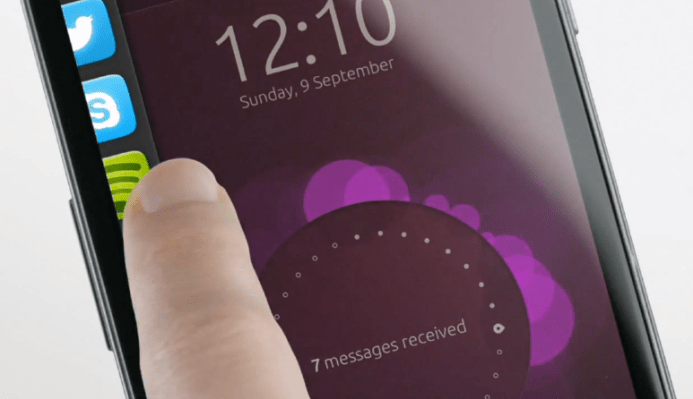
After spotting it on video and briefly playing with it at CES, Canonical’s mobile-friendly version of Ubuntu will soon be available for the truly curious to muck around with. Starting on February 21, developers will be able to load the build onto their Galaxy Nexus or Nexus 4 — on the off-chance that you’re attending MWC like we are, Canonical will be on hand to flash your compatible hardware for you.
As you’d expect, the release is intended to familiarize enthusiasts with Ubuntu mobile, but Canonical has also released templates, a preview SDK and an app design guide to give us all a better understanding of the development process involved.
Curiously, developers looking to make their mark in a relatively new mobile environment may end up working with a slightly different distribution process at first. Canonical confirmed early on that Ubuntu for phones would launch without a centralized app store in tow. As Canonical product manager Richard Collins put it in an interview with Engadget, the company is going after a market segment “where users are primarily interested in being able to use a core set of applications” rather than a picking and choosing pre-loaded storefront full of them.
It may seem like a crazy omission for a platform that’s being pegged with potential in markets as varying as enterprise and developing economies, and that’s at least partially because of how these Ubuntu apps are meant to work. You see, the sorts of applications that will ultimately run on an Ubuntu-powered phone will also run on Ubuntu PCs, televisions, and tablets in addition to just smartphones The onus on developers then is to craft the sort of all-encompassing experiences that work across these different devices, a task that’s no small feat even for experienced designers and programmers.
Naturally, that extra work can yield some big gains in terms of stickiness too — this sort of one-app-fits-all mentality may mean that the apps developers do wind up creating for Ubuntu phones can follow them as users bound from device to device, a compelling argument for adopting the Ubuntu platform as a whole. Sure it’ll take plenty of work to make sure these experiences are actually worth using, but at least Canonical is giving the app development world at large a bit of lead time.