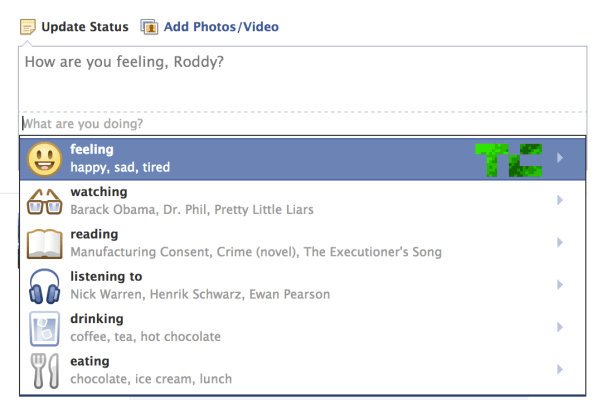
Facebook is poised to get a lot more expressive. Today it began tests of a new status composer that lets you say “what are you doing?” by selecting from different categories to share activities such as feeling, reading, or eating. You can then choose a specific emotion or piece of media or add a custom text description and post something like “Niners in the Super Bowl — feeling ecstatic :) “
Facebook is testing this new visual activity sharing status composer with some users on the website and its mobile site. It could inspire people to share more frequently. Instead of just adding a plain text update, you can select from feeling, watching, reading, listening to, drinking, or eating. Then you can pick from pre-made options such as happy, Game Of Thrones, 50 Shades Of Grey, Radiohead, coffee, or ice cream. Alternatively, you can write your own emotion, piece of content, or cuisine.

Visual status updates could help Facebook fend off emoji messaging apps like Line, media consumption sharing apps like GetGlue, and the smiley-laden Path. It follows Facebook testing a bunch of new standard status update prompts like “What’s going on, Josh?” and the somewhat creepy “How are you feeling, Josh?”
Along with being fun for users, it could be a big help to advertisers, though Facebook tells me it’s not piping this data into its ad engine just yet. By selecting your current activity instead of merely writing it out, you structure data for Facebook. That could eventually help it to connect you with advertisers who want to reach people who frequently watch TV and movies, or listen to music, or eat at restaurants.
If you choose a particular pre-formatted emotion, piece of media, or food, Facebook could potentially use that behavior to pinpoint you with ads. If you listen to a Daft Punk song, it could target you with ads for their new album or nearby concert. Coffee shops might be able to pay to reach coffee drinkers, and Netflix would probably love to target sad users who could be primed to stay home and watch some videos. Going further, Facebook could even sell “Sponsored Activities,” where advertisers could pay to have themselves suggested as what someone was up to in the category selector.
This all mirrors Facebook’s “action spec ad targeting,” which lets advertisers target you based on your activity in Open Graph-connected apps like Spotify or Foodspotting. Perhaps Facebook should just be ripping this data out of plain text updates with basic natural language processing, but this is a start.
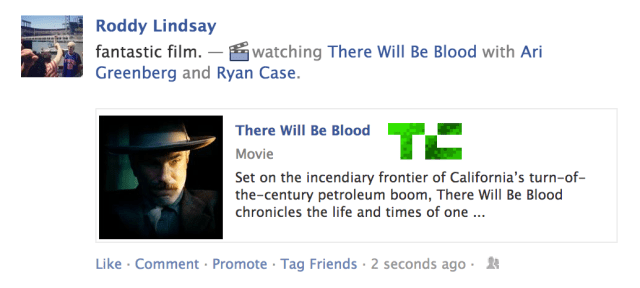
Facebook didn’t provide many details but noted:
It’s just a new way for people to visually represent what they’re doing and how they’re feeling through their Facebook posts. It will only be available to small set of people. This isn’t integrated into Graph Search. It’s just a small test to see if people are interested in sharing their actions in a more visual way.
If rolled out, the visual status composer could be very popular, as it will make people’s status updates stand out in the crowded feed. It’s a subtly brilliant move for Facebook that simultaneously lets users express themselves while building its knowledge of who they really are.