
Yandex begged Facebook not to shut down its social search app Wonder that launched this morning. But the explanation Yandex’s lawyers sent us for why it’s compliant with Facebook’s policies didn’t stop Facebook from blocking all API calls from Wonder, Yandex confirms. Facebook tells me it’s now discussing policy with Yandex. The move follows a trend of Facebook aggressively protecting its data.
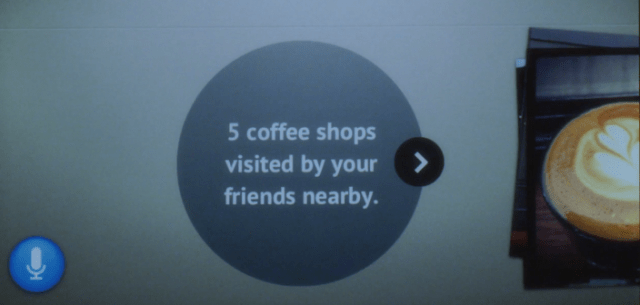
Wonder has, or should I say had, big potential. When I broke the news that Yandex was readying Wonder earlier this month, I detailed how the voice-activated social search app for iOS let people see what local businesses friends had visited or taken photos at, what music they’d been listening to, and what news they had been reading. It essentially reorganized Facebook’s data into a much more mobile, discoverable format.
Unfortunately, Facebook’s Platform Policy says “You must not include data obtained from us in any search engine or directory without our written permission.” Facebook would not confirm that it has blocked Wonder, though Yandex tells me it received an email from Facebook that its data access had been revoked. Wonder is still able to access Twitter, Foursquare, and interestingly, Instagram data. However, any Wonder user who tries to log in through Facebook is getting this error:

Though Facebook did confirm its policy against competing search engines still stands. The two companies are currently discussing the future of Wonder. For now, though, the Google of Russia’s larger integrations with Facebook will still have access to the social network’s data.
The policy enforcement confirms rumored fears from Yandex that Facebook would shut down Wonder. Yandex tried to preempt this and disuade Facebook by sending us this statement which we printed alongside the launch this morning:
We note that Yandex is not in violation of Facebook Platform Policies providing for restriction to use data obtained from Facebook in a search engine or directory for the reason that Wonder is not a search engine or a directory. Our application is a personal assistant that helps browse and organize information that is exclusively available to and associated with relevant account of the relevant user in various social networks and services.
On the contrary, [a] search engine is conventionally understood as an information location tool which automatically indexes tens of thousands of publicly available websites, fetches information with unrestricted access and is freely accessible to any Internet user. In addition, we would like to note that Wonder requests [a] user for specific permission to access each portion of information available to the user through a social network or services and never accesses information or data which is beyond the consent, availability for or extent of permission expressly granted by the application user. It is further to be noted, that the application does not perform any automated operations, unless these are specifically permitted by the user.
But last week, Facebook blocked voice messaging app Voxer’s access to its Find Friends feature that lets people recreate their Facebook social graph on other apps. Facebook told me this was because it didn’t want competing messaging apps taking advantage of its data if they weren’t contributing much back to Facebook. Voxer only offered a very buried “share to Facebook” option, and since the app was designed for private messaging, few people probably used that option.
It seems that Facebook has matured to the point that it’s willing to trade its status as an “open platform” in exchange for preventing competing apps from stealing its value and users. If Facebook doesn’t handle these situations delicately, it could cause a chilling effect that disuades other developers from building on top of it.