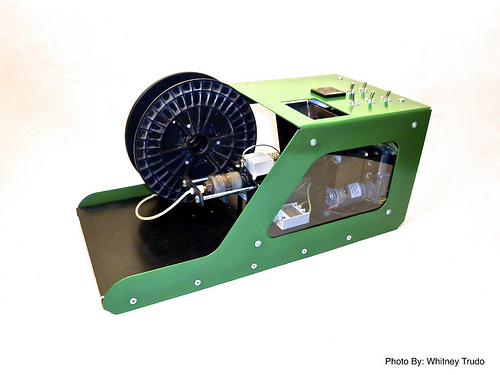
A fascinating project is making the rounds this weekend that could change the way we think of 3D printers. The Filabot is a robot that can turn scrap plastic into 3D printer filament, thereby allowing an almost endless supply of material for prototyping and manufacturing.
While it’s probably not that exciting for non-hobbyists, the Filabot is essentially a way to make the raw materials used in products like Makerbot out of stuff you’d throw away. The creator, Tyler McNaney, ran a Kickstarter campaign last year and he is slowly but surely bringing the devices to market this year.
Obviously you’re going to run into problems with such a small system – the impurities in the plastic and bubbles being of primary concern – but at about $50 a spool, PVC isn’t cheap and if you’re printing quite a bit of prototype hardware there’s room for a bit of error. Kickstarter backers paid $350 for their Filabots and a “public” price isn’t yet set.
While there are problems with any recycling technology, the Filabot is a fascinating study at the potential for in-home 3D printing. Imagine, for example, printing out repair parts or toys using stuff that you would normally recycle? It’s a wonderful example of technology finally digging us – imperceptibly slowly, I’ll grant you – out of the plastic waste problem.