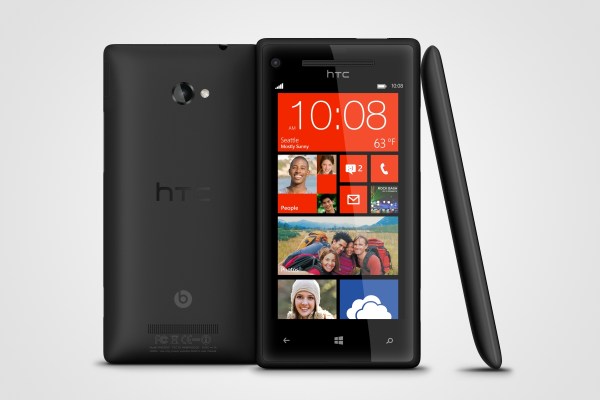
HTC is said to be dropping a planned big-screen Windows Phone 8 smartphone, which was intended to go toe-to-toe with some of the latest Android devices with large displays, including HTC’s own Droid DNA. The reason HTC scrapped the plan is reportedly a lack of high-resolution screen support in Windows Phone 8, according to Bloomberg, since Microsoft’s mobile OS only offers up to 720p resolution, while big-screen devices are mostly now using 1080p or greater.
HTC figured that big-screen output on a Windows Phone 8 device that can’t compare to Android alternatives available with similar dimensions in terms of resolution was a losing proposition, according to Bloomberg’s source. That’s likely a wise assessment of the situation, and one made with the benefit of a few months’ worth of sales data on HTC’s existing Windows Phone 8 offerings, including the 8X and the more recently launched 8S.
The Windows Phone 8S, a budget-friendly offering the company showed off on stage with Microsoft at a special WP8 keynote launch event, was already scrapped by HTC for the U.S. in a move that was explained only by way of the manufacturing saying it wanted to focus on its flagship device in that market. But the two bits of news taken together could suggest a different story, one in which HTC isn’t seeing the upside of devoting too many resources to Microsoft’s mobile platform, despite a big push by Redmond to portray HTC as a flagship smartphone partner pretty much on par with Nokia, with whom MS has a very cosy relationship.
Fortune hasn’t been especially kind to HTC recently, with projections from the company putting quarterly revenue at its lowest point since 2010. Microsoft hasn’t yet put any solid numbers on Windows Phone handset sales, noting only that it is selling them at a much faster rate than it did with Windows Phone 7 devices a year ago. It’s unclear how many of those devices are made by HTC as opposed to Microsoft’s other OEM partners, but taken together, these recent reports of HTC backing away from WP8 as a platform suggest the numbers likely aren’t that high.
Microsoft needs some room to run to get Windows Phone 8 up to speed with the major players in the market, and to do that it likewise needs manufacturing partners who also have that luxury. HTC likely isn’t the best candidate, because despite the fact that they make excellent hardware, their financial picture hardly gives them a lot of wiggle room for investing heavily in a platform that will take time coming into its own.