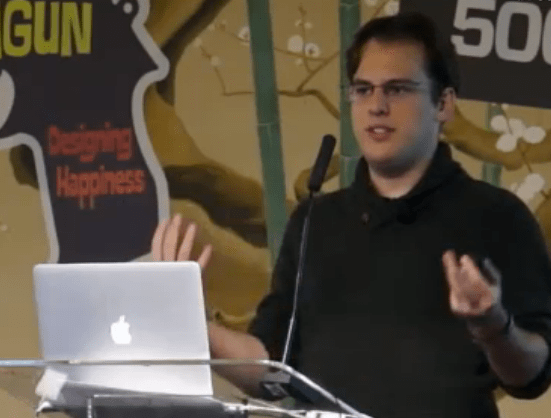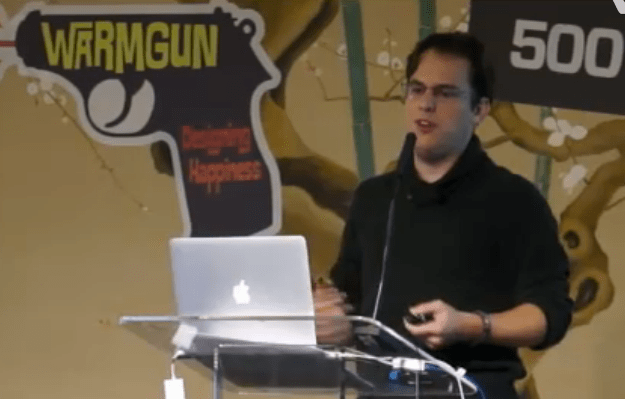
Mike Krieger, Instagram’s founder, thinks you can build apps that fit in the real world by watching what people want, not guessing. He presented his eight core product design insights today at 500 Startups’ Warm Gun conference. Here’s the cheat sheet to his talk.
“Just because you’ve Googled something doesn’t mean you’ve learned,” Krieger explained in the intro to his design talk. To build something that solves a problem, “You want to know people better than they know themselves.” For example, if you’re trying to disrupt the shopping experience, you have to actually know what the existing shopping experience and behavior set is. “Go to The Gap and watch people shop for three hours,” is Krieger’s advice.
You should come away with serious insights, not just random facts. Krieger says his favorite definition of insight is “Something you’re really excited to tell strangers about on the train.”
And now, Mike Krieger’s Eight Principles Of Product Design:
- Draw On Previous Experience and Understanding – The biggest problem is startups in search of a problem. Chase what you’re passionate about; you’ll probably already have knowledge in the space.
- Have A Hypothesis About How You’re Different – Have a point of view about your startup. Why is there a special opportunity for this now?
- Never Build Without Sketching – Mike says he and Instagram co-founder Kevin Systrom would go to a cafe with little iPhone design pads where “we’d build and throw away entire features. You’d waste three or four pieces of paper, not three weeks of coding.”
- Learn In Weeklong Increments – Start with a question: “Will folks want to share photos on the go? Can we build filters that look good?” Spend the week investigating, and by Friday have a conclusion and move on.
- Validate In Social Situations – “We called this the Bar Exam. If you can’t explain it to the guy or girl at the bar, you need to simplify.” Don’t just test with your techy friends.
- Know When It’s Time To Move On – “I know ‘pivot’ has become a dirty word, but if there’s no unanswered questions left, then it’s time to move on.”
- The Wizard Of Oz Techniques For Social Prototyping – You don’t need to build everything at first. You can be the man behind the curtain. Krieger says him and Systrom tested an early version of a feature which would notify you when friends joined the service. Instead of building it out, they manually sent people notifications “like a human bot” saying ‘your friend has joined.’ It turned out not to be useful. “We wrote zero lines of Python, so we had zero lines to throw away.”
- Build And Maintain A Constant Stream Of Communication With Your Audience – Don’t spend months building something without any idea if someone actually wants it.