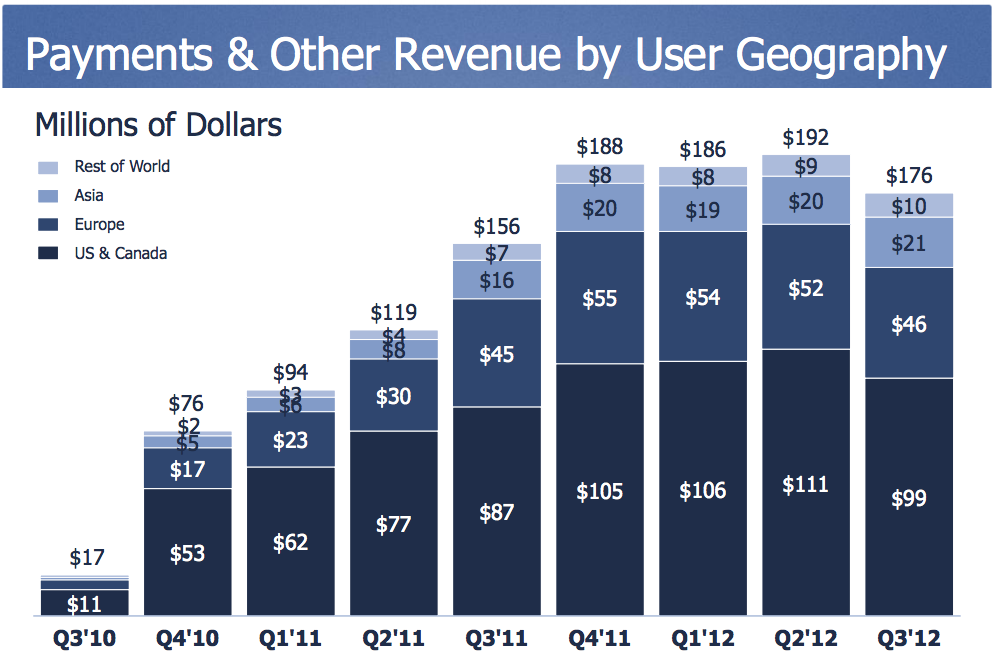
Mirroring the pain that we’re seeing across the entire social gaming industry as players shift toward mobile devices, Facebook’s payments and fees revenue declined 9 percent quarter over quarter to $176 million from $192 million. The company may be up 13 percent year-over-year in payments revenue, but you can see a clear peak in this revenue stream happening over the first half of the year.
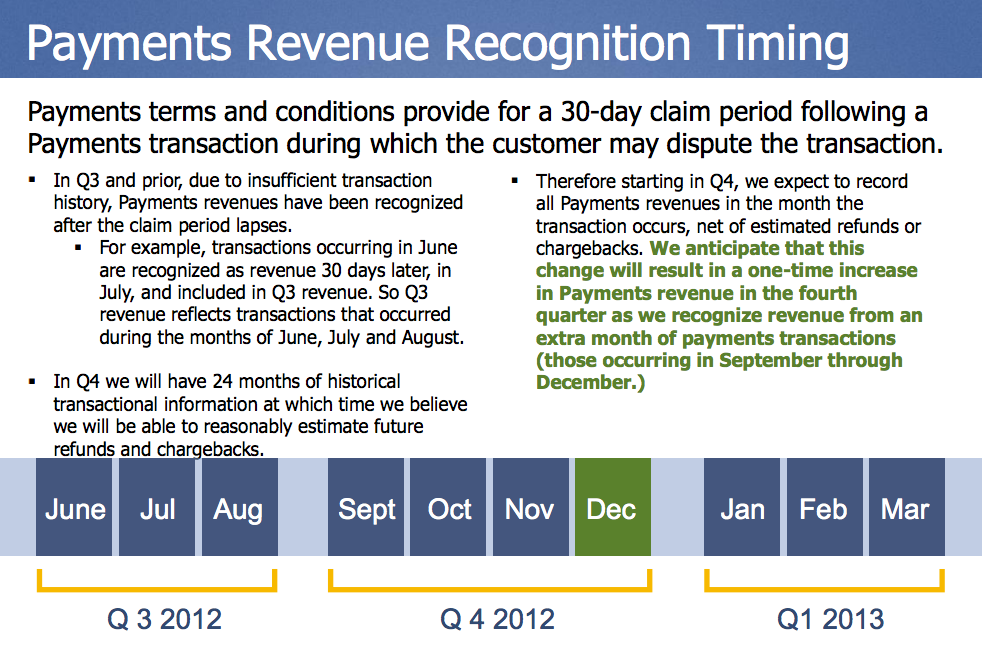
Facebook says this figure may rebound this quarter because it’s changing the way it recognizes payments revenue. Before, consumers had a month to dispute charges so payments revenue would actually be recording transactions that were at least a month old. This quarter, the company will record payments revenue as it happens, so there might be an artificial bump this quarter.
That said, there are larger forces at work affecting this line of business. Gamers are transitioning toward mobile devices, where Facebook doesn’t earn a direct revenue share as Apple and Google do for the iOS and Android platforms. The company is essentially trying to come up with a replacement business through mobile app install ads. Because apps that generate a lot of revenue per user (like games or e-commerce) spend millions of dollars every month on marketing, this would be a way for Facebook to earn an indirect share of this revenue.
At the same time, Facebook has made calculated bet to tone down on spammier types of games on the platform, which has curbed growth for some of the company’s earliest and best-known third-party developers. They’ve also made tweaks that favor games with longer-term engagement, which basically helps out mid-core developers who make more action-oriented games that appeal to smaller groups of users who spend more.
Because of this, payments revenue has remained relatively stagnant for the last several quarters. So it’s no surprise to see a sequential decline right now.