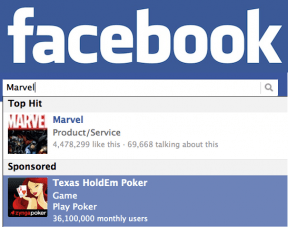
Just a couple of weeks ago, Facebook officially launched its Sponsored Results program, which allows advertisers to place sponsored links in the social network’s search results — and the early results are impressive, according to social advertising and analytics startup Optimal.
Optimal has been running Sponsored Results campaigns for its own customers, but it also tracks brand activity and fan value on Facebook through its Optimal Index (viewable on the company’s home page). So CEO Rob Leathern used the data to answer two questions: Do these units help advertisers target a new audience? And are they actually effective? (Spoiler: Yes and yes, at least so far.)
On the question of reaching a new audience, Optimal looked at the number of people who would have been reachable by targeting a given search term, and then compared that to a brand’s Facebook fans (or others who could have been targeted with existing Facebook ad units). For example, during the seven-day period that Optimal measured, “Facebook” showed up in 24,800 US searches (yes, apparently people are searching for Facebook while on Facebook), and only 21.9 percent of those searchers were fans. The percentages are similar or lower for the other top brands on Facebook, like YouTube (20.8 percent), Coca-Cola (2.7 percent), Disney (22.3 percent) and MTV (17.4 percent).
In other words, if YouTube had placed an ad on the search term “YouTube”, it could have reached 24,620 US searchers, and nearly 80 percent of them would have been a new audience, or at least people who weren’t already Facebook fans. Among all the brands that Leathern looked at, he says there was a weighted average of 7 percent overlap between fans and searchers.
On the question of effectiveness, Leathern isn’t taking a comprehensive look at big brand data, but instead providing anecdotal evidence from Optimal’s campaigns. Those campaigns covered a variety of categories, including political, entertainment, and consumer packaged goods. The clickthrough rates ranged from 0.7 percent to 4.1 percent. Leathern says that on the low-end, the campaigns performed at least 10x better than normal Facebook Marketplace ads. Over time, those numbers will “normalize” and go down, but he says they’re still “very promising.”
Looking at the data, Leathern also suggests that the new Sponsored Results aren’t a replacement for normal search advertising or for normal Facebook ads. Instead, it’s “a new way of reaching people” that can grow brand’s audience in an “incremental” way.