
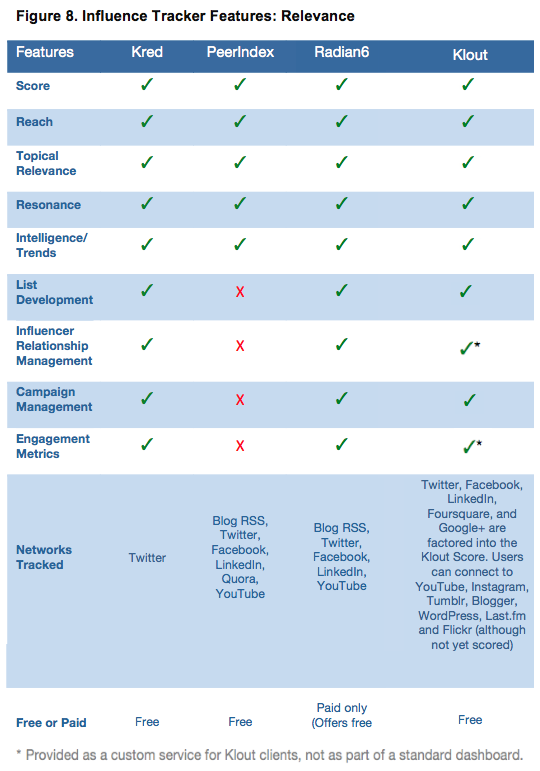
Whether you like it not, Klout, Kred, PeerIndex, and Radian6 are measuring your social capital — not your influence but your potential for it. Altimeter Group’s principal analyst Brian Solis today releases a free report that explains why influence is largely misunderstood, and breaks down what 14 of the top measurement services are really good for. It eradicates consumer myths about one of social media’s hottest trends, and gives brands an action plan for making money with these tools.
You can see and download “The Rise Of Digital Influence” report on Slideshare, or check it out here along with my key takeaways and analysis of why these products are flawed now but have big potential.
For the world’s social media users: accept that you’re already being indexed by these services, and they’re going to sell data about you. ‘Influence’ scores are going to become more important with time. Once they reach a threshold of accuracy, you can bet a new wave of brands will start rewarding and providing better service to people identified as influencers.
Brian Solis believes that rather than sending out a flurry of tweets in hopes of boosting your score now, you should think about your short- and long-term goals with social media. It’s not worth trying to game the system. I think services like Klout should inspire you to think critically about how to use Twitter, Facebook, LinkedIn and other social media. That way you can increase your real-world influence and let your scores rise to reflect that, instead of the reverse.
For brands: You too need to start by outlining specific goals for how you’ll identify influencers and what you want them to accomplish for you. Do not start by brainstorming what you want to give people with a certain score.
Solis writes that “What does a “74” mean to your business goals and objectives?” should be one of the first questions you ask. Then choose a service with the data to power your influence plan. Solis has already gone to the trouble of evaluating Appinions, eCairn, Empire Avenue, Klout, Kred, mPACT, PeerIndex, PROskore, Radian6, Traackr, TweetLevel, TweetReach, Twitalyzer, and TwitterGrade in the report.
A lot of people think that nobody gives a damn about your Klout score, and that those from other services are equally useless. I disagree. They may not be very accurate yet, but they’re getting better quickly. Brands want to spend their marketing and customer service dollars wisely, and there’s simply too many people in the world to give everyone the highest quality experience.
Brands aren’t going to measure influence themselves. They’ll choose one of the vendors from this report. You either understand them now, or be the one without influence later.