The average news feed post by a Facebook Page receives Likes and comments for 3 hours after being published. To maximize the engagement, impressions, and traffic driven by the news feed, Facebook Page owners should wait at least 3 hours between posts.
This new finding from a study by Facebook Page analytics company EdgeRank Checker could help Page owners avoid cutting short the lifetimes of their posts and overshadowing them with new content. Each Page is different and needs to find its own optimal posting frequency depending on its content and audicence, but no more frequently than every 3 hours is a good general guideline.
Last month after Facebook changed the news feed in September, EdgeRank Checker analyzed 30,000 posts by over 500 Pages with an average fan count of 140,000. The company defines the end of a post’s lifetime as when it receives 10% of the engagement per hour as it did in its most popular hour. It’s important to maximize engagement because this influences the EdgeRank, or news feed visibility of a post and a Page’s future posts. Engagement is also strong indicator that a post is being seen and receiving clicks for Pages looking to drive awareness or traffic.
The study found that the average post lifetime was 3 hours and 7 minutes, while the median post lifetime is 2 hours and 56 minutes. After a post’s death, it only receive a trickle of engagement and there’s little lost by posting again.
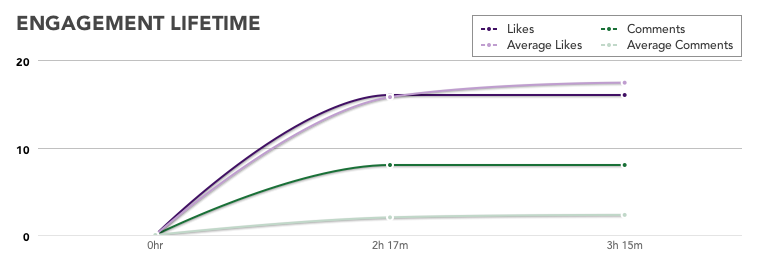
There is variance in any specific Page’s post lifetime average. Services like EdgeRank Checker can help Pages find their average. Alternatively, Pages can chart their own lifetime by manually recording the total Likes and comments their posts receive every hour and then watching for when they stop accumulating.
To be clear, the 3 hour average post lifetime does not mean Page owners should post every 3 hours. 8 posts a day would likely force them to churn out low quality content and annoy their fans. Optimal post frequency is a separate question depending on a Page’s audience, content production skills, its post lifetime but also other factors.
Most Page owners stick to roughly 2 to 3 posts a day. Update: News outlets and those producing urgent content like TechCrunch should post more often, but they will end up cannibalizing some of the engagement from their past posts.
Page owners should remember this study when they have tons of great content and are anxious to share. Take a breath and watch your last post’s Likes and comments rise. There will always be exceptions and Pages that need to post more frequently, but those who are unsure should wait an average of 3 hours before posting again.