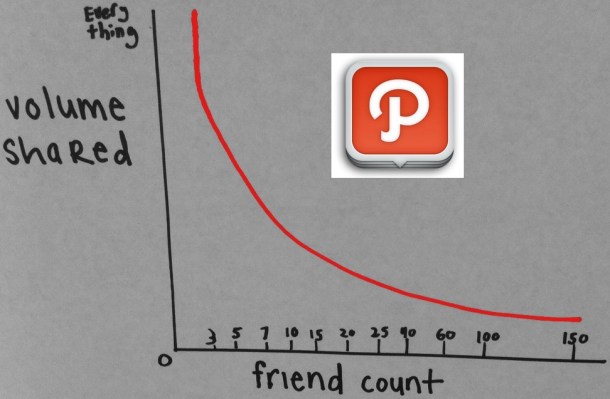
You’re going to be tempted, but don’t do it. Don’t add all your friends on Path. Don’t come anywhere near the 150-friend limit. And make the tough decision to reject the friend requests of people you care about. Because the whole point of Path 2 is sharing everything, and you won’t do that if you’re sharing to people that aren’t your best friends. Path’s power comes from the intimacy of your connections, not the quantity.
This is difficult to adjust to because we’ve been conditioned by most social applications to connect with everyone we know. Path is different because it’s a micronetwork, not an interest network or general social network. It can but isn’t designed for sharing content that’s relevant to a wide audience, like the articles you publicly tweet, or the major life events you share with hundreds of Facebook friends.
Path lets you share things that only people who really care about you want to know, like when you wake up and go to sleep, or when you travel more than a few miles. If you are friends on Path with anyone you might feel embarrassed by sharing that content with, or that you think wouldn’t find that stuff interesting, you’re much less likely to share. The maximum sharing volume likely comes with a friend count of between 3 and 5. As you hit 15, 40, or 100, you’ll censor yourself more, and find less reason to use Path in addition to other services.
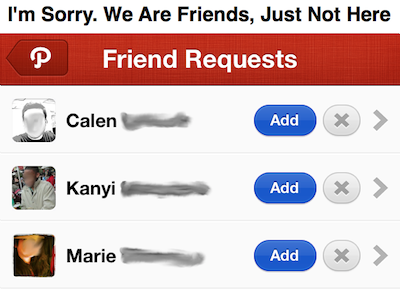
That means you have to undertake the socially awkward experience of rejecting requests from your co-workers, acquaintances, and fellow early adopters, and make sure not to put them in the same position. You may have already let some loose acquaintances into your inner circle or have outstanding requests from Path 1, and will need to go in and remove them. I’ve received a dozen Path friend requests from people I’m hardly comfortable sharing my Facebook posts with, let alone my sleeping habits. This indicates a widespread lack of understanding of Path that the company will need to address.
The fact that you’re not trying to maximize your audience creates a fundamental distribution problem for Path and any other micronetwork that pops up. How will the mainstream ever find out about Path or think it’s work their time if they’re not bombarded with invites? This may unfortunately be why micronetworks won’t succeed as standalone products, and may need to live within your general social network service of choice.
Really, Path is about granularity — the ability to share with a subset of your friends. For now, this binary “Share just to Path friends, or share to all your friends” may be adequate. Eventually as devices like the Jawbone Up give us more personal data, I think we’ll want even more sharing granularity. Depending on the content, we’ll want to the option to share to just our very best friends, our close friends, our nearby friends, all of our acquaintances, or the public. We might not be ready for it now though, judging by Facebook’s failed attempts to get everyone creating lots of Friend Lists.
Path has a chance to own the micronetwork space until we’re ready for more granularity. However, to retain its value, Path must somehow keep users from reducing its distinction from existing social networks. Its on-boarding process may need to help by suggesting you only add your closest friends based on those you wall post or @reply with. It will hurt its growth, and finding the proper language will be tricky, but it is crucial that Path make it clear to users that they shouldn’t add just anyone.