
Facebook users are getting more connected to each other as the service grows and matures, according to a new study by the company’s data team and the University of Milan. Instead of the traditional “six degrees of separation” that researchers have historically observed between all people in the world (and Kevin Bacon), the number of degrees has been dropping since 2008 on the site, from 5.28 then to 4.74 now.
This isn’t just an interesting factoid about the modern world, it highlights Facebook’s long-term strategy, and its dominant market position in social networking. Founder Mark Zuckerberg has proclaimed for years that his goal is to make the world more “open and connected.” In practice, that’s meant features across the site that do things like reveal what friends you have in common with any other user, and suggest that you become friends with people you’ve never met in person and have no friends in common with.
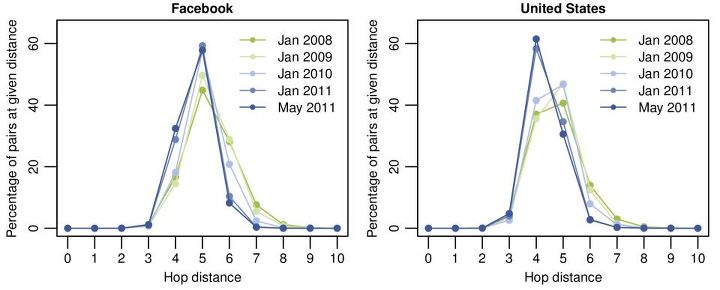
Those features have a big impact on the average user. Let’s say you meet a stranger in real life who you want to know more about. For example, you can Google-stalk them to try to find out anything interesting they’ve done over the years, but you’re going to go to Facebook to see if you have any mutual friends. Then, you might friend them. Repeat that process for its 800 million-plus users over the years and all these connections are just getting tighter and tighter.
Facebook’s big goal is to be the social layer for everything in the world — the way you get recommendations for music, news articles, products to buy, and anything else. These closer social connections mean that Facebook is getting more and more information about what you, your friends, your friends of friends, your friend of friends of friends of friends, etc. like or don’t like. It uses all of this information to make smarter recommendations for all of the ads on its site, and to create a more valuable platform for any third-party developer. Any rival that hopes to offer its own separate social layer is going to have to work harder and harder to beat these ever-strengthening connections and the possibilities they create.