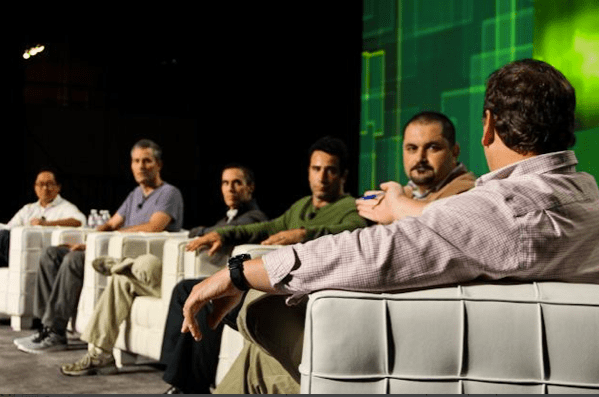
Today at TechCrunch Disrupt, five VCs gathered to talk about the state of investing in Silicon Valley and what skills and qualities make a successful venture capitalist. James Slavet of Greylock, Joe Kraus of Google Ventures, Shervin Pishevar of Menlo Ventures, George Zachary of Charles River Ventures, and Rich Wong of Accel Partners each weighed in on how venture capitalists are trying to make a difference in the lives of startups as well as what the perception of venture capitalists has been traditionally and how that’s changing.
“As they say, 130 percent of the value [of a venture capitalist] is the day you write that check”, said Kraus, reciting — tongue in cheek — an age old saying among VCs and entrepreneurs. The Google Ventures investor continued on to say that what he sees as the true value of venture capitalists, and GV in particular, is not just providing the capital but helping entrepreneurs to hire the world’s best engineers.
A great management team will only take you so far, he said, and every startup goes through a “desert phase” in which they wander, seemingly a bit aimlessly, as they try to find customers and the right market fit. The tendency, he said, is to think that focusing on hiring a good management team is what will help lead you out of these desert phases, when in reality the anchor is a good engineering team.
On the flip side, for those aspiring venture capitalists out there, Kraus said that the key is to avoid fostering a dependence among your entrepreneurs — that venture capitalists have to teach their founders to be independent and self-sufficient. As simple as that may sound, many entrepreneurs are young, and that education (like what a good resume looks like or what to look for in your employees), while basic cannot be overlooked.
Mark Zuckerberg is a classic case of an outlandishly successful entrepreneur who is also a top flight engineer, but what many people don’t talk about when they mention the Facebook Co-founder’s success, Pishevar said, is that he was also mentored closely by VCs and angels (like Ron Conway and Peter Thiel, to name a few).
Mike Arrington weighed in to say that, in his experience, founders are also eager to have VCs help guide them — before even considering what engineers to hire — on simple things like how to find a good accountant. The panel seemed to agree that, beyond guiding entrepreneurs through strategic acquisitions of human capital, these day-to-day, ground-level things like hiring a good accountant are important and may get overlooked during the mentoring process.
In light of this, Slavet then touched on what the role of venture capitalists will be over the next few years. The overall heft of venture capital is changing, he said, in such a way that the number of firms who invest all the way down the line (early stage to late stage) is decreasing. Ideally, today and in the future, VCs will be specialized in certain verticals, and their areas of expertise will give their startups strategic advantages at one point or another in their growth. Essentially, he said, the future of the business is investing in small chunks rather than mega rounds. “Specialization is very important”, Wong agreed.
Another important trait for venture capitalists? Being bold and entrepreneurial, Slavet said. The investor then went on to lay out three keys to being a successful VC, which included having strong instincts (usually from a product level) about opportunities in the market, being bold and aggressive in relation to those actionable opportunities, and the third is the importance of building a lasting relationships with entrepreneurs over time — not just being the embodiment of a check book. The more that VCs invest in their startups, both financially and with time and attention, the more successful all parties are likely to be.
The panel also touched on the importance of locating one’s business in Silicon Valley, to which most of the VCs agreed that, while there are amazing business sprouting across the globe, there is still a strategic advantage to being in the valley, because that is where the large cap acquirers (and VCs and angels) are in highest concentration. You can read Sarah’s coverage here.