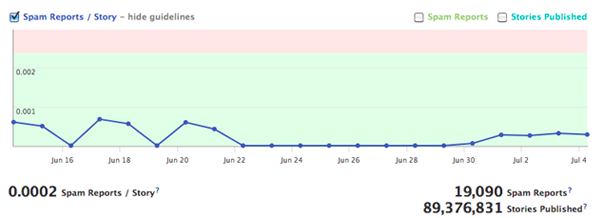
Two weeks ago a number of Facebook developers logged into the site to horrible news: their applications had suddenly been disabled without warning. The culprit was Facebook’s spam-fighting bot, which automatically tracks the amount of negative feedback an application receives from users and blocks apps that are faring especially poorly (since they’re probably spammy). But the bot was acting more aggressive than it should have been, and developers didn’t have a way to tell how frequently users were blocking their app updates in the first place.
Today, Facebook is rolling out some new features to address this.
In a blog post announcing the news, Facebook engineer Mike Vernal writes that developers will now have access to a ‘News Feed’ tab as part of Facebook Insights (their analytics product). Developers will now be able to track how frequently the posts their applications generate are hidden or marked as spam by users (the more they have, the worse standing they’re in).
And Facebook is also taking a more gentle approach to app banning. Previously when an app crossed the spamminess threshold it would simply be deleted. Now Facebook will only cut off the notification channel that’s producing the spam. And if an application is deemed to be spammy across multiple notification channels, Facebook is also introducing a new ‘disabled’ mode that will still give developers access to their applications, even though users won’t be able to use it.
Perhaps the biggest news, though, comes at the bottom of the post:
In the coming months, we will be moving from per-channel enforcements to a more sophisticated ranking model where the amount of distribution that content gets will be a direct function of its quality. Good content will be seen by more people, poor content will be seen by fewer people (and potentially no one). We think this is the right long-term model, as it rewards apps that focus on great social experiences while minimizing negative experiences.
Facebook already does this to some extent with its News Feed (high quality content is seen by more people). But it sounds like this will also be seen in other channels, like Chat and the notifications tab.