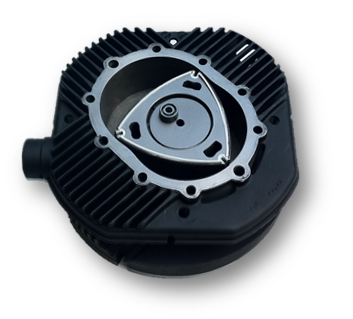
 An energy technology incubator, ClarianLabs in Seattle, has published a patent for a device called the Rotary Piston Generator (RPG) which the company hopes will challenge the idea of what batteries are, and how they’re used, especially in vehicles.
The RPG is a mechanical rather than chemical approach to portable energy storage. Its energy capacity is potentially ten times greater than a typical battery, company representatives wrote in an email exchange with TechCrunch. That depends on the kind of fuel it uses— the invention is essentially a very tiny, highly efficient engine.
ClarianLabs’ published patent shows the RPG contains: “induction armature that rotates around a fixed shaft inside a rotary piston.” As they rotate relative to one another, the parts generate electricity (kind of like a diesel engine).
The RPG doesn’t require a separate generator, starter or gearbox. It can ostensibly run on a variety of fuels, including: gasoline, kerosene, propane, natural gas, ethanol, methanol or hydrogen.
ClarianLabs is pre-revenue, with 5 employees. The company previously won GE’s Consumer Innovation Award in the 2010 Ecomagination Challenge, for its SmartBox Solar module design, which is a “plug-n-play” solar concept for the home. Basically, it’s a small solar panel you can plug your appliances into directly.
According to Chad Maglaque, president of ClarianLabs (and ClarianPower):
“We’re a technology developer and licensor, akin to a Dolby or a Dyson for cleantech. This is a very early stage technology. We are now looking for a partner to develop [it] — like the Department of Defense or the Department of Energy, an automobile or aerospace manufacturer. We think a natural for this would be in electric vehicles as a lightweight, compact range extender, something akin to a bike rack that you clip on or put in your trunk for a weekend trip.”
There isn’t any data that demonstrates this thing works, yet.
[Ed’s note: It’s always exciting to see new ideas to deliver more efficient portable power. While we can’t highlight every patent published, I selected this one because the company has a track record of winning awards and recognition on the cleantech competition circuit from judges in the field who know what’s commercially viable, better than I do.]