
Every startup needs an inception story, and that of electronic payment service company Square goes something like this:
In February 2009, Jim McKelvey wasn’t able to sell a piece of his glass art because he couldn’t accept a credit card as payment. Even though a majority of payments has moved to plastic cards, accepting payments from cards is still difficult, requiring long applications, expensive hardware, and an overly complex experience. Square was born a few days later right next to the old San Francisco US Mint.
As always, the full story of the founding of Square is a tad longer, and much more complex. That’s the first thing I thought of as I started reading over the details of this freshly filed lawsuit: Square, Inc. et al v. REM Holdings 3, LLC.
Its subject? A patent, of course.
To be more precise, the subject of the lawsuit is the fact that McKelvey – who serves as Square’s Chairman – is not listed as a co-inventor of U.S. patent no. 7,810,729, entitled “Card reader device for a cell phone and method of use”.
Update: Morley’s version of what happened was published by Venturebeat at the end of last year. He had apparently planned to assign the patent to Square in exchange for ownership shares in the company, but says the two sides couldn’t come to an agreement.
Isn’t it always about the money?
I’ve embedded the full complaint below, but here’s the nitty-gritty:
Square claims McKelvey, who is a software engineer and glass blower, in February 2009, in “a flash of inventive insight”, conceived of a way in which businesses and individuals could easily accept and process credit card payments, using a cell phone and a card reader for reading magnetic card stripes that was small enough to be plugged into a user cell phone with ease.
The complaint adds that McKelvey co-founded Square after discussing his ideas with Twitter inventor and Chairman Jack Dorsey, to “exploit his inventions”.
Then, still according to the complaint, this happened:
“In or about February 2009, Mr. McKelvey contacted his friend of 20 years, Mr. Robert Morley, Jr., to help build a prototype magnetic card reader that could be plugged into a cell phone input jack. Mr. Morley, a professor at Washington University, had previous experience working with magnetic card readers.
Over a period of several days, working in Mr. McKelvey’s glass studio and Mr. Morley’s laboratory at Washington University, Mr. McKelvey and Mr. Morley exchanged ideas regarding the design of the prototype card reader.”
For your information: McKelvey is a Washington University graduate.
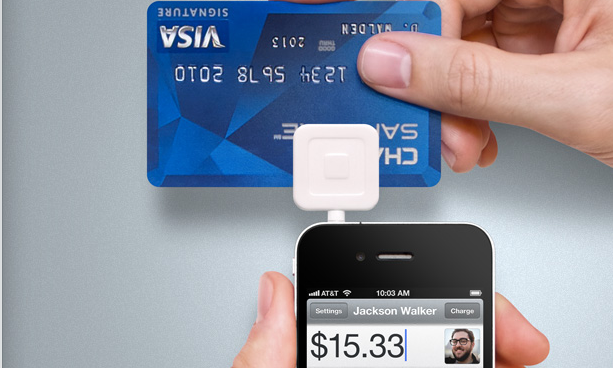
According to the complaint, McKelvey together with Morley and Dorsey discussed obtaining patent protection for the magnetic card reader after successfully building an initial prototype, which allegedly used a circuit designed by Morley (but was perfected and incorporated into miniaturized cases by McKelvey).
Morley subsequently contacted a patent attorney, namely David Chervitz, to do a prior art search (and was allegedly paid by McKelvey to do so).
This is where things started to head in the wrong direction:
“On June 10, 2009, Mr. Chervitz filed the ‘134 Application. The Application, however, listed only Mr. Morley as the sole named inventor. That listing was in error because Mr. Morley is not the sole inventor of the inventions claimed in the ‘134 Application.
On October 12, 2010, the ‘134 Application issued as the ‘729 Patent. Mr. Morley was listed as the sole named inventor on the ‘729 Patent. That listing is in error because Mr. Morley is not the sole inventor of the inventions claimed in the ‘729 Patent.”
Ouch.
Needless to say, McKelvey not having any claims of invention to such a critical patent poses an enormous problem for Square as a company. Worse for them is that Morley and the patent attorney apparently haven’t yet responded to their concerns to date:
“Although a letter providing notification of the error in omitting Mr. McKelvey as a named inventor on the ‘729 patent was sent to Mr. Chervitz on October 21, 2010, on information and belief, neither Mr. Morley nor Mr. Chervitz has taken action to correct the error.”
Square has now pinned its hopes on the U.S. justice system, requesting a court to issue an order directing the Commissioner for Patents of the USPTO to correct the patent-in-suit by adding Mr. McKelvey as a co-inventor.
It will be very interesting to see how things evolve from here – we’ll be eagerly keeping tabs on it and have reached out to Square, Mr. Chervitz and Mr. Morley for more information.
Update (see above): Morley’s version of what happened was published by Venturebeat at the end of last year.
(Image via Flickr / mira66)