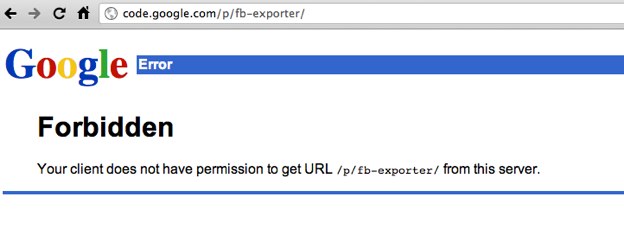
This is just getting silly. Yesterday, we reported on a new Chrome extension created by a developer that allowed you to scrape your Facebook contact information. Called “Facebook Doesn’t Own My Friends,” the extension provided a workaround to import your friends contact information on Facebook into Gmail and CSV files. As we noted in our post, the extension was taken down shortly after our story went up. The exporter is still down, and it’s unclear who has actually taken the exporter down, but the implications are clear. The only companies that will provide these technologies are Facebook and Google, and this will probably involve a peace treaty of some sort.
So what got us to this dark place where ten minutes after the workaround was posted on TechCrunch, it was taken down? Nearly a month ago, Google began blocking Facebook API access to download Google contacts. Facebook hacked its way around that, and Google subsequently issued a statement that they were “disappointed”. Facebook Platform engineer Mike Vernal then responded in the comments of one of our blog posts about the slap fight, defending Facebook’s policy and calling it “consistent”.
 A few weeks ago, Google started posting a warning to users who tried to import their Gmail contact to Facebook, effectively saying that your contacts information will be effectively trapped inside Facebook without the ability to re-export the data. It seemed that the message was somehow blocked because the “warning” subsequently disappeared when you tried to export your Gmail data.
Then last week, Facebook started removing the Gmail option from the list of third party email providers on “Find Friends.” The Gmail option was also removed on Facebook-owned FriendFeed.
What’s so confusing about this back and forth, passive-aggressive brouhaha is that it’s unclear which company is initiating each action. Both companies have remained fairly tight-lipped about the issue.
The key part of all this is reciprocity—Google feels that since they are providing the ability to export Gmail contact data to Facebook, Facebook should allow Gmail users to do the same.
The thing is that reciprocity is an issue that affects relationships between major countries. Whether it be over tariffs, law enforcement or immigration policies, countries and states deal with reciprocity daily. Often times, agreements are finally made through treaties.
For now, this rigmarole has continued for nearly two months-is it time for a peace treaty between Google and Facebook?