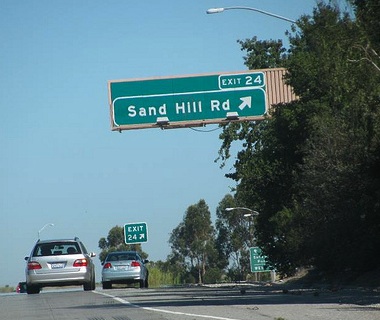
Don’t “Pull A Patzer” And Other Lessons Learned On Our Trip Down Sand Hill Road
Guest Author
Feb 28, 2010

Editor’s note: Earlier this month, BrightRoll raised a $10 million Series B for its video ad network. In this guest post, CEO Tod Sacerdoti shares some of the lessons he learned trying to raise that money in the current environment.

As Peter Drucker once wrote, “The entrepreneur always searches for change, responds to it and exploits it as an opportunity.” Put more simply, change is good . . . of course, that’s unless you’re trying to raise capital in these trying times.

After my company BrightRoll recently closed its Series B round of financing, we took a step back to digest the lessons we learned from pitching and negotiating with a handful of VCs over our 6-week fundraising effort.

To say raising money in the current economic environment has been different than it was two years ago is a massive understatement. Saying it’s night and day would be more accurate. As a year that was touched off by Sequoia’s now famous “RIP Good Times” presentation, 2009 was highlighted by massive layoffs, significant cost cutting and many well publicized company failures. As a result, many VC firms, and their portfolios, are now fraught with uncertainty—walking a fine line between licking their wounds thanks to poor fund returns and looking for new opportunities to improve their fortunes as the market recovers.

Perhaps the most important lesson gleaned from our financing is that over the last two years, the fundraising environment has become more complex. A still dormant IPO and comparatively sluggish M&A markets offer little hope for the future in terms of exits, while a handful of well-publicized scandals have led to more bureaucratic layers in the due diligence process and a new series of metrics are being used to gauge long-term prospects.

It’s a market in flux, with a whole new set of best—or worst—practices, depending on how you look at them. What follow are some highlights from BrightRoll’s most recent trip down Sand Hill Road.

1. The Mint.com Acquisition Left Anything But a Minty Aftertaste in the Mouths of Many on Sand Hill Road

If you read TechCrunch, you undoubtedly know the story of Mint.com. The winner of the inaugural TechCrunch40, Mint.com’s personal finance application lets users track and monitor their financials. The company grew by leaps and bounds following its debut and just three years after its founding was acquired by Intuit for $170M.

By most accounts Mint.com’s rapid rise to prominence and ultimate acquisition is the quintessential Silicon Valley success story. Yet, the Mint.com acquisition brought to light an interesting phenomenon, one I’ve coined the “Patzer Problem.” Prior to submitting offers to invest, three separate VCs wanted to confirm that we had no intention of “Pulling a Patzer,” modern-day Sand Hill Road parlance for selling too early.

Here’s why: with large funds being raised on Sand Hill Road and returns from previous funds underperforming, investors are becoming increasingly desperate for that single homerun investment that returns $1B or greater. Even though Mint.com was a huge success for the founder and team, generating $60 million in equity value per year, many VCs believe they sold too early and left too much potential value on the table.

2. Fraud and Its Impact on the Due Diligence Process

In addition to the challenge of getting a term sheet signed, new barriers have emerged that make closing transactions harder than ever. Chief among them is completing due diligence, which has gone from a relatively efficient and painless series of “check-the-box” financial and legal processes, to a full-blown corporate and financial audit.

These changes can be primarily attributed to the alleged fraud and ultimate failure of Canopy Financial, a company that raised more than $85 million from FTP and Spectrum. Canopy is alleged to have falsified financial reports and auditing statements and its investors were left holding the bag, which means that other entrepreneurs seeking funding are now paying the price. To prepare for these changes, companies should make sure to negotiate a cap on legal expenses ($25,000 max) in all term sheets because there is no end to what can be attributed to due diligence under this new model.

3. Perception is Reality, So Prepare Your Third-Party Data

As Mark Twain once said, “Facts are stubborn, but statistics are more pliable.” While both companies and venture capitalists often argue that internal logs are both factual and the most accurate source of online traffic data, this data carries little weight when there are millions of dollars at stake. At BrightRoll, we were amazed how many investor decisions relied on metrics provided by comScore and Quantcast, even when the same investors would simultaneously mock the validity of those reports.

The lesson here? VCs act like public market investors and perceived leadership may be as valuable as actual leadership—don’t forget to put apples-to-apples measurement in place before making your pitch and understand how to explain any discrepancies that may exist between your logs and those of third-party providers.

4. New Metric: Revenue vs. Money Raised (RoR)

We all know that Rome wasn’t built in a day and that venture investing is by nature one of the most risky investment classes. History has shown that companies pursuing billion dollar exits that VCs covet are often required to spend significant amounts of time and capital in their formative years to build out their product and gain market share.

Yet, in what may be a harbinger of things to come, in multiple meetings I was asked to compare BrightRoll’s annual revenue to the amount of money it had raised in previous years. This is what I now call the Revenue on Raised (RoR) Ratio. If your RoR is greater than one, meaning you generate more revenue every year than your total capital raised, then you are in good health and outperforming most later-stage startups.

Just a few years ago, the “Patzer Problem” and the “RoR” ratio would have seemed paradoxical. After all, how can a company be expected to pursue a multi-billion dollar opportunity, bring a product to market and generate revenues in excess of the funds they’ve raised fast enough? As difficult as it is, that is what companies must do. Savvy investors now realize that fast time-to-market, and massive market opportunities and significant revenue generation are all possible in today’s online environment.

5. Revenue Growth or Profitability, Pick One

There is a perception that in 2009 companies were either reducing head count to get profitable or gaining market share to grow revenue. Yet, in most of our conversations the concept of doing both—doubling revenue and getting profitable in a down year—was regarded as the gold standard.

Is this thinking the fatal flaw in the venture model? Looking back to early 2009, it would have been a smart move to invest in companies at low valuations to enable them to deliver either revenue growth or profitability, not both. These results would have been achievable through a disciplined approach, focused on several factors, including:

  • Resisting raising too much money before the business was scaling so that achieving a desirable RoR was possible in the short term
  • Only hiring where desperately needed, to preserve capital to hire through the recession;

Together, these small steps can pay dividends when it comes to raising follow-on rounds, particularly during tough economic times.

I hope the above lessons help other companies looking to dive into today’s VC environment, as a little knowledge from the companies that have come before you can go a long way.

Photo credit: Flickr/ Steven Damron

Advertisement
  • Related Topics
Advertisement
  • Matt

    “Sandhill Road parlance”

    Well first, it looks like you’re spelling “Sand Hill Road” two ways in this post and second, am I supposed to know what Sand Hill Road is and why it has its own parlance?

  • http://www.facebook.com/profile.php?id=217370 Touraj Parang

    Excellent observations Tod! Times have certainly changed since I raised the Series A and Series B rounds for my last company, Jaxtr.

    One thing I wanted to add though is that in my experience, the “Patzer Problem” has always existed in the VC industry, although some firms are much more portfolio-driven in their approach than others, so they are more sensitive to it. One proxy for gauging this sensitivity is to note the number of Board seats or investments per Partner. The higher that leverage, the more portfolio-driven the fund.

    I think (and hope!) that there are still a number of good, founder-friendly VC firms today that would be EXTREMELY happy with Mint-like returns.

    Best of luck with Brightroll and congrats on the closing!

  • http://blog.praxicom.com oren michels

    Congratulations to Tod on the round – having just raised a round myself, I can attest to “night and day” compared to the last time around.

    While some of our experiences were similar, no one mentioned “pulling a Patzer”, though questions of “how big does it really get” could have been code for the same issuu. Perhaps, since Aaron and I shared First Round Capital and numerous angels as investors, the VCs I spoke with may not have been wanting to say it in quite that way.

    And many of those same investors have told me they’re thrilled with the outcome, and don’t believe that Aaron sold “too soon”. No one knows the future, and Aaron and his investors are way better positioned to have all the data than a VC who hadn’t backed the deal early on, when Aaron was raising HIS Series B.

    But I’d be concerned about any VC who says to you that any deal which puts tens of millions of dollars in a young founder’s pocket – a founder who will clearly go on to do many more great things – is something to avoid. VCs can easily create terms that give them an acceptable outcome in such a circumstance.

    I’m sure most of those same VCs have websites talking about how “entrepreneur-friendly” they are.

    But I will tell you that if any VC told me that it was a “problem” that an entrepreneur and his investors decided to sell at the time that made sense to them, and with an outcome under which everyone made money and the entrepreneur had a life-changing outcome before his thirtieth birthday. I’d probably thank them for their time and go speak to one of the many great VCs I know whose actions match their entrepreneur-friendly rhetoric. They’re out there, and I spoke to many of them before ultimately settling on Cisco as our lead.

  • http://mo.com Brian Null

    Touraj, nice post, glad i’m not the only one thinking many out there would be pretty happy to have the success Mint.com achieved… i think you nailed it with ‘founder-friendly’ firms

  • http://www.facebook.com/profile.php?id=645867564 David Semeria

    An excellent, informative post. Well done and thanks!

  • http://www.facebook.com/profile.php?id=631166328 Scott Rafer

    Tod, great post, but you didn’t detail the problem at a level that’s actionable.

    It’s really the Patzer No-Pro Rata problem. A bunch of large funds are desperately trying to deal with the Internet’s low-capitalization reality by making investments too small for the size of their funds. To provide their LPs with acceptable returns, they are entirely dependent on repeatedly exercising their pro-rata rights on subsequent rounds. When you are a $300M fund, It’s almost impossible for a $5M investment to provide scaled returns on its own.

    Most importantly from where I sit, the exercise of pro rata rights is the moment of greatest divergence between founder interests and VC interests. That’s the worst of the structural problems that is hurting the big funds.

  • Numbers nitwits

    I’d like to invest in a sure thing, too. Idiots.

  • EH

    Yes, you’re supposed to know. Here’s a primer:

    http://en.wikipedia.org/wiki/Sand_Hill_Road

  • BobSled

    Yes you should know what Sand Hill Rd is and the fact that you don’t solidifies your place in the ecosystem.

    Now move along little boy, your petty critique is neither helpful, accurate or presented in a manner that makes you anything but a chump.

  • OhBoy

    Asking a VC what to do is like asking Congress how to solve _________ problem. They are both self serving mo fo’s with egos the size of a 18 wheeler.

    VC suck – they suck and they blow.

  • Sanford Rich

    Before criticizing Patzer the would be analysts that claim to be venture capitalists should visit http://www.nvca and review the “Venture Backed Exits” report. Even in the boom years the probability of a $1 billion take out is small. Just because they have significant capital to invest does not justify the assumption that there will be an effect on the likelihood of big returns. It works the other way. The capital flood, or in the words of Professor Reinhardt and Rogoff (This Time is Different) the “Bonanza of Capital” is much more likely to lead to bubble effects, declining returns and losses. It seems to me that Patzer, et al merely made an intelligent decision given the probabilities.

  • Byron McCarthy

    Few notes to entrepreneurs who read this post and get excited:
    1. This is a B round story. A is much more difficult to get.
    2. Do whatever you can to make sure you can become rich when you have the opportunity. Its nice that VCs decide they want to shoot for home runs but they have secured their salaries and benefits for the next 7-10 years, you didn’t.
    3. This fund raising effort took 6 weeks. You are a fool if you think that is the norm. Plan for 6 months, then for another 6 to find a job if you don’t raise in first 6. In other words, plan for a year with minimal or no salary.

    Generally speaking the industry goes back to funding close circle networks. If you are outside of the network you won’t get funded, unless there is very little risk in your company and a huge upside. You see, contrary to common belief, VCs invest in very sure things or in hyped founders or startups. Just keep that in mind.

  • http://www.affordit.com WIl Schroter

    I’m not sure the logic of the “Patzer Problem” holds up.

    The thought is that the company “sold too early” and therefore avoided a much larger potential return.

    But that argument assumes there would have been a bigger exit, or any exit at all, in the future.

    Yes, we wall want $1b exits, and they do happen. But you also have to look at the probability of an exit and thank your stars you got one past the goal line at all.

    I think playing Monday morning Quarterback and assuming another outcome was a given is flawed at best.

  • Rohit Nallapeta

    A Fantastic , insightful post….

  • Phil

    “A still dormant IPO [...]”

    And one reason it will stay that way is that Americans continue to tolerate Sarbanes-Oxley.

    If you think that Washington can simply be ignored, and plastic bag after plastic bag can be placed over businessmen’s heads with impunity – think twice. There are other places in the world that, even if for purely “pragmatic” reasons, are not so eager to kill new businesses, and that is where new companies are listed now (e.g. London.)

  • Phil

    “[...] and go speak to one of the many great VCs I know whose actions match their entrepreneur-friendly rhetoric.”

    Names please? :)

  • http://www.facebook.com/profile.php?id=217370 Touraj Parang

    Thanks Brian!

  • mint

    patzer ain’t gonna be happy this sunday… haha.

  • Rami Sandu

    Tod, you picked a great VC to work with. Rob Theis is one of the best in the U.S. Great disposition – He wants you to win, because he wins. Congratulations.

  • http://www.facebook.com/profile.php?id=627826 Jonathan Marcus

    Very interesting and well-written article.

  • Harris Teeter

    Agree completely. Patzer knew he had built a house of cards, and the “greater fools” at Intuit ready to pony up would be best obliged.

  • http://www.brightroll.com Tod Sacerdoti

    Oren – thanks for the comments. I deeply share the concern “about any VC who says to you that any deal which puts tens of millions of dollars in a young founder’s pocket is something to avoid,” and that is why I wanted to shed light on the practice. I understand this phenomenon first hand, having been at Plaxo, a company that exited at $180M+ in equity value but had VCs saying it had failed behind closed doors.

    My perspective is on this issue is that VCs are actually acting counter to their goals. They should tout these 3 year, $180M+ exits, and share the story with any budding entrepreneur who will listen — what better example is there of the incredible fruits of starting a successful company?

    Furthermore, this exit in particular was at close to 40x revenue! It’s not like the company was a guaranteed success. Any rationale person would consider this a home run and I say congrats to Patzer and the entire Mint.com team.

  • http://www.facebook.com/profile.php?id=720555518 Glenn Kelman

    Great essay but I don’t understand why revenue growth trades off with profits? Yes of course you can spend more to grow recklessly but surely every company has to find a happy balance: the other extreme, just cutting your way to profitability without any revenue growth means you don’t need venture capital — hooray! — and probably shouldn’t get it .

  • http://itunes.apple.com/us/app/busybee/id337163880?mt=8 Doug

    100% accurate. Especially the last point. I went down Sand Hill with my first company, and if it wasn’t for my connection thru my law firm, I wouldn’t have been anywhere.

  • http://www.adrianscott.com Adrian Scott

    Thanks for the perspective; interesting thoughts and data points!

  • http://kadongadonk.wordpress.com/2010/03/01/how-do-you-solve-a-problem-like-patzer/ How Do You Solve a Problem Like Patzer? « Permanent Record

    [...] How Do You Solve a Problem Like Patzer? March 1, 2010 It was with bemusement that I read how Mint.com founder Aaron Patzer has just been “verbed.” [...]

  • Steve

    For every Mint there is a Pointcast. If someone is willing to pay a valuation today that you won’t achieve on a normal basis (i.e., with reasonable external comps) for a long time, it’s time to sell.

    Nice article, and congrats on your financing.

  • http://www.perfectoled.com led display

    correct .i agree

  • http://www.facebook.com/profile.php?id=722513624 Mike Su

    Any VC that talks about a “Patzer Problem” is really talking about a “Fund Size Problem”. Guys with ~$150mm or smaller fund sizes are the right VCs for web startups. Guys like FRC, Dave McClure, Chris Sacca, .406 Ventures etc.

    Patzer’s got 99 problems, but money ain’t one. The problem is a VC problem, not an entrepreneur’s problem.

  • whoop dedo

    its the VCs who should have been learning from patzer, not trying to educate him. the era of hyper-capitalism is over. small gains are where its at. who are the big fish willing to fork over mountains of cash or stock for an acquisition in 2010? last big play on that level was msft trying to pick up yahoo…but sand hill road had no stake in that deal and it fell apart anyway. google wanted yelp for what…$400 million? is this the mega deal the VCs were drooling over?

    the “twenty bagger” is going to go from being a one-in-a-hundred event to one-in-five-thousand event, and most VCs will never see one again. indeed, i only see one potential big exit out there on the docket right now…facebook. what else is there?

    the VCs could adapt if they weren’t so greedy and their funders so stupid. but, no one really changes until it is forced on them. i’m looking forward to the ongoing gutting of sand hill road over the next decade, its long overdue

    frankly paul graham is the future of funding for web startups, and he knows it

  • whoop dedo

    “Yes, we wall want $1b exits, and they do happen”

    exits are going to get smaller and smaller for at least a decade. this is a secular bear market. hell, facebook won’t even go public, and they are the #2 site on the web.

    people sit around talking about markets “coming back” and the economy “coming back”. this is the new normal.

    the question is, which VCs can survive until 2020? probably Y combinator, its the only one with a sensible model for the new reality

  • fedd

    good and educative article. though it’s series b, though i’m not a web project, though i’m far overseas… and completely out of that network… but it informs of what vc’s would tell me and what they’ll check. i need more such experience.

    thank you.

  • fedd

    > This fund raising effort took 6 weeks. Plan for 6 months

    does this include only face to face meetings? if cold emails too, i inform vc’s about my project already for a year, very few responded. those who did, were very polite and said they liked a project, but passed

  • http://www.facebook.com/profile.php?id=5405110 Dave McClure

    most VCs who think Aaron sold too early are:
    1) running larger funds (>$250M) that are misaligned with entrepreneur interests, and
    2) have little or no understanding of how the Yodlee relationship affected Mint decisionmaking, or
    3) wished they had any involvement whatsoever with Mint, Aaron, & the stellar team that made it happen.

    Tod’s written a great piece above. Don’t misinterpret it as some hatchet piece on Aaron (it’s not). But it’s becoming “cool” to pile on the “Mint sold too soon” bandwagon by many VCs and others who couldn’t find their ass with both hands, and really have no clue why Mint was so successful. And they can all go suck eggs.

    Smart VCs better start thinking about how to design & align fund structures where $170M exits are “homers” to go ring the bell about, not “singles” to wring their hands over. unfortunately most of them would rather bury Mint than have it in their portfolio. their loss, our gain.

    [disclosure: I worked part-time at Mint in 2007, and was an investor in the company's A round led by Shasta]

  • Mike B.

    Last year, I seem to remember Mike Arrington blogging that Aaron Patzer had “nerves of steel” for holding out for the exit that he did. I reckon the VC community strongly disagrees with this now?

  • http://www.cloudave.com/link/the-entrepreneur-thesis The Entrepreneur Thesis | CloudAve

    [...] was going to save this post for a while but the “Patzer Problem” meme has forced my hand.  I, for one, am with Rob Hayes of First Round Capital on this [...]

  • Byron McCarthy

    Let me try to save you from yourself:
    1. cold emails don’t work with VCs, ever.
    2. if you try to raise money for a year and no deal is in sight, the company is not suitable for venture funding. move on or build a business that doesn’t need VC money.

  • Lenny Raymond

    One way to deal with this is what we did at my old firm (and what was done in the deal I was a founder of as an EIR): tranched acceleration. The founding team’s acceleration terms were stepped according to price targets for liquidity events, with more acceleration for bigger sale prices. This gave entrepreneurs a strong incentive to not sell “too early,” but didn’t give the VCs effective veto power over sales that management felt were sensible.

  • http://www.010-jbzc.com 涡轮流量计

    时大概分三段警方似懂非懂

  • http://www.010-jbzc.com 室内设计

    地发挥各独具风格第三个梵蒂冈

  • http://www.47hats.com/2010/03/the-10000-most-tempting-software-startup-categories/ The 10,000 Most Tempting Software Startup Categories

    [...] So how do you explain a mint.com? Various VC’s seem to be bitching and moaning that Mint founder, Aaron Patzer cashed out for “only” $170 million when he sold to Intuit (“Don’t “Pull A Patzer” And Other Lessons Learned On Our Trip Down Sand Hill Road“). [...]

  • http://sworddance.com/blog Pat

    SOX happened because public companies had gotten so good at ripping off the public shareholders.

    Jez man, remember (recent) history! Stop blaming the laws that were only written because of blatant robber baron actions.

    Not every company should be public anyhow. Going public is not be the only way to make money – getting customers that pay is another!

    The fact that VCs depend on the IPO market says a lot about how broken the VC model is. VCs are clearly not interested in building great companies that generate increasing revenue.

  • Nigel Glass

    Is it fair to label this outcome “Pulling a Patzer”? This makes it sound like it was entirely Aaron’s decision to sell to Intuit. Having raised more than US$30M in venture capital, VCs surely controlled the board and had a majority of the voting power. While Aaron may have been on board with the decision to sell, it is extremely unlikely that he would have been able to block the transaction if he wanted to.

  • http://blog.sproutbox.com/2010/03/09/dont-be-a-banker-part-1/ Don’t be a banker. (part 1) « Sproutblog – News & Opinion From SproutBox

    [...] when taking companies public is your MO. For more evidence of this attitude, look no further than Sand Hill Road’s disappointment in the measly 5x return that Aaron Patzer produced for his mint.com [...]

  • Ilan Ben Menachem

    Thanks for the perspective; interesting thoughts and data points!

  • http://insiteny.org/media/2010/03/26/thoughts-on-dont-pull-a-patzer/ Thoughts on “Don’t Pull a Patzer” | InSITE

    [...] In a guest post on TechCrunch, Tod Sacerdoti, CEO of BrightRoll, an up-and-comer in the video advertising world, highlights this philosophical rapture and its effects upon business people like himself, trying to raise money to change the world with the implementation of their ideas. He focuses on 5 main entrepreneur-facing lessons he gleaned a six-week mission to raise $10m to keep BrightRoll rolling. [...]

  • http://thundernoise.wordpress.com/2010/03/27/the-entrepreneur-thesis/ The Entrepreneur Thesis « Thundernoise's Blog

    [...] was going to save this post for a while but the “Patzer Problem” meme has forced my hand.  I, for one, am with Rob Hayes of First Round Capital on this one. [...]

  • http://www.ankaraceviri.com ingilizce çeviri

    good and educative article. Well done and thanks!

  • http://intensedebate.com/profiles/nusret1 yuregininsesi

    Before criticizing Patzer the would be analysts that claim to be venture capitalists should visit http://www.nvca and review the "Venture Backed Exits" report. Even in the boom years the probability of a $1 billion take out is small. Just because they have significant capital to invest does not justify the assumption that there will be an effect on the likelihood of big returns. It works the other way. The capital flood, or in the words of Professor Reinhardt and Rogoff (This Time is Different) the "Bonanza of Capital" is much more likely to lead to bubble effects, declining returns and losses. It seems to me that Patzer, et al merely made an intelligent decision given the probabilities.

  • http://laptop-komputer.com luis fabiano

    awesome that was great article,thanks for share with us.

  • http://getmakemoneyonline.com diana aviz

    after reading this article I would agree of that,all i say that amazing about this news,thanks

  • http://mortgagecalculatorlender.com vicente basquitos

    yes indeed I agree on that, quite favorable, after reading the news,thanks

  • http://www.tiyanwang.cn/ 体验网

    df好痛苦了人

blog comments powered by Disqus
Advertisement
Got a tip? Building a startup? Tell us