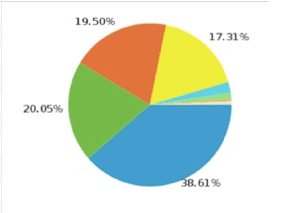
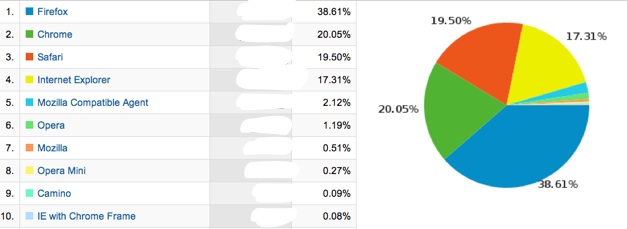
Google’s Chrome browser is quickly gaining market share, with one estimate putting it at about 5 percent of total usage, while Microsoft’s Internet Explorer is seeing a drop in overall share. But among TechCrunch readers Chrome is already beating every browser except for Firefox.
A look at our Google Analytics numbers for the past 30 days shows that 20 percent of TechCrunch visitors are using the Chrome browser. Just on TechCrunch, we’ve seen Chrome’s share almost double since October. Firefox is still the most popular browser among readers, with 38.6 percent share, and Safari is a close third with 19.5 percent. Internet Explorer comes in fourth with 17.3 percent.
TechCrunch readers are definitely early adopters, but if your Web surfing habits are an early indicator of how average users will browse the Web, Chrome could be in for some major market share gains. On the other hand, if it’s just a geek thing Chrome’s share might stay around 5 percent for the general population.
So which one is it: are one fifth of TechCrunch readers simply attracted to anything shiny and new, or are you the vanguard showing everyone else the way forward? That’s what I thought.