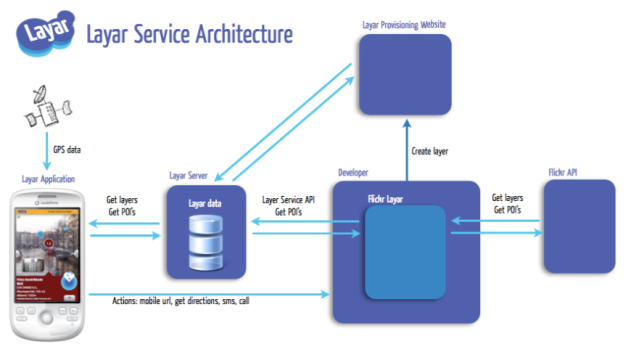
 SPRXmobile, the startup behind Layar, the mobile augmented reality browser for Android, is moving fast. Barely three weeks after launching its application to much fanfare, it is opening up its platform by handing out keys for its just launched API to a select number of developers. (See my video interview with the company’s co-founder Raimo van der Klein for more context). Interested parties will need to fill out a request form, which should be available in about half an hour by following this link, and the company will subsequently handpick 50 developers and provide them with the necessary documentation, tools and a test environment for third-party layers.
Layar is far from the only player in the mobile AR browser market, which is shaping up to be an interesting field as devices and the operating systems they run see technological advances at an ever-increasing speed. Our friends over at Venturebeat recently published a great piece about AR browsers and listed Layar alongside similar tools like Tonchidot‘s Sekai Camera and Mobilizy‘s WikiTude. Even IBM is playing around with mobile AR apps.
But ultimately, it will always come down to supporting as many platforms as soon as possible without neglecting the content part of the equation. Without a decent amount of usable layers, none of these AR browsers are going to see mainstream adoption any time soon, and Layar is the first to attempt luring third-party developers into creating layers on top of their system by means of an extensive API. In my opinion, it’s a logical step to take, and I’m curious to see if there will be enough developer interest.
To be continued.