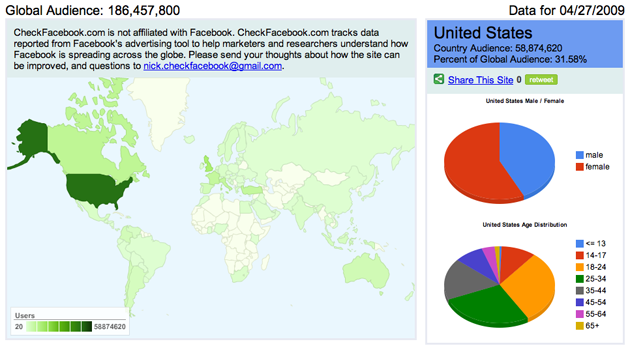
We all know that Facebook is growing like a weed, especially internationally, but which countries are really seeing the most growth? TechCrunch alum Nick Gonzalez has put together a new tool called CheckFacebook designed to help users do exactly that. The site is primarily meant for advertisers, who can use it to gauge where to deploy campaigns, but it also offers an interesting look at each nation’s basic demographic information in an easily digestible format. The site pulls from data that Facebook publicly discloses to advertisers, but isn’t normally readily available because it’s tucked away into the ad signup process.
Each country on the map is shaded according to how popular it is on Facebook, with the darkest shades of green representing the most popular countries (unsurprisingly, the United States is by far the most popular single country, though it only accounts for around 30% of Facebook’s total audience). You can also see some basic demographic information, including gender and age distributions in each nation.
The site is still pretty basic at this point – I’d like to see some more in depth trend analysis and historical data – but it shows potential. Gonzalez says that the data indicates that there’s a youth trend as Facebook first penetrates a country, with the 18-24 and 25-34 demographics stabilizing at around 33% each as the country’s userbase grows.
Also interesting to note is that according to the system, Facebook’s total reach is around 186 million – shy of the 200 million figure it announced earlier this month. This isn’t terribly surprising, as Facebook regards these numbers as ‘estimates’ (which is a bit odd given that they have the exact data). Gonzalez believes that the data could be a few weeks out of date, or that Facebook may not be able to sell ad inventory in some regions which would cut back on the total number of users reported.
Also worth noting are Inside Facebook’s premium reports, which analyze similar demographic data.