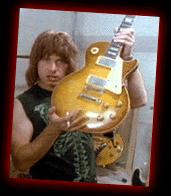
Farhad at Salon’s Machinis wrote a great piece on the effect of Guitar Hero on the popularity of guitar music. In my humble opinion, playing Hero has as much to do with playing the guitar as pounding on a bucket has to do with playing the xylophone, but Farhad points out that
… “Guitar Hero” instills two important guitar-playing fundamentals: sensitivity to rhythm as well as mastery over “independent hand usage — the fact that you have to do something different with each hand.”
He also says that many good guitar players are good GH players, but I wonder which skill came first. Talent in music might make you a good GH player whereas being able to tap buttons will not make you Stevie Vai.
Video games have always been poor life simulators but excellent problem solving trainers. While Doom doesn’t really teach you how to kill aliens, but it does improve your hand-eye coordination and generally teaches you how to work through simple problems in an entertaining way. Guitar Hero, as a simulation, is poor. As a way of teaching the uncoordinated how to lay down some licks it’s excellent. Like DDR before it, getting good at the game requires muscle memory and speed, two important tools in a guitarist’s tool box. Will GH increase the sale of real electric guitars? Only time will tell.
How “Guitar Hero” saved guitar music [Machinist]