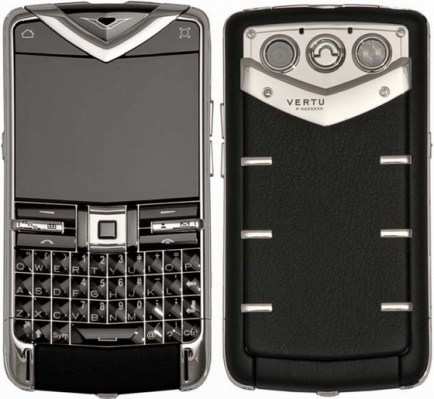
Nokia finally managed to offload its luxury-oriented Vertu brand to private equity firm EQT-VI late last week, but the parties involved seemed content to keep quiet at the time. Not so anymore — Vertu has just issued an official statement on the matter, and shed a bit of new light on its executive structure going forward.
Sources told TechCrunch late last week that Nokia alum Anssi Vanjoki would take over Vertu’s CEO spot, but that no longer seems to be the case. Instead, he has been appointed chairman of a new, non-executive board intended to support current Vertu chief Perry Oosting as he continues to run the show.
So what’s next for the newly transferred business unit? Vertu’s statement also points to the existence of a “strong product roadmap in development,” though there was no further explanation on the matter. The company is probably best known for tricking out otherwise droll feature phones with ridiculously ostentatious trim (to their credit, they never took the easy route and blinged up commonly-available hardware), but recent hardware forays like the Constellation line have underlined a shift in the company’s understanding of the mobile market. Paying a ridiculous sum of money for a phone is one thing, but paying a ridiculous sum of money for a phone that’s technically inferior to more common devices doesn’t seem to be a philosophy Vertu will be clinging to for much longer.
To wit: recent rumblings point to Vertu’s adoption of Android for use in powering its future handsets. It’s a savvy move, if true — it’s highly customizable for one (which means that Vertu owners could soon have a gaudy smartphone UI to go with their device’s gaudy industrial design), not to mention that the shift could finally put Vertu hardware on the same level as other modern smartphones. Then again, I’m not sure how many people actually bought Vertu handsets for their functionality, so who knows how this will all play out.