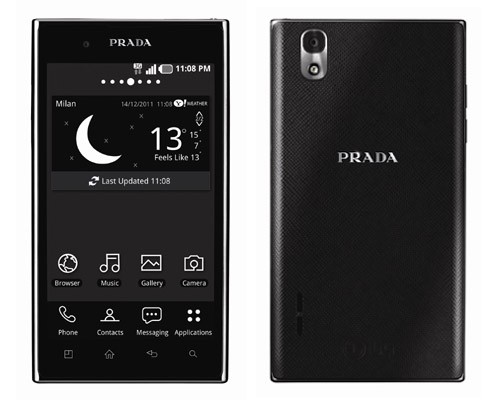
Tech-savvy fashionistas finally have a reason to rejoice with the official release of LG’s Prada 3.0 handset. Namely, it’s the first time a in a long while that the company’s fashion phones aren’t completely outclassed by the competition.
When I say outclassed, I’m referring strictly to performance. With it’s 4.3-inch WVGA NOVA display, 1 GHz dual-core processor, and 8-megapixel camera, the Prada 3.0 is a solid little package, but one that’s a bit lacking considering its premium price tag.
Specs, of course, aren’t the point here. The Prada 3.0 goes back to the strictly candybar form factor of its forebear, and despite design language similar to the Lumia 800, it’s a handsome (if understated device).
What’s sort of curious about this whole thing is how exactly performance and style intersect with the Prada 3.0. Its spec sheet is above average, but many current-gen Android smartphones would likely run circles around it. Then again, will the Prada’s target market care? Doubtful — as long as it’s got that logo (and Prada’s Saffiano pattern) on the back, brand fiends with money to burn will eat it up. For a device that costs 899,900 won (or nearly $780), I’d prefer something with a bit more horsepower, but that’s just the cheap pragmatist in me talking.
Despite being a niche product through and through, LG recently outed the Prada as one of the company’s first devices to receive the Ice Cream Sandwich update. It won’t be long before the Prada 3.0 starts its world tour — the device will hit Europe and the rest of Asia in January — but there’s no word yet on U.S. availability.