Keen On… Walter Isaacson: Was Steve Jobs a Tyrant? (TCTV)

Friday, December 16th, 2011

Andrew Keen is an Anglo-American entrepreneur, writer, broadcaster and public speaker. He is the author of the international hit “Cult of the Amateur: How the Internet is Killing our Culture” which has been published in 17 different languages and was short-listed for the Higham’s Business Technology Book of the Year award. As a pioneering Silicon Valley based Internet entrepreneur,... → Learn More

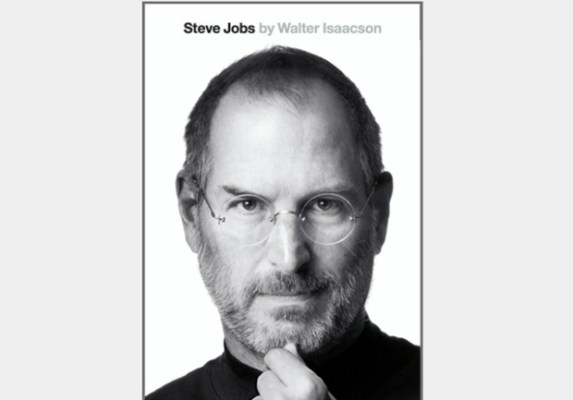
Steve-Jobs-BioCover-640x480_620x433
There's nobody in the world who knows more about Steve Jobs, outside his immediate family, than Walter Isaacson, the author of the massive hit new book, Steve Jobs. Walter, welcome to Tech Crunch T.V.

Thank you.
I think you probably overstate that. I'm sure there many people who knew Steve quite well. There are? For example?

Why, he had a very tight knit family. He also had this incredibly loyal cadre of people. He was, you know, if you read the book, he's kind of tough as a boss. But those who stick with him get totally inspired, and you have a every tight knit team, that was at Apple. Unlike most other companies in this area, where people come and go pretty rapidly, the people who stood by Steve stuck with him.

One of the other aspects of your books, which was very striking, was in spite of the fact that Steve Jobs even referred to himself as an asshole, and he clearly was a, could be, when he wanted to be, a very unpleasant man and a very cruel man. He had a large circle full of very close friends. Close friends, close colleagues, close family and I think you have to put that in context.

I mean the context of, you know, he's petulant, he's impatient at times, he can actually be pretty brutal on certain people. Yet those around him end up being totally inspired. So it's not a simple thing of the guy was a jerk. It's, well, there was a purpose to all of that and the people who understood the purpose and signed on with him got to put the gloves on.

Was it fair to say, that if you stood up to him, he respected you.

Yes, you know back in the early 1980's, he, I loved this part of, there's people telling me these things. They had a contest every year at the Macintosh team. Who best stood up to Steve Jobs? And it was Joanna Hoffman, wanted the first year, I think, in 1981. She was an Eastern European refugee family and really knew how to, you know, she was always yelling back at him and then nothing.

Debbie Colman wanted it at some point. Women tended to win it. And they got promoted, they got, they got. the inner circle. So, yeah, if you stood up to Steve and Steve would, I'd say, why are you so tough on people? Why are you so brutal at times He said, Look, that's the price of for being in the room.

I get to tell people they're full of shit. They get to tell me I'm full of shit. We have some real knock down, drag out fights but, we get To a place where we have a better product and we all can put up with each other.

I have to that my favorite bit of this book, which I think any. My house is reported. I was on page 405, you won't remember the page, but you might remember this incident. Jobs is arguing with his senior staff about whether to allow. whether to put the iPod software on Microsoft. Right. They're all in favor of it and he's against it, because of course of the long history of Microsoft.

And eventually after a long drive than argument he says to them, it's good he said one meeting when they showed them analysis. I am sick of listening to you assholes go do whatever the hell you want. Now I love that because I'm not sure did that reflect his humor? Well he was kind of self-aware about it.

I mean at that point, he said alright, I'll only allow the iTunes software to be put on Microsoft if you can show me that it makes That was his way of surrendering, cause of course it made business sense to have the iPod available, you know, to windows users as well. He was a he was somebody who could change his mind if you stood up to him, and there's multiple times in the book where he is fighting and fighting and fighting.

Now he never Wins an award for the gracious concessions speech. As you say, his way of conceding is to say, screw it do whatever you want. But he was smart enough to know. I'm going to. Tough people and I'll change my mind about it.

But in that meeting did every one laugh, did the room go quiet, did they all.

Well, they tell them, they laugh when they tell the story and Steve was comfortable telling the story. So I think Steve was pretty self-aware and he certainly had a good sense of humour. So he would say, yes. He would tell that story and say, I finally said screw it, do whatever the hell you want.

But, you know. I think he knew that he knew how to back down and sometimes do it and not kind of way. This is like a see the one upon a proletarian leader. How was he in a shuttle, where the way a Democratic leader within Apple itself.

He was more collaborative than he's sometimes given credit for for. Meaning he would walk around the design studio with Johnny Ive, for example. And just fondle. And Johnny would show him something and Steve would say that sucks. And Johnny would say well, yes Today the way they actually has some promise toward and together they would get to the right place.

I think that he had an executive team. He meet with the executive team every week. That was the place where decisions were made. So even though he could be, you know, hand down edicts, you could talk him around. One of the chapters in the book which is really is your description of how he single handedly negotiated the iPod deals with various executives within the music industry.

That couldn't have been done done by a traditional business development unit. It could never have been done by anyone but a charismatic leader like Jobs.

And here's a CEO and there he is sitting in the Warner Music conference room running the machine himself, showing the iTunes software off and all these people at Time Warner and Warner Music they're wondering, you know, how can the CEO be that passionate, that every detail, every design of how I worked.

And it really won people over. And he was, you know, nobody else, really, could have gotten all 7 music companies in line into selling songs singly at 99 cents which is the secret of the original iTunes store. My only criticism of the book Walter, and this is a very minor one is that you're brilliant in terms of adding the background to Job's negotiation with the music labels about the iPod and the iTunes store but you don't cover his negotiations with the telecoms particularly AT;T.

Right.
Behind the development of the iPhone. Was there a reason for that? Or you just simply don't think it's significant.

No, no. And it's a valid critic, I mean it's a valid criticism.

I didn't mean it in a, I'm just curious.

I actually spent a lot of time researching the AT;T deal. There was good Wired magazine story on that as a matter of fact. And then I went to the people at AT;T and sort of did the whole back story of how. Who did you talk to at AT;T? I didn't put it in the book so I don't want to go through all the sources now.

OK. But in the end there's things you just, I mean, it's a 700, 600 and some odd - but really significant, that if anything Apple could even be a future telecom company. Yeah, you know I thought it would be interesting if they decided they could bypass the cell phone carriers. And I thought for a while they were going to do that.

You know, there's maybe 20 or 30 things I reported out and then just in the end you leave it in the cutting room floor because it wasn't, in my judgment, the most interesting thing I had. But you're right, that's an important topic.

But did Jobs have to play as evangelical role with the Telecom as he did with the music business.

No I think it was mainly a negotiation with AT;T. And so it was a tough negotiation, but he brought them in unlike music labels. Unless you get all 7, you don't really have an iTunes store. So that was a much more difficult Rubiks cube. And when he was doing the music, it was just so fascinating because he'd go like behind Andy Lack at Sony Music's back to try to get Dylan in.

And you know Dylan a And Andy Lack ends up writing Bob Dillons a check for one million dollars to hold off not putting all the songs as a sort of set piece on the iTunes store. So, in the end I kind of love that struggle with both the Artist like Dylan and the Beatles which were the difficult holdouts.

And the music labels. to me it wasn't quite as sexy as him trying to make the AT;T deal.

Well, with or without Telecom, the book is totally sexy. Well good, maybe for you I'll put in appendix next time on the 6 or 7 parts I left out.

You said that publicly now Walter. You won't get out of it.

Uh-oh. Watch out.

At the heart of the enigma of Steve Jobs lies a riddle about authority. On the one hand, Jobs was an intrinsically anti-authoritarian figure whose life was a litany of rebellions against every kind of convention. On the other hand, however, Jobs often seemed to run Apple like a personal fiefdom, shaping products and strategy according to his own whims and instincts.

So, I asked Jobs’ biographer, Walter Isaacson when he came into the TechCrunchTV studio earlier this week, was Steve Jobs a tyrannical leader?

Isaacson, whose best-selling biography explores this riddle in some detail, told me that Steve was “more collaborative than he is given credit for.” Like other authoritarian personalities, Isaacson explained, the best way to bring out Steve’s democratic instincts was to scream at him. When you resisted him, Issacson told me, you got promoted. And if you didn’t, perhaps he implied, you got fired.

This is the penultimate excerpt of my interview with Isaacson. On Monday, he talks about where he sees Apple going in a post Steve Jobs future. Yesterday, he talked to me about Jobs’ historic significance.


Person: Steve Jobs
Companies: Pixar, NeXT, Apple

Steve Jobs was the co-founder and CEO of Apple and formerly Pixar. Steve Jobs was born in San Francisco, California to Joanne Simpson and a Syrian father. Paul and Clara Jobs of Mountain View, California then adopted him. In 1972, Jobs graduated from Homestead High School in Cupertino, California and enrolled in Reed College in Portland, Oregon. One semester later, he had dropped out, later taking up the study of philosophy and foreign cultures. Steve Jobs had a deep-seated interest in...

Learn more

Walter Isaacson is the president and CEO of the Aspen Institute, a nonpartisan educational and policy studies institute based in Washington, DC. He has been the chairman and CEO of CNN and the editor of TIME magazine. He is the author of Steve Jobs (2011), Einstein: His Life and Universe (2007), Benjamin Franklin: An American Life (2003), and Kissinger: A Biography (1992), and coauthor of The Wise Men: Six Friends and the World They Made (1986). Isaacson was born on May...

Learn more

Sponsored Ads

Sponsored Ads

Sponsored Ads

Upcoming Events

SXSW 2012

Austin, Texas

Disrupt NY 2012

New York City

Disrupt SF 2012

San Francisco, CA