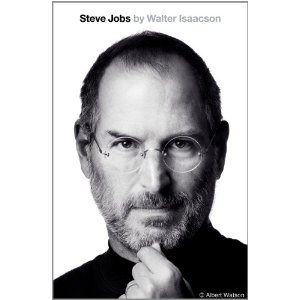
At the beginning of his rich and very fair biography of Steve Jobs, Walter Isaacson notes that Steve himself “found the endeavor of assessing historic influence fascinating.” So when Isaacson came into the San Francisco TechCrunchTV studio earlier this week, I asked him for his personal assessment of Steve Jobs’ historic influence. Including Jobs in a pantheon of business icons such as Thomas Edison, Henry Ford and Walt Disney, his major contribution to history, Isaacson explained, lay in his ability to combine awesome artistry and technology. But Jobs not only made history, Isaacson went on, he was also a reflection of it, channeling the Zen-like values and minimalist aesthetics of the counterculture into his products.
Herein perhaps lies the most fundamental difference between Jobs and Bill Gates. Jobs poured himself into his products; Gates continues to pour himself into society. Thus, as Isaacson noted, Steve Jobs, who represented a strand of the 60’s counterculture that withdrew from society, had more interest in dishwashers or furniture than in politics and even refused to discuss what he intended to do with his money after he died. Some people say this is why Gates’ historic influence will eventually be measured as being more meaningful than Jobs’. But I’m not so sure. Will Steve Jobs eventually be remembered as a selfish, self-absorbed ex-hippie unwilling to give anything back to society? Or was Jobs’ great contribution to society his synthesis of amazing technology and art?
This is the second of a multi-part interview with Isaacson. Yesterday, he explained to me why Steve wasn’t a tweaker. Tomorrow, he assesses whether Jobs was an authoritarian or a democratic leader at Apple.