Absolutely.
You know, this Facebook and the story of Facebook has sort of become part of the popular culture. And I think everybody thinks that they know the story. And it's been told so many times, that they're probably do know some version or another.
But take us all back to the early days in the dorm room. What was it really like
to be founding Facebook? Did you know? At what point did you know that it was, going to be bigger than colleges?
Yeah, absolutely. The first part of your question, what was it like? You know, fundamentally it was a story of just putting in a lot of hours and working hard, every single day. I feel like everybody likes to talk about the social network, of course, and they sort of paint this picture that we were partying every day and somehow finding time to do work in between sleep.
And it was really very much the opposite. You know, maybe they were like two or three parties in the whole first year that occupied one of our nights. And all of the other days we were just you know, putting in 14-16 hour days coding you know, especially while we were in school doing that while having course work and all of our other responsibilities in school, including campus jobs and just you know, putting in a lot of time and effort.
And when did you.... at what point did you know that it was gonna be bigger than just something that was like popular in colleges?
Sure. So, so Facebook was founded on you know February 4th 2004, and I'd say around February 5th, 2004 February 5th.
we were feeling pretty confident. You know it was just a really crazy experience, even seeing, just you know, the first few hours of usage and seeing a very large portion of the student body engaged with the app, and use it like crazy.... not just you know go and check it out and then get off, but you know, register and then be using it for the next three or four hours of your life, no matter what time of day that happened to be.
And then the next morning, you know going out and going to classes and, you know, sitting in the back of a lecture hall and Just sort of seeing Facebook on every single laptop in the room really gave us a lot of confidence, and made us think, you know There's nothing really special about Harvard students that makes this unique and makes people want to use it.
There's a bigger story here.
Sticking to colleges, it was almost like being in private beta for a long time right?
Sure.
Because only certain people could participate. Was that by design, or just because you didn't think the servers could handle anything?
It's definitely the latter, I'd say the first twelve months of Facebook's history was characterized by us trying to add capacity as quickly as possible, and basically using the list of colleges that were allowed to register as a throttling mechanism. So literally, we had bunch of experiences where we said: "Okay, you know, two months from now we're going to have twice the size of the user base.
Let's order three times as many servers as we have now. We'd get them in 30 days, put them in, and instead of having excess capacity Today the site was just running quicker, and so people would use it more, and so we'd immediately just exhaust the capacity that we put into the system, and we just can continue playing that game over and over until, you know, around the time of the Excel investment.
Right. One of the things that always impressed me about Facebook is that the company always seemed to be focused on the numbers that really mattered, right? We have these, we have vanity metrics that startups always put out and that don't really tell you what the health of the business is.
Yeah.
But it seems to me that Facebook always was pretty hardcore about measuring the right thing.
Yep. Absolutely.
When did that start and what was the philosophy behind that?
So very early on we were sort of tracking registered users and also tracking retention. And, you know, we were just, you know, constantly sort of having the conversation of well, you know, we should really ignore the registered user count and focus on, you know, how many users are coming back in 30 days?
How many users are coming back in 7 days? And partially this was driven by, you know, sort of observing a lot of stories in the news about MySpace and how massive their user base was but anecdotally and empirically you'd talk to people and it turned out that a lot of people were sitting on completely dead MySpace accounts.
And we said, "Well, OK, you really do get what you measure, so it's important that we track the right things, that were motivated with the right kind of product improvements. And the other thing that was really just important is the sort of highest level engagement metric. It was something we talked about quite a lot.
ComScore had sort of standardized on this idea of total minutes spent on site per user and we thought really hard about that. On the one hand it seems obviously good, but on the other hand Facebook was about efficiency and accomplishing a lot, and we wanted people to be able to get in and out of the system as quickly as possible, drive value.
So what was your from metric?
So, it was pretty tough, but for a long time we were tracking actual usage of the features, like how many comments were being posted, how many stories were being posted, how many photos were being uploaded.
Right. Active activity.
Yeah, so these are all these, you know, higher value metrics and sort of had, you know, struggled to come up with something to sort of summarize them all. And Facebook's still been iterating there and, you know, I've heard some of the metrics they're using internally now and they sound pretty good.
Yeah, like what?
I'm not sure if they would want me to speak about it, but I'll speak about what we use at a Asana, the sort of like, highest level thing, is a net promoter score. And just being able to break that up by cohort, and be able to, particularly we see directional changes in your product quality.
Right. So if you look at the evolution of Facebook, right, starting out as a college social network and then broadening out to the mass population, and then adding in features like the news feed, and then, you know, photos, messages, events, etc., etc., apps, platform. To what extent, you know, was Facebook following sort of a grand plan or grand scheme and to what extent were these directions a result of, you know, smaller experiments and small iterations and what took off and what didn't.
I would definitely say to some extent in both directions. You know, I like to say that, you know, sort of in 2004 when we were you know, also working on the Wirehog project. There was sort of a sub-set of the founders and some of our friends working on that. That was really, you know, sort of, portending the Facebook platform.
There was a box for your Wirehog media on your profile. There was an API that allowed people to authenticate into Wirehog and sort of describe who they wanted to have access to their personal web server, and all of these ideas were very literally manifested again in the first, First in leader versions of the platform.
But a lot of it were just things that took off like, particularly, photos, for a long time, you know, we sort of had this idea that we wouldn't really concentrate too much on the verticals because we wanted to really invest in platform and leave a lot of things for third parties developers, but photo-tagging just ended up being up so popular that that app, you know, ran away with itself.
It became, you know, one the primary things that people do on the site. Right.
Right. So, you know, years later, a lot of, sort of pretenders to the throne, show up and say that they invented Facebook, or they were, you know, the co-founder and everyone from the Winklevoss twins to sort of you name it. When these people pop up and lay claim to something which you helped build, at this point you're probably used to it, but when it first happened, how do you react to that?
You know, it was a little scary at first, to think that, you know, you could create all this value in the world, and somebody could just sort of assert claim to it, and take it from you if their legal team was good enough. But, you know, in the end, I think I've developed a mature perspective that, you know when you build something really big, that stuff will happen, and as long you execute it with with the right kind of ethics, and genuinely added the value yourself, then things will turn out right.
I think all of those lawsuits, you know, were settled exactly the right way and yeah, we're just moving on and able to sort of leave those in our past.
Right now we're seeing sort of second generation Facebook companies, right, Facebook Mafia, yeah, we left half tuck on the PayPal mafia, the Facebook mafia. And there's Asana, there's Quora, Path, and a number of other companies that we're starting to see. And, of course, many Facebook, former Facebook, engineers and employees in new startups.
Is there an ethos that comes from Facebook that is now sort of making its way through the Valley? And if so, how, what is that ethos?
I guess the thing that I would say most characterizes the Facebook set of companies, and you know I've talked a little bit with Sarah about this, is that they're, you know, they're really built to last. All of those people have done great work and added a lot of impact to the world and frankly, are financially very secure.
So, the only thing they're interested in now is doing that again. You know, adding massive impact to the world and thinking about the very long run and trying to build companies that last and, you know, really change the world for the better. So you know in all of those cases, those founders are completely against the idea of flipping their company back to Google, or having a talent acquisition or something like that... they really just want to go for the long run and go big.
Right. And you're an investor in Path and Quora.
And Quora, yep.
And Flipboard as well.
And Flipboard and others.
Right. So Path turned down like a hundred million dollar acquisition offer or more from Google. There's a report actually, that you're the one who talked Dave Bering or helped him decide to turn that down.
Yeah, I certainly can't take full credit. But, we happened to be on a vacation together, like the weekend he was making this decision.
Right.
And there was one conversation in particular that was me and him and Brian Singerman, and from Founders Fund who's you know... we're basically two of the principal investors in Path. And, it just was really clear from Dave's body language and what he was saying that unequivocally he did not want to do the deal.
And he felt a lot of preasure from you know, his other employees and, and, from some of the other investors to just do it, because "take the offer that's in front of you, don't risk it all." And I think think that's just sort of the wrong way to look at it. I think the lesson I learned from that is just to really set expectations well with all of the people you hire and all of your investors on this point that, if you don't intend to sell the company, you don't intend to sell the company and you shouldn't even be receiving letters of intent.
Right.
Or formal offers or anything like this. Don't even go to the table.
Right. Well, I mean, and, and. Facebook is the classic example of ...
Yeah, right.
...the company that refused to sell, no matter how supposedly ridiculous the price was..
Right.
...and it turned out to be too low. I think that's bogus, actually.
Think it's too low, so?
I think no price would have made a sale. I think the mistake again, like I just said was...
No, what I meant was, when somebody offered a billion dollars, everyone said you were crazy, but then...
Oh yeah!
Then it was worth 5 billions a few months later, so you weren't so crazy busy.
Sure.
But that's an exception, right?
Uh huh.
I mean not every company fits into that mold. Even a good company, you know, in terms of to grow to that valuation, you know, you can't use the Facebook model. That's an exception; it's an exceptional company, right. It comes once a generation, or once every few years. And how do you talk somebody into not taking a hundred million dollars for a startup that's just a few months old?
They can take that money and start something else.
Well, you know, in the case with Talon's acquisition that's not entirely true. You know, there's gonna be a renounce and you know, they really, you know, particularly in that case wanted Dave to work there. So, to some extent, you know, he was viewing it as indentured servitude.
Right.
So, you know, I don't think he needed to be talked out of it at all. I mean his heart was very clear, and he just needed somebody to say "It's OK for you to, it's okay for you to do this, it's okay for you to take the risk. You were taking the risk in the first place by you know, leaving Facebook where you're already creating a ton of value and this is the path.
What do you think about Google Plus?
You know it 's interesting, I think it's great to see a really well executed product in this space. I think you know, there have been a lot of competitors over the years. There have been a lot of competitors from Google over the years and I think Google Plus is certainly the best of them.
Do you use it?
No, I definitely don't. There is some key features about it that make it pretty difficult to use it if there are a lot of people trying to contact you. So I don't have a way for example, of subscribing to posts from my friends and not posts from people I don'tknow.
Right.
And, but you know, I think How would you fix Google Plus?
You know, I guess by adding some symmetry to the relationships. You know, there's sort of, there's value in the one way connections but there's also value in the two way connections and Facebook has both Mm-hm.
in the form of, you know, pages or one way connections and you know, I think it's It's a mistake to go too far in either direction there.
So, we've seen this flower of entrepreneurs in the valley and entrepreneurship as the costs of sort of start-ups goes convenient as people have more experience in companies like Facebook, you have more alums and you can go out. Are there too many entrepreneurs in the valley? That's a really interesting question.
So, I feel like I've... I've been in the Valley for seven years now and it seems like I've observed a fundamental shift in the culture. So, when we first got to the Valley, it's my perception, was that there were a handful of good companies that were able to attract a great, a large number of really great engineers to work on a single problem.
So, when Facebook, you know, starting in 2004 and starting recruiting out of the Stanford Network and some of the neighboring companies, we were really able to attract, really quickly, thirty to fifty of the you know, best developers I've ever worked many of them are not leaders in the organizations are the ones who started these other companies in the Facebook Mafia.
Right.
And, now, it feels like there's, you know, There's many more smaller ideas being funded. There's just a lot of companies you know, with more like three to ten people and the results of that is that the talent has become you know, really diluted. So you have to ask yourself, if a company like Facebook was starting today, would they be able to build a team as quickly that was as talented and ready to execute on that problem and I think, from my perspective, it's really unclear.
And I think, you know, it makes me a little sad, I think...
What should be the criteria for becoming an entrepreneur?
So, I think that the most important thing is you know having a really great idea. So, I've met a lot of engineers you know, in the context of recruiting for Asana, or just networking in general, who tell me they've decided that their next career move is to start a new company. They just have no idea what it will actually do.
And I recently actually heard an anecdote about somebody else considering... trying to raise money you know, just on their reputation and then you know, figure out the idea later.
Mm-hm.
And I think the...
Are they wearing flip flops and a hoodie?
Maybe. You know, and I think that's a good point that,you know...I think there's this sort of idolization of entrepreneurship that, you know, Mark and I played no small part in creating. And I actually see that as sort of the most negative contribution I've created in the Valley . You know, riding on the back of the greatest is just, sort of, you know, setting that up on a pedestal is this is what you should do.
And I think, you know, a lot of people, sort of, you know, when they ask me, you know, "Why did you leave Facebook?" they sort of project this idea of, well, of course, you know, you must have had problems with the organization or it was too big a company is something people say all the time. Or my favorite is that, you know, "You're a serial entrepreneur at heart.
This is of course what you need to do."
Why did you leave Facebook?
So we left Facebook because we had the idea for a sauna. And we talked about it for a really long time and basically looked for every reason to stay. And, in fact, one of the biggest things that almost kept me there was I hated the idea of starting my own company. I really didn't want to become an entrepreneur.
But the idea for a sauna was just You know, becoming so strong, we're becoming so passionate about it. You know, we're working on internal tools inside the company trying to help.
So, explain what a Sauna is.
Oh sure.
So, Sauna is enterprise, enterprise product. Why'd you go, that seems like a huge, you know, built Facebook, the biggest consumer facing service you know, on the internet.
Sure.
That's what you know, why go to enterprise? What's the big problem in Enterprise that you're trying to fix? That you think you have a unique, sort of, perspective on?
Sure. You know, so, I think fundamentally, the most important thing about Sauna is that we all have a consumer internet backgrounds. So, we're really able to take the sort of, user centric perspective on things. So, in answer to your first question, what is a Sauna? So we're working on tackling the problem of how groups of people work together and communicate about large projects and we think this is just really fundamental to, you know, every start up or any kind of project being successful is keeping everyone on the same page and being able to make sure things don't get, you know, dropped and everyone's communicating successfully So in terms of you know, what we're doing in Facebook, I had basically you know, in my time as a manager decided that the tooling for management was, was quite lacking and I started creating a bunch of you know, internal tools inside of Facebook including a task in Project Management System.
And you know, when Justin came in, he sort of brought me some fresh ideas and we were able to make something that was really effective and a later generation of it is still what runs the company today.
But what's fundamentally wrong with the way that enterprise software's built today?
Sure.
We saw sort of I think you know, the first wave of enterprise 2.0 companies were, were taking software that was in data centers and putting it in the cloud. Sure.
and I think that, you know, companies like Sales Force and etcetera, have done an amazing job in moving that transition, you know Sure.
for pretty far long, but what hasn't happened is that it still doesn't feel like... still feels like enterprise software right, when... for the user.
Yeah, for exactly the reason you said. They were taking desktop software and moving it to the web. Which really, you know, sort of ignores the fact that you can do something better when you're on the web. And you can, you know, sort of count on the fact that everyone has a standard operating system, everyone's connected.
You can do very different things. So part of it is just a sort of lack of innovation, which I think is an enterprise mindset to begin with. You want to do the safe thing; you want to sell the thing people already know slightly better, with a slightly better brand, with slightly better marketing, because you're selling to, you know...frankly, because you're selling to CIOs and you're selling to the top and that's what those people are concerned about.
Whereas when you're in the consumer world, you're selling to the user. And if you don't create a great user experience, they'll move on to the next thing.
Right.
I think that's fundamentally what's different about Asana.
So we've gotta move on because the...I want to get the start-ups up here to launch.
Sure.
What advice do you have for...there's a lot of founders in the room, a lot of people who want to be founders. You know, other than obviously have a great idea, once you have that great idea, what's the next step? What's the next step? Manifest it. You just have to get out there everyday and create your idea and recruit other people to work with you and build a big vision.
Well, thank you very much for joining us.
Yeah.
Dustin Moskovitz.
Thank you.
Okay, I'm going to hand the reins over to Paul Carr, who is going to be emcee for The Battlefield, Paul.
Hello.
, co-founder of Facebook and, more recently, of enterprise collaboration software company
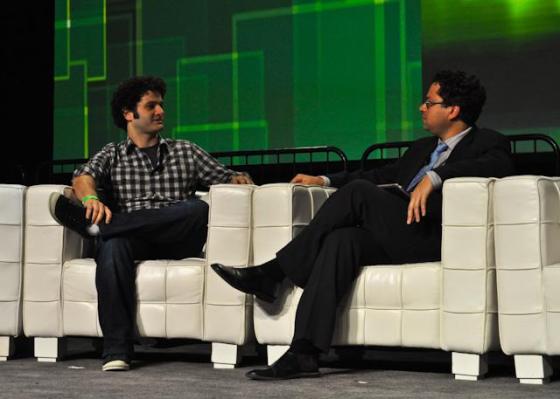
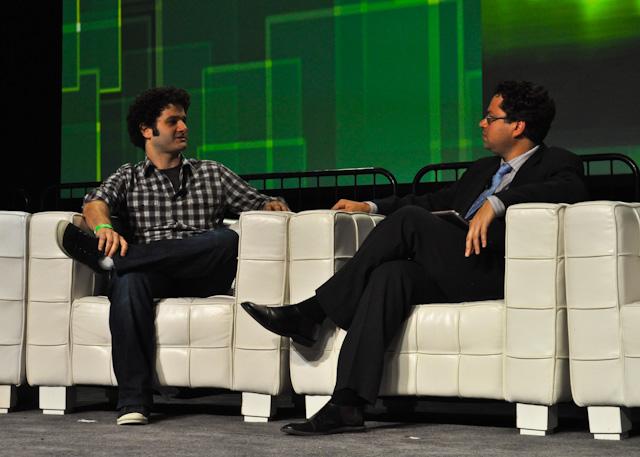
, spoke to TechCrunch Editor in Chief Erick Schonfeld at Disrupt this afternoon in a brief interview. The subject of their chat, for the most part, was the early days of Facebook and the changes the Valley has seen in the years since the company’s launch.
Erick also asked Moskovitz for his thoughts on Google+. And in case you’re wondering, no, he doesn’t use it.
To begin, Erick asked Moskovitz to talk about what Facebook was really like back in the early days. Unlike the movie, “The Social Network,” it wasn’t all parties, explained Moskovitz – in fact, there were only 2 to 3 parties in the first year. What the early founders of Facebook were really doing was putting in a lot of hours, he said. ”We worked 14 to 16 hours days that year.” Building Facebook took a lot of time and effort.
The work was necessary, though, because the founders knew that had created something really big as soon as it launched. “Facebook was founded on February 4th, 2004, and around February 5th, we were feeling pretty confident it would be bigger,” said Moskovitz. Right after its launch, Facebook saw that a large portion of the student body was registering for the site, and then using it for 3 to 4 hours. “We would see Facebook on every single laptop in class,” Moskovitz said. “We knew there was a bigger story here.”
Facebook was fortunate in that it was able to use colleges as sort of its own private beta, adding more colleges to the network as fast as it could. But the decision to ramp up this way was less about executing on a company vision, and more about dealing with its scaling problem. “The first 12 months were characterized by adding capacity quick as possible,” said Moskovitz, “as soon as the site was running quicker, people would use it more.”
What this meant for Facebook was that, even in the early days, it didn’t have the luxury of trading on vanity metrics. Facebook needed to know exactly how many users were on the site, and for how long. During this initial period, Facebook was tracking metrics like user retention, specifically how many users were returning within 7 days or 30 days. They knew, for example, that people were sitting on practically dead MySpace accounts, said Moskovitz, so simply counting registered users wasn’t enough. In addition, there was this idea of total minutes spent on a site, an idea popularized by metrics-tracking services like ComScore. But while on the one hand, it was a good metric to know, on the other hand, it could mean that the site wasn’t as efficient as possible.
“They’re really built to last, they’re adding massive impact to the world, and they really want to change the world for better,” said Moskovitz. In other words, they’re completely against the idea of building a company just to flip it back to Google.
As for Moskovitz’s thoughts on the newest pretender to the Facebook throne, Google’s new social network, Google+, he surprisingly had some nice things to say. “It’s great to see a really well executed product in this space. There have been a lot of competitors, but Google+ is one of the best.”
But do you use it?, Erick asked.
Moskovitz says that if he had to fix Google+, he would add more symmetry to the relationships. There’s value in both one-way connections and two-way connections, he said, referring to the following model that Google+ uses, versus the friending model on Facebook. But Facebook does have a one-way model with its Pages, he added. And apparently, he believes that’s the model to beat.
However, it was Moskovitz’s closing thoughts about how things in the Valley have changed over the years since Facebook’s launch that was, perhaps, the most profound. There’s been a fundamental shift in the culture here, he said. There are so many developers. There’s an idolization of entrepreneurship – something which “Mark and I played no small part in creating,” Moskovitz admits. There are even some developers who are raising money based on their reputation alone, he added.
But when Facebook first arrived, there were only a handful of companies, so it was able to attract top engineers. “Now it feels like there are many smaller ideas being funded…companies with 3 to 10 people,” said Moskovitz.
Would Facebook, if it started today, be able to find the talent it needed to execute on its ideas?
That question, ironically posed at a conference that celebrates entrepreneurship and the very early stage startups which could draw the talent away from the so-called “big” ideas, was left unanswered.