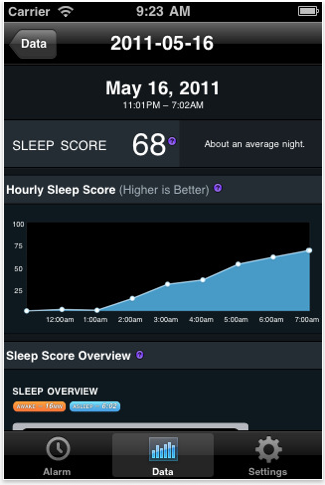
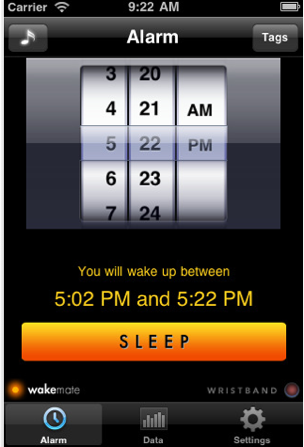
 The story of WakeMate could be viewed as a warning to all tech-savvy entrepreneurs out there: building a hardware device is much more difficult than most web applications. The promise of WakeMate is compelling — it sells a $60 wristband that tracks your movements during the night, syncs to your smartphone, and wakes you up in the morning when you’re in the lightest stage of sleep, thereby reducing grogginess (hopefully). But the going hasn’t been easy.
The company trudged through a year of delays, faulty units, and upset customers before it finally started shipping in December, only to run into another issue: customers who had WakeMate units were having issues with the accompanying smartphone applications, which weren’t properly syncing. Which led to more negative reviews and frustration.
But now things are starting to look up for WakeMate. In April it released a point update for its mobile application that fixed many of the issues, and today it’s releasing the 2.0 update for iOS, bringing with it a revamped UI, new features, and yet more bug fixes. And because these improvements are all being made to the mobile applications, users don’t need new devices. You can grab the iPhone update right here.
The biggest upgrades are in reliability. WakeMate uses a Bluetooth connection to transfer data between the motion-sensing wristband and your smartphone, but leaving the connection on over night would be a major battery drain. So WakeMate intelligently turns it off, then reactivates the connection when it’s approaching your wakeup time. The only problem: sometimes the connection wouldn’t be reestablished, causing the alarm to always go off at the ‘fail-safe’ time and negating the anti-grogginess factor entirely. That’s now fixed, and the WakeMate team says the alarm now works reliably.
Other improvements include better accuracy for the device’s battery meter, deeper analytics, and tagging (you can remind yourself what the conditions were for a given night’s sleep). Another recent addition: you can now purchase a larger version of the WakeMate wristband, should you find the original size too tight.
WakeMate isn’t sharing any sales numbers, but they say that since the update in April their reviews have generally improved. And those reviews are contributing to more sales — in the last three months (since the first mobile app was released), they’ve seen 50% growth in sales month over month. And now that the app actually works, people are using it more — nightly uploads 83% since last month.