Elin is the Community Manager for TechCrunch. Previously, she was a Community Manager at Slide and was in charge of one of their most successful products, SuperPoke! Pets.
Originally from Huntington Beach, Elin attended California State University, Chico, where she studied Organizational Communications and Art History. → Learn More
Our last day of Disrupt NYC was bittersweet, but we all got to ride a Tesla. Make sure to check out our favorite moments from Day One, Day Two, pictures of the whole event (including the Hackathon, Startup Alley, backstage, and our after parties), and all of the videos we shot while in New York.
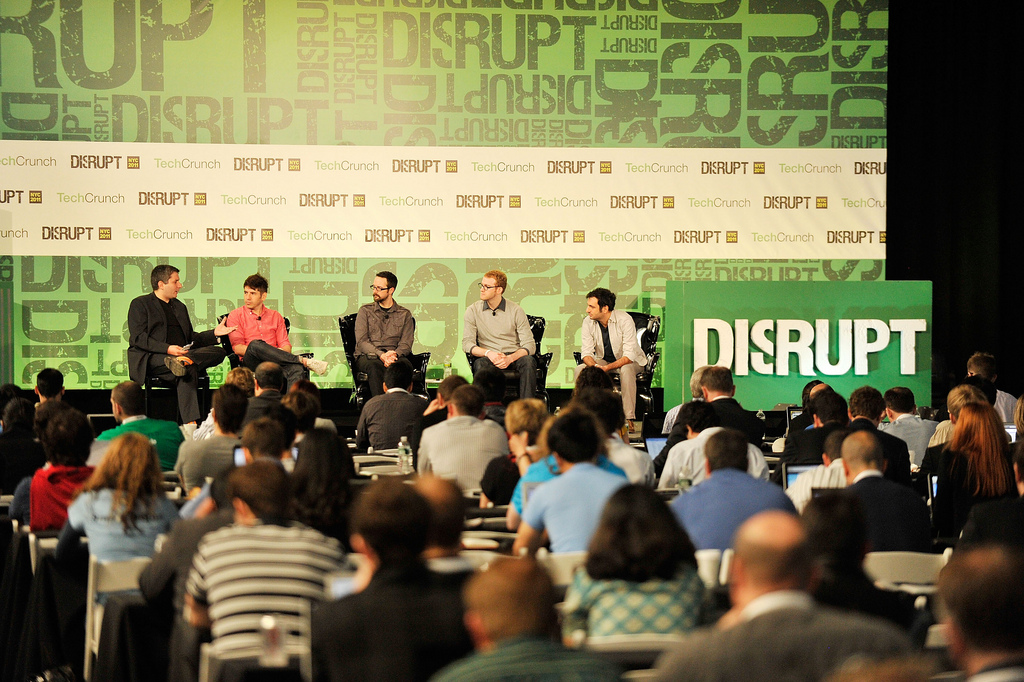
Looking back, here are some of our favorite moments from our last day of Disrupt in New York City.
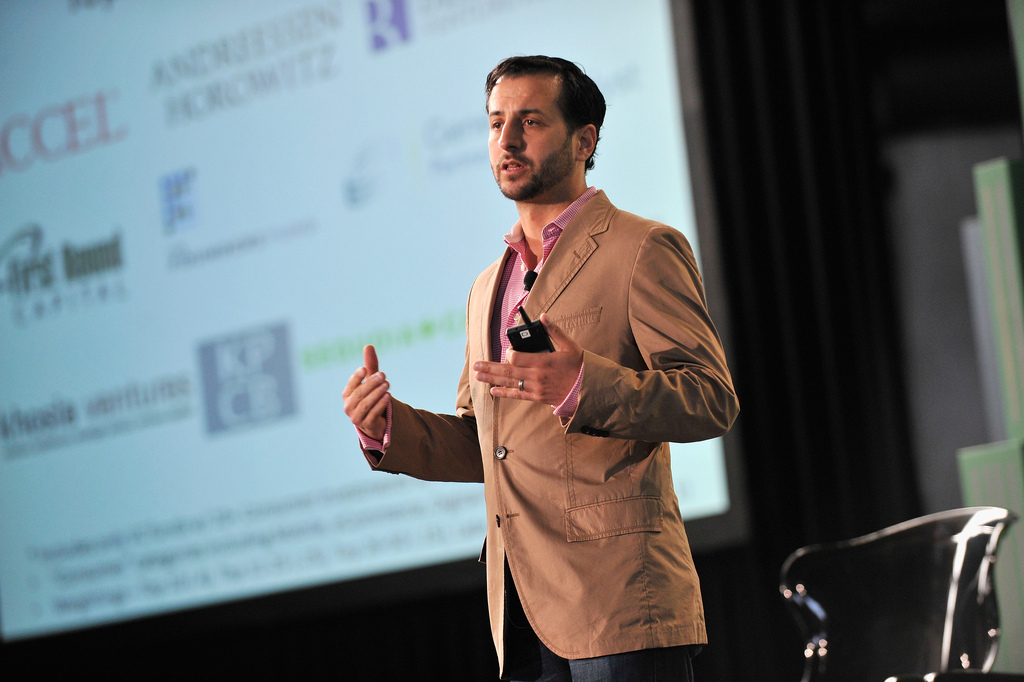
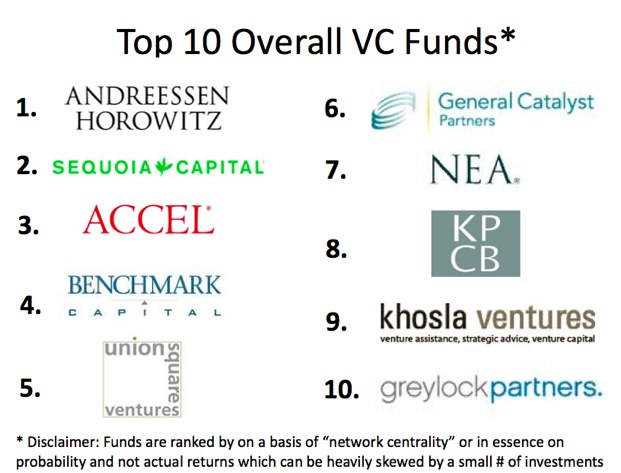
Chris Farmer, a partner at General Catalyst Partners, introduced InvestorRank at Disrupt and revealed the top 10 venture capital firms. He explained how InvestorRank looks at the connections between VC firms and is based on how connected and trusted a VC firm is. Many people were surprised to see where certain firms were ranked. Do any of the rankings below surprise you? Be sure to read more about InvestorRank here.
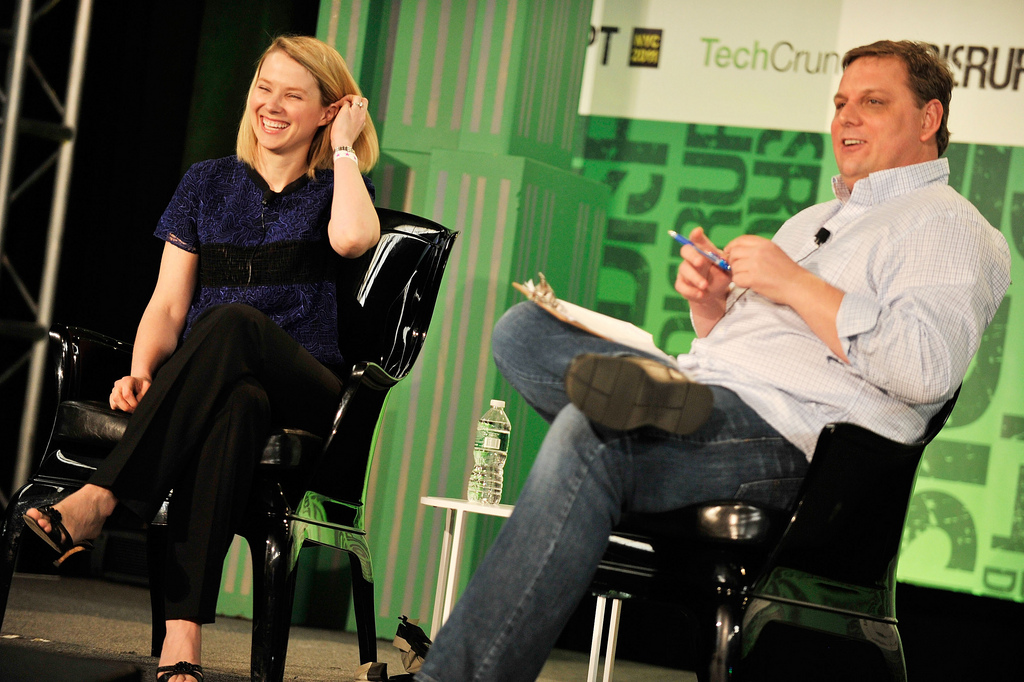
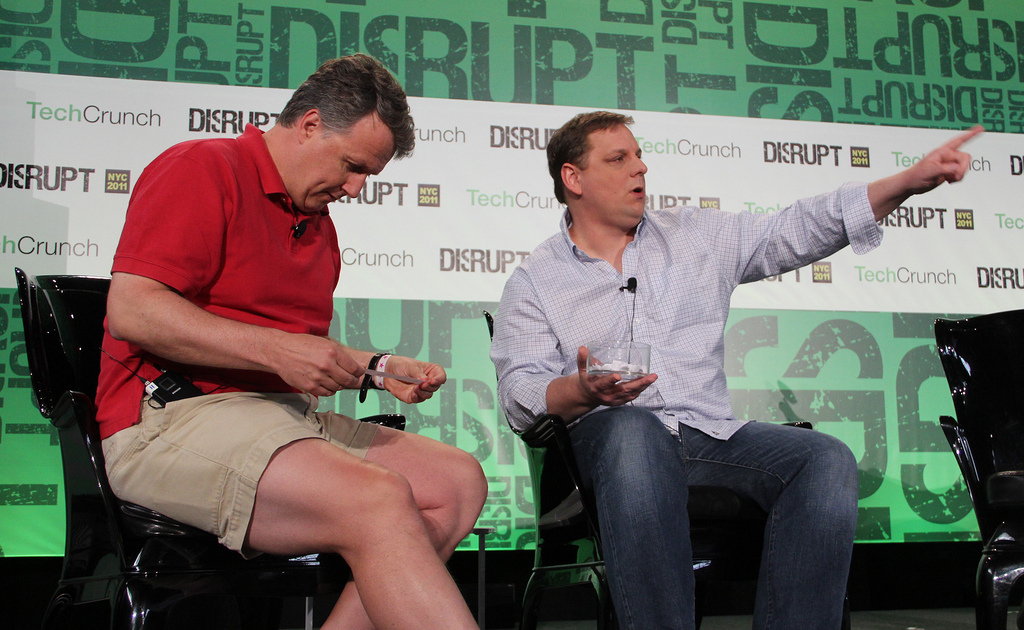
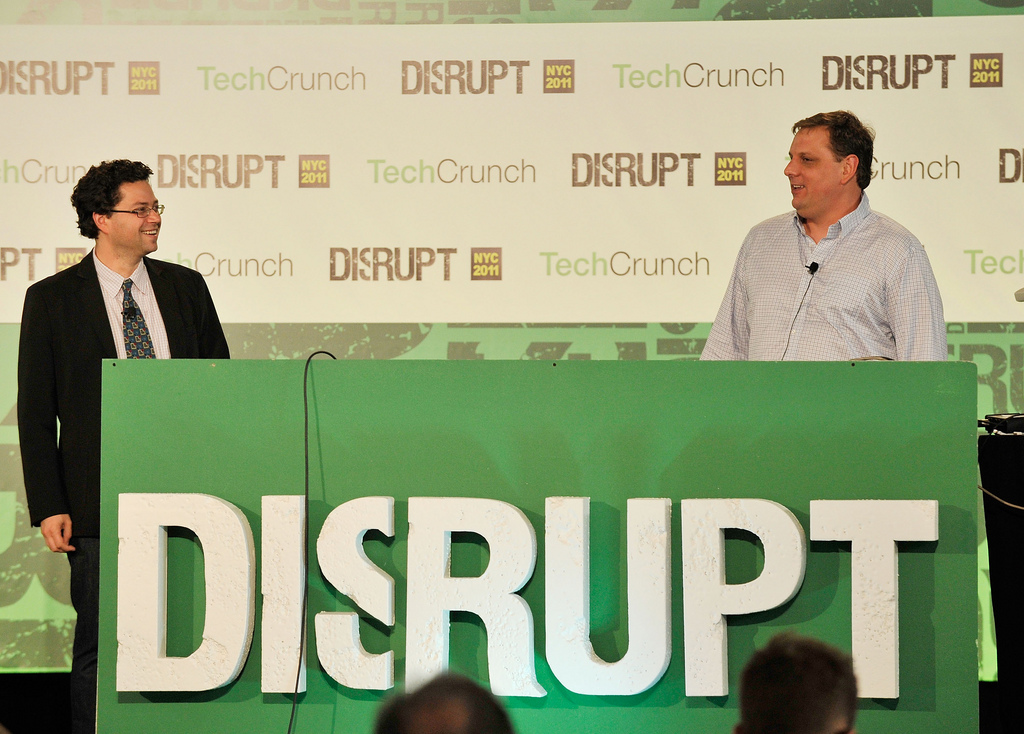
When Square COO and angel investor Keith Rabois took the stage with Michael Arrington, they began discussing the mobile payments product and his investment strategy. Knowing Square was on track to process $1 billion in payment volume within one year, Michael Arrington asked Rabois if he thought Square will ultimately do better financially than PayPal.
Rabois was more than a little optimistic about Square’s chances against PayPal, “We are not limited to just e-commerce, we actually enable real world payments, which is a much bigger market and is more valuable.”

To see more of Arrington and Keith’s chat, be sure to watch the video below.
You were busy, so I had to talk with others about amazing stuff he's going to say.
OKYou 're going to ride that offstage.
Why don't we just give it away to the audience right now?
OK, maybe we could.
Are we legally entitled to do that?
No.
Good morning everyone. I'm here with Keith Rabois, the COO of Square. Welcome to Tech Crunch Disrupt.
Thanks for inviting me.
Thanks.
So yesterday you were, was it yesterday? You were busy Monday. Yeah, it's already Wednesday. You were busy back in San Francisco launching some really interesting new products with Livestream to here. Thank you for doing that.
We appreciate you hosting us.
I want to talk a little bit about that. But in exchange for talking about that and pimping your new stuff, I want to pick your brain about a whole bunch of things, if you don't mind.
Sure. Let's go.
So first off, you hurt your knee.
That's true.
And that's why when I originally invited you to Disrupt you said I can't come because I hurt my knee playing soccer. And then now you actually made it out here even though your doctor told you not to travel.
So, yes. I sprained my myself.
My question for you is, what's a grown man doing playing soccer?
Some of us have to try to stay in shape. Some way or another and soccer's more fun than going to the gym. It's actually an Did you just say I'm fat basically ?
I believe there is a connection between your physical fitness and your brain, so we try to encourage healthy activities.
So let's talk about Square.
Sure.
So what you announced. And who here has seen what Square announced? Are you guys aware of it? And OK, new question.
We should rebroadcast. Only about half of them have seen it.
We 'll force everyone. Who here has used Square either as a buyer or a seller?
There we go.
Wow. Yesterday how many people play CityVille, and it was like, me. Bing, Gordan and I, and that was it.
Awesome.
More people use Square than play CityVille. I'm actually proud of that the thought of.
That's the first statement from our perspectus.
So tell us about the two things you that announced on Monday.
So we were really excited to announce two things on Monday. One we call Square Register which is the default way to run a business in America in 2011 and 12, which is you take an iPad and you replace these clunky cash registers and replace these ugly point of sale machines. Your place in need for a menu, your place in need for ugly loyalty cards, paper and receipts that everybody throws away, all in the box, all three.
We just charge 2.75% for every transaction you swipe with your credit card. It tracks all of your sales. It gives you an inventory reporting. It's awesome.
Is it like an introductory rate? Sort of once you get them locked in, and you're taking over the hardware and the software in their business you're like it's 5%.
No, we don't believe in that at all. As you know, the financial services industry has historically been predicated on these teaser rates. where people, you'll see these solicitations in the mail if you're a small business or a local business, you'll get offers of 1.7% and then there's like 55 footnotes.
And in fact actually, if you look at these documents - and I went to law school, as you know - it takes me like an hour to read one of these documents. And, you know, like, I'm probably a little bit more suited than the average small business to do that. But there's no way to figure out what you pay with most services.
So we have a brand that stands for simple and transparent. What you see is what you pay. So all we charge for is 2.75% per credit card swipe. Everything else is free. Works with your iPad or iPhone or Android device.
So tell me about the card case.
So square card case is the flip side. So if you're a consumer, what we now offer you is a value proposition where you can just swipe your card once and return any time to a local institution - your favorite local coffee shop, your favorite local bar - and just pay with your name. So imagine going to your local bar...
So wait...so, okay. So, let's just say...so I come in and let's say this is my phone. I don't keep my...I don't have my phone with me on stage because all my friends call me. And then it's just buzz, but yeah, so...So here's my phone, right. This is the new...the Android H2O. All right. And...
It 's about as good-looking as one.
Yeah. So you are no longer the CEO of Square. You work in the local cafe.
Okay.
And you work the new iPad Square cash register.
Got it.
So I'm like heading down, right, and I pull up Square on my H2O. And I, you know, it knows I'm coming to a unit, it could pull up, like, your, sort of, stuff on Square, and see your menu.
So you see my menu updated in real time. So anything I change on my menu for the day, specials for the day.
It's right there on my phone.
You can even see the most popular items.
But I can't actually order.
You can't order that today.
But anyway, so I can't order, but I know, I like, oh, wow, the latte looks good.
Exactly.
Hey Keith, sorry about the knee, I would love a latte. Okay.
Right.
So you hand me a latte.
So I hand you a latte. And that's all you have to do now, since I know your name, I'll just say, "I'll just place it, put it on Mike." But if, let's say I didn't know who you were, you would actually tell me your name and say "Put it on Mike's tab."
Yeah, this is all confusing. I think what you're saying is on your iPad at the cash register-
Correct.
-it shows like the four people in the cafe that have Square sort of open or are users.
Exactly, you really need to see it.
If I've already swiped my card with you once, we're good. I just hit a button, "Pay."
You don't even have to hit a button, "Pay." You actually have to open the app sometime within a two block radius, like when you're approaching the store, consulting the menu. And then when you get to the cash register-
You hit a button.
I'm hitting a button.
I don't authorize at all.
I'm checking you out.
So you could just sit there and check everyone out for whatever you want and all I know is I get the receipt.
You get a SMS notification.
Is that legal? Can you charge a card without any authorization whatsoever?
It's very compliant. It's just like one swipe. Think about one click on iTunes or one click on Amazon.
There's no click. Except it'd be Apple clicking. It would be like-
You went to the store and said I want this. We 're just removing the friction and mechanics of paying.
Fair enough.
Led me to focus on talking to you about this great Cappuccino I just prepared for you.
So this is pretty awesome ut my question for you is, is why not stored value at this point? I mean, you're right there, right?
So, you're still charging my card for every little thing.
I think stored value, you have to create a stored value only where there's a value proposition for the consumer. So I don't think there's a lot of people running around that want to add balances to their phone. Like, would you do that?
Sure .
Who in here, raise your hand if you would actually add a balance to your phone, like in advance.
Why not?
Well, why?
Better than like, It's better than a separate 25 or $1.50 charge to my card why not have $20 or something in stored value. And you did this with Paypal because you're a Paypal exec and it worked out pretty well for you.
At Paypal, we never required you to have a balance. What would happen is, let's say I was an eBay seller and I would sell my goods on eBay.
Yeah.
We allowed you to preserve and keep them in the PayPal system. Actually it provided a very attractive interest rate. For a long time, it was the highest interest rate you could sort of earn in, let's say, a money market fund. And that encourages you to keep the money, because...
So you'll never do stored value, is what you're saying? Because backstage you said it's coming.
No, I didn't say...
I said, "is stored value coming?" You said, you know, "Yeah."
It's coming from other players.
You did that thing that said "I can't say, but it's definitely coming."
I don't believe in stored value where you have to advance money into your own account in advance of a purchase. I do believe there's some value proposition just like a bank, where someone makes money, they reserve the money somewhere, and they leave the money there, because it's attractive to do so.
Speaking of PayPal, We're talking about the growth rates at Paypal versus your growth rates at Square. And I know I used to love Paypal, not just because of the I think then at first and then the five dollars you got. Yeah, I loved it because you could pay through the infrared on the phone, you guys remember that?
Any of you guys just pay people and it's really neat. How, you told me that you're, actually even now, you're going to do a billion dollars in transactions this month.
No, I wish.
You're getting to the point where you've done a billion dollar run rate.
Run rate, Right, right, exactly.
And that's over seven, eight months?
So, no, that's if you annualize what we're currently doing.
Oh, I'm sorry. Actually you're on one billion dollars sort of run rate. So it'll imply that you're doing like, you know, you'll do, like, ninety million in a month or something. And it's been how long?
Seven months, we launched October publicly.
Okay, so where was Paypal after seven months? That's my question.
So Paypal had, the first three or four months actually, we out-executed Paypal so I used to have a slide presentation where I sort of compare our rate of growth versus That was before you joined the company, right?
No. I joined August last summer.
OK. That's when growth just hockey stick?
Yeah, totally accidentally, but good conflicts. But, in any event, the key comparison to PayPal is, PayPal was a free product. Many of you may remember that. Paypal charged That was, I was setting that up for the punch line.
Oh, you're setting up the punch line. OK, so in the fifth month, Paypal actually outperformed us in-group pretty well, but Paypal also provided its You're roughly tracking Paypal's growth?
Yes, except that we're not free.
Paypal paid for new users.
10 dollars per user per
How much did Paypal pay out?
$5 million in March of 2000, just that month.
Just in that month?
Just in bonuses. Let alone the cost of not
And PayPal was completely free, and you're charging the two point seven five percent introductory rate.
No, it's not an introductory rate. It's all, what you see is what you pay. No fancy calculator required.
This Google NFC, this They've announced without announcing, they're going to announce tomorrow, sounds like it's pretty competitive with Square, and you don't need the swipey thing. Is it just, like, game over, done? Go to your next start up, or?
Oh, of course, my, Well, that seems pretty compelling, right?
No, I think there's two things to point out, I mean, this is obviously all rumors. Speculation, I mean, I've read articles on the Web, there's no product yet live to play with, so, planning on a product that you don't get to use, It's pretty overt rumor and speculation at this point, they're going to use NFC that a lot of people check out, without a credit card.
So the way we think about NFC is, it's an interesting technology, but it's technology in search of a value proposition, so at Square we focus on how do we deliver, how do we deliver value to consumers, how do we deliver value to local businesses? So we start with, what can we do to make the world better for buyers and sellers, and how do we forge tighter relationships between them and take the friction and mechanics out of the way.
We don't see really any benefits to NFC in that process. Second thing is it has no relevance to a lot of. The core tentative square is that anybody can get paid with credit cards and debit cards, NFC has nothing to do with that. Google's not announcing a way for you to accept, get paid on your phone.
They're announcing potentially a way to pay with your phone, which is quite different than the core essence of Square.
When will you become an issuer, a credit card issuer? Because you're doing all the pieces, you say no stored value, although backstage you said definitely stored value, I thought you did, maybe, you had that look that said but the issue work, why not issue a credit card at this point? Square's a brand.
People love it. They certainly love it more than Chase or Bank of America. Why not just go there?
It's a great idea. We'll consider that. We have 100 employees, full-time at Square. We're growing really rapidly. We're adding one or two new people at least per week without fail. There's only so many things you can do at the same time.
If you did it, would it be, would you become a bank and do it, or would you just do it through a bank and a partnership to your local one?
I doubt that we would become a bank. But Paypal issued basically debit cards, they were called Paypal Preferred cards the top two hundred thousand users, they were very attractive, there was a lot of value proposition, it had like a five percent cash back, it was actually a great program that Reed Hoffman came So there's a lot of ideas in the space that we could take advantage of and innovate on top of, but we're not committed to anything right now.
Come on. Give me one piece of hard news besides the stuff that we live-streamed over there.
Hard news. I don't know.
The stored value? Probably not going to do it. No commitment. Issue a credit card? Probably not going to do it. No commitment. Google? No chance it competes with you. That's actually a pretty strong statement. But nothing else on this? If there's not, we can move on to your investment sort of stuff.
I 'm happy to chat about anything. Obviously we have lots of future product plans. We always explore them internally and debate them. We just did an announcement on Monday, so we'll have some interesting things.
Well, congratulations, I'm very excited about it.
Thanks, we'll get you using it as soon as you get back to San Francisco.
I'm, theoretically I'm an avid Square user. I just, I don't like it. I don't like the swipe thing so much. And I told Jack this, actually that is a question. I don't like the design of it too much, I think it would be better question about Jack is, like, you are...I assumed you were acting CEO, but you say you're actually still the COO.
He is the CEO of this company.
Of course.
Is it weird that he's doing both? Is it hard to get his attention sometimes or...?
No. I mean, my role hasn't changed a bit. Like, so I've been COO since I guess September of 2010, and the company operates the exact same way it always has. Jack sets the vision, product directions, the pixel perfection on everything we do, and runs engineering, runs design, and that hasn't changed at all.
Okay. And so it's working out really well?
It's working out great.
No complaints at all?
Oh, no. Not at all.
You don't feel like, you know, you're the mistress, and he's married to Twitter or anything like that? Nothing bad to say at all?
No. Absolutely not.
So you are one of the most impressive angel investors in Silicon Valley. I mean, you...there's this hit list for decades now that you've invested in. You've invested in...you're on actually the boards of Yelp and Zoom.
That's correct.
You have invested in Airbnb, which is just the darling right now of the...I mean, everybody You just saw onstage why.
What valuation do you invest in at Air B;B? It was the last round, right?
Oh, no. It was, well a while ago.
What was the evaluation then?
I can't tell you, but it was a lot lower than it is now.
What is it now?
Why don't you ask Brian?
You invested in Youtube at what valuation? This is one you can tell me, right?
It was the first, I can't remember, it was somewhere around $10 million dollars ?
$10 million dollars?
I don't remember.
And that sold for one point six five.
Correct.
Billion.
You were an investor in LinkedIn, or you were at LinkedIn, Both investor and employee.
How much money did you personally make on the LinkedIn IPO at a $10 million valuation.
How much money did you make on your sale to AOL?
I will tell you, if you tell us.
That 's a hard trade.
You invested in, to be honest, I would have made you tell first and then I wouldn't of told.
Journalist .
You invested in Quora.
Yes.
And that was a 90 million dollar valuation.
I won't confirm the valuation but it was part of Benchmark Surround. Okay. You like that investment?
Yes. Oh, yeah.
And then Palenteer?
Palenteer.
Okay. Anything else?
Event Right, another great company.
A huge winner. It looks like they're going to win.
Kevin's doing awesome. Kevin and Julia both are doing awesome. You should have them onstage.
What do you look for in an investment?
People. Mostly people.
Team.
Like, the individuals founders.
Idea really matters far less than--
People first, idea/product second, but product is really a way of reflecting back on the person. So, you can sort of see by the product instead of a resume.
Yeah.
Like, how the person thinks about the world and what kind of things the grasp.
Good.
And things they can teach you.
Yeah.
So, looking at the product is awesome and then people.
If you were fetching yourself, as an investor looking at you, What would you say your biggest weaknesses are?
I am not a product visionary. That's why I like working with those who are.
You're not a product visionary?
I'm pretty good at picking up whether a product will resonate or not, but I can't actually create that from scratch.
You like being with the product visionary and help making it happen.
Yeah, I mean, there's not that many product visionaries, like, in the Valley as a whole. I mean, that, we're sort of limited.
Let's name them. So Jack's the best. Jack's the best I've ever worked with.
Your boss, right?
Yeah.
Yeah, OK. Who else? Would Steve Jobs-
David Sacks is great. So David ran product to Paypal. He now-
Somebody who wasn't at Paypal. So Max, David, let's leave those guys out.
Okay. So the core team's amazing. It's a combination of Adam, Charlie, and Rebecca for the most part, started the original.
Okay, let's take out anything you've invested in as well.
Alright. Lots of Apple products. Unfortunately, I don't own any shares, never owned any shares of Apple. But I use them all.
Are all product visionaries a little bit crazy?
Yes. Absolutely. I think all great entrepreneurs are a little bit crazy actually. I sort of had this phrase once that, sort of I was brainstorming with Peter Till once which was like "Only disruptive people create disruptive companies." If you're completely conventional, it's very hard to create something radically interesting.
Tell me the chances, 0 to 100%, that Square will be more important culturally than PayPal.
Culturally, that's a good question. Fifty-fifty. and more, and we'll do better financially. Considering PayPal, the investors it was ultimately 1.5 billion. Right?
Yeah, so I'd say 95%.
95% chance.
Yeah. Yeah.
Also I just think our market is so much more massive. So PayPal only serves eCommerce which is 5% of the U.S. economy, 6% if you get, you know, sort of stretch things. We serve the rest of the world which is 20 times larger. So, Paypal is limited to eCommerce. The real world is 20 times larger so we should do 20 times better.
Plus our value proposition resonates better.
So, you're saying Square is worth 30 billion dollars then.
Today? No.
You said 20 times better.
Paypal has been around for a while. Paypal wasn't worth 20 billion dollars, a year after launch; it was worth maybe around 500 million dollars, so we're much more valuable and will be more valuable than PayPal.
So, you're only worth 10 billion right now?
If you want to invest at that, we can probably cut a deal.
So the headline is, Keith Rabois, Square CEO, says Square worth 10 billion dollars.
That'll be like the same as Peter Thiel like headline in 2006 about Facebook being worth 10 billion, which proved to be somewhat conservative.
I know you have been traveling, but have you seen any of the Disrupt battlefield companies?
Yeah, I've been to reading a lot about it.
Yeah, what's your favorite?
I personally like the heart rate monitor one. I think the technology is amazing. I think that's been incredibly difficult to do. I don't know if it's the biggest business of all the things you've had onstage, Yeah.
but it's the one product that I would love to have.
They got into a swearing match with Chris Sacca onstage yesterday. Didn't do so well with the judges. I liked it a lot, too.
I personally would really like to invest in it. I think it's awesome.
You 'd really like to invest?
Oh, yeah. Sure.
Are you guys out there in the audience? Or did they go home in a huff?
They went home.
You know, they might want to talk to you about that. Any of the others? I don't want to put you on the spot because I know you No, no. I mean, I love seeing the update from CloudFire, because you may What do you think about remember I was the judge for them last time, Yeah, but they're--
They're awesome.
What do you think about Get Around? You know, the, sort of Airbnb for cars.
I've invested a little bit in something that's partially competitive called Zimride, so I probably shouldn't talk about it.
You probably think Zimride's way better.
Zimride's amazing.
Yeah. Okay. Great. Actually, there are probably a couple of questions the audience would like to ask, Sure.
and we have a minute left. Anybody have a question for Keith? Just tell us who you are first.
I'm Cameron Kunduth, and I'm wondering, Square lets any individual sell goods and services. How do you see that disrupting traditional small business models?
I don't think we want to disrupt traditional small businesses, I think we want to empower them and make life easier for them, like, historically, most small businesses have been unable to accept credit cards, and credit cards will make your business grow. Depending upon what kind of business you're in, it may grow as little as ten percent, as much as eighty percent.
I think that's what you meant, is how will new Burton businesses flourish is what you meant.
No, actually, I see Square being disruptive in the sense that if I can hold inventory in my apartment, then I can sell it to you, and not have the overhead of having a storefront.
Sure. Yeah.
Well, it's been great for the drug and prostitution trade. Right?
That's why I said services as well.
Yeah. I know, the joke is old, but it's just, I can't let it go.
I think every time I see you, you have the same joke.
It 's just so obvious. Do you remember that guy did that video?
Yeah.
We'll play that later, of the guy that was joking selling drugs. Get a pile of cocaine and
We screen all of our transactions methodically, and all of our users are vetted very carefully. Cash is used for all of those You can say with 100% certainty, Square has never been used for any kind of illegal transaction including drugs and prostitution.
No. Nobody has ever moved money or any type of transaction whether Paypal, Amazon, Western Union Square CEO admits Square used for drugs and prostitution.
No. I said all other services have been used for drugs and prostitution, but our basic mission is to create the ability for small local businesses to thrive.
One of that is accepting credit cards without the friction, without being disqualified, so traditionally, to get a merchant account in the United States, you had to have a FICA score, and the FICA score would screen out sixty percent of our users. It has nothing to do with--
Yeah, but you can use PayPal.
You could use PayPal online.
You could use cash.
You could use cash, but then you would lose out on sales. So if you don't accept credit cards you're going to sell less. Like, people run out of money. Like, when say you're at a farmers market, you only brought with you, like, fifty dollars; and if you see that next good that you really are in love with, you have no way of purchasing it.
So, that's the first step.
Do you feel as though your question has been answered? Alright. One more.
Hi, my name is Rachel [xx]. my question is about using Square for charity, are there any plans to waive the 2.75% fee or to make it easier for sort of flash fund-raising, like for example, with the tornadoes in Joplin and Oklahoma?
So no, because our costs are the same, so in other words, Visa, Mastercard, AmEx, Discover charges the same regardless of whether the transactions from Mike's garage sale or for your charity.
I love garage sales, by the way. It's like a weird thing with me.
We saw that motorbike.
I want to give that away so bad. I don't know what the legal liability is if we just give that away. But if we gave to somebody, how are they not going to let us give it to them.
So processing for non-profit charities has been one of You want to do an auction later?
Yeah, let's do that. We'll sell it through Square.
We'll do it later. I'll check with the lawyers and see if we can get away with that.
So our rates are actually much better than if you look at other competitors, other options for processing for non-profits, actually they're actually very, very expensive a lot of compliance costs associated with nonprofits. The banking industry is quite conservative about nonprofits. Historically people have been able to abuse the nonprofit label so we have be very careful about who we process for.
I think what's best about it though is that it gives you an opportunity to make an on the spot donation that you maybe otherwise couldn't make, or wouldn't make it.
So imagine you're a candidate for office, and let's say I was running for Congress, and I come up.
Do you think you ever will run?
No, I have no intention to, but, as you know, Jack may run for mayor. So, a great product for raising money is, when you say, oh, I'd like to write you a check tomorrow for.
What do you mean I know Jack may run, I didn't know that.
You didn't read that in Vanity Fair? You need to improve your reading list. Well they enhance it. Well imagine I'm a campaign.
I'm not going to let that one go. Vanity fair would be improving my reading list. So go ahead. Sorry .
So imagine I'm running for office, and instead, normally, I would approach you, and say, will you write a hundred dollar campaign contribution?
Yeah.
And say, oh, I'll send you a check tomorrow.
Yeah, yeah, and that never happens.
Of course, you know, 90% of people forget to do that. Imagine now I come up to you and I say, "I'm running for office Mike, give me your credit card". And then not only are you on the spot to give me the contribution, which maximizes the opportunity and the chance that you do that, but also I'm going to look very carefully at the amount you're contributing.
Have you seen any homeless people try to collect donations using Square?
I have not.
It'd be a great marketing trick. Okay.
Thank you.
You want one more?
Sure.
She's been waiting.
We'll just cancel the next panel.
Okay, one quick question. I'm a student, I just finished my first year at Michigan, and I'm interning with the Kaufman foundation this summer, and I had a question about your take on investments. Right, so, I noticed that during the startup battlefield, a lot of the companies didn't mention what the current market was.
Looking like what competitors are out there, how do you rank that in what you evaluate throughout when you take a look at a company?
So I don't look at that very much at all either. And biggest reason is the best companies I think are in non-consumption markets, which is basically they are forging a market. If you think about Youtube or Air B and D, there wasn't necessarily a clear market opportunity. You're creating that andTwitter is a great example of this.
If you'd asked Twitter what was the market opportunity for Twitter, what would the answer have been? So, that's one reason. Second thing is, I actually don't believe that competition dictates your fate. I think, generally, if you look in the mirror as an entrepreneur, it's what your team decides to do or doesn't do that dictates your fate.
So I am more focused on what 's the quality of the individuals involved?
You know it's funny, everybody says that, and as an entrepreneur I get that, I mean, I've been in a lot of failed companies and one, as Carol Bart says, very tiny company. And it is that. It's sort of the decisions you make on the fly, the ability, it's not even intelligence, it's just ability of a team to work together and make those changes.
And I truly hate the idea of getting user feedback on what your product should be. I love that saying about, you know, a camera was a horse designed by committee.
Right.
The boldest entrepreneurs are the ones that say, "We're going to build this, and then they'll come". It's so easy with hindsight to say this Steve Jobs has done this over and over again, or same with Twitter. But that's what I get most excited about, is stuff where it's like, wow it's created a whole new market.
Yeah, I love that. That's what I'm looking for is someone who actually has a vision of what they want to do in the world and then they just make it happen. And eventually, you have to sell those movie-- it's like producing a movie you can't build a movie by, like, painting by numbers, and if you did it would probably not be a pretty exciting movie.
Eventually, you do have to sell those movie tickets, so the market will give you feedback whether the movie is interesting and entertaining, but you don't create the movie by saying, "oh, these four people want to watch a drama, they like this actor, we're just going to throw him over here". That generally doesn't work out so well.
And then you square to buy the movie ticket.
Exactly. Perfect.
Okay. The last question I have for you is, how many investments a year do you make? And how active are you right now? And how much do you invest normally?
So, last year I invested a lot. In probably forty five companies.
What 's a lot for you, like $10 million?
I don't even, actually, scarily, I didn't even add up the total. Generally I invest a typical amount for an Angel.
You probably don't even get out of bed for bed for less than a million dollars at this point, right?
No, I invest a very small amount of money. Typical Silicon Valley Angels invest, I'd say, below 50 to 100k is the most typical dose.
Yeah, that's a tiny amount of money.
So, that's generally what I'm investing.
Okay.
But since I've joined Square, I've tried to avoid investing as much as possible. I just don't have any free time. The only times I invest are really if I know the person. So, if somebody I know well is starting a company, they are going to call my cell phone or text me anyway for advice, so I might as well invest but I'm generally not looking for new investments.
Okay, so you're saying here that people should be emailing you then if you--
I can redirect them to other great investors.
Hey, thanks a lot for flying out here, especially with the bum knee. And congratulations on everything, it is really going well for you.
Thank you very much. Thanks for hosting me. See ya.
Careful .
Yeah.
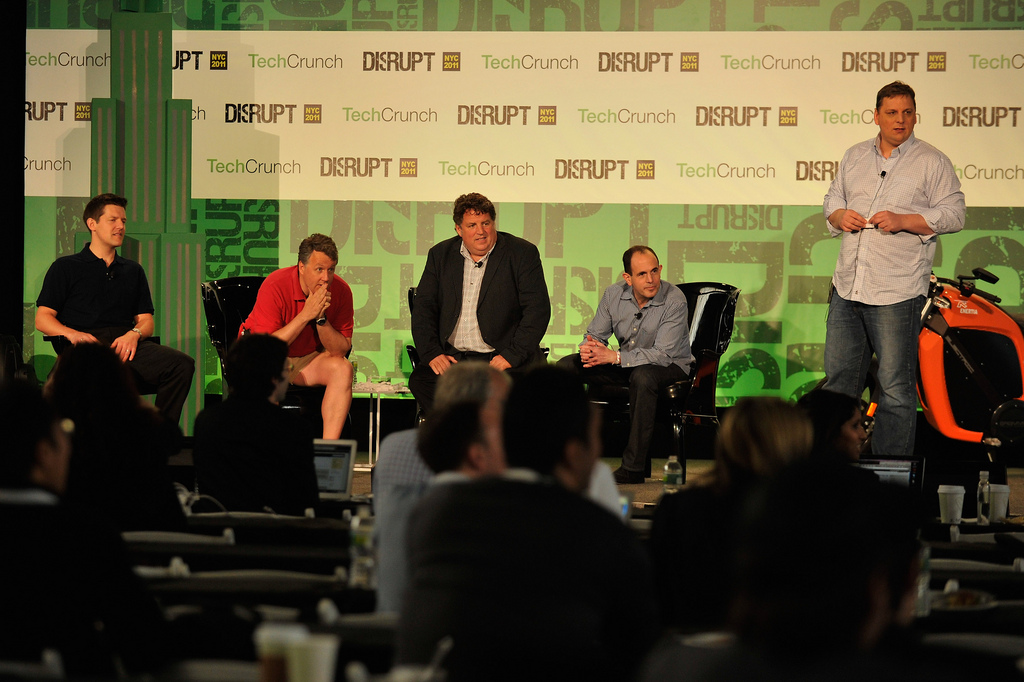
As you can see in the video above, there was a shiny and orange Brammo Enertia electric motorcycle onstage behind Rabois and Arrington. After their chat, Arrington looked at it and spontaneously decided to give the motorcycle away. After running backstage to have a short talk with BrammoCEO Craig Bramscher, it was a done deal. Everyone got excited and audience members raced to the microphones.
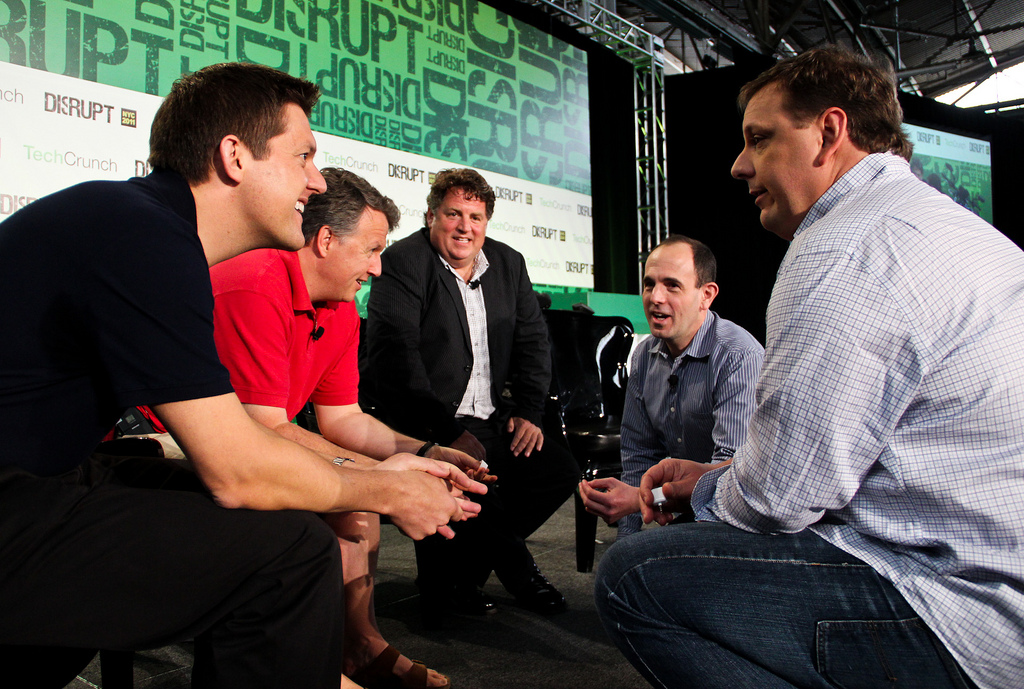
Arrington called Bramscher up onstage, as well as Paul Graham (Y Combinator), Keith Rabois (Square), and Roelof Botha (Sequoia Capital) to help judge. Arrington told the audience they could submit 10-second pitches on why they should be chosen to win the motorcycle. Pitches were made that included shouts like, “It’s my birthday!” However, one sweet lady who wanted to win it for her son before he had to leave for the marines won the bike.

The pitches were really funny. Be sure to catch all of them below.
So the motorcycle, you guys know I keep trying to give it away. So I find out who it is. It's Craig, from Brammo, the CEO of Brammo. And, he's like yeah give it away. So we're going to give away not this one but one just like it, and we'll have it shipped to you. That's cool, right?
And what we are going to do is have 10 second pitches. So, if you want this motorcycle, start thinking about what you can say in 10 seconds to convince an excellent panel of judges we put together at the last minute. Paul Grahamm has volunteered, thank you very much for being up here.
And than Craig will you come up? It's Craig Bramshire is the Ceo of Oregon based, Brammo. Really cool stuff. It's like Tesla's, but they are motorcycles. Roulof Bhutta is from Sequoia. We interviewed him yesterday. He is going to help, and, the, Keith Roboy from Square is also going to help judge.
Keith, also for the runner up prize, offered to give away, for absolutely free, this otherwise normally also free, square card reader Which is, which is pretty cool, so actually he didn't. He meant to say well if we're going to take like a five dollar charge or something that we could use Square, but.
So you guys you know have a seat if you want. Start lining up at the microphone, we are going to have ten people make your pitch, you can say because, any reason you want at all, and we will do it quick caucus and then we'll give it away right now, and we will even ship it to you as long as it's in the United States.
Who wants the motorcycle?
So it's going to be the first five at either microphone will be able to make their ten second pitch. If you're not the first five, give up on it now or convince the person in front of you to give up your spot and ten seconds. Go.
My name is Muhammad. I don't know how to ride a motor bike, but I would love to have this motorbike, because I will trade it with Paul Gram for half an hour of his time and get me back on my show.
Great. Stay up here though. Go.
You've got a start up, we're building a platform where we already have 20 thousand daily active users. We can take care of sign up, inviting your friends and putting your well I just also all of the things, a combinator might use it.
Good, okay. Go No pitch, I just want to get the hell out of my mini van.
So that's it.
In my opinion, I'm only two thirds of the vote here, I would say that's OK.
My son enlisted in the marines and he wants a motorcycle but if I give him a motorcycle maybe he won't go in the marines and go to Afghanistan.
Oh, that's . Here.
Angela motocinta.me using everyday citizen to deliver your goods.
This is not a, well granted with these people on stage, I understand why you don't care about the motorcycle. Anyone such a, go.
Luke Depper, I am a pretty crazy guy, my lifetime is spent in the motorcar racing and I wants to do back flips on that motorcycle.
OK! How many is that, ten? I am not counting.
No it can't be ten.
OK go!
My name is Bill Fisher, I built the best team to make sure everyone sees thIt is my birthday.
Ohh. Boooo.
I did, I did, I will as if I did.
Come, may I see your driver's license, or ID before you go?
So, I just want the moral side of my idea. I am starting, people really self-indulgent using Twitter so I'm building basically a gaming platform that you just get points for tweeting and just saying what you're doing. Like, if you have mentos and diet coke, you get five points. People just get the best thing about video games is the instant gratification and people are self-indulgent, so gratified.
Great, go.
Name's Ian, I want the bike because my wife won't let me buy one.
Hmmm.
Hi, I am Henry King. I am from Cunningham Mania and I study Robotics. I want to get the bike and change it so that my grandmother can ride it. Thank you.
John Birdsong with Open Study. I drove a minivan all throughout high school. I am just getting up here to say I vote for that guy. The minivan folk. Jonathan Soundscape and mission that would help you find cafes that are playing the you music that you like or any other venue.
Go.
I'm Rachel I usually bicycle everywhere I go but I was recently hit by a car while bicycling and I can no longer pedal so I really need that to get up the hills of San Francisco where I'm living to start my startup.
Go .
Hi, Best Vendor, we're using social recommendations to help small business leaders make faster, smarter purchasing decisions, seek funding from Peter Teal.
Go.
I'm not an entrepreneur but married to one and I need a break.
Go.
An ultimate map that does actually what a map should do, tell you what's around you. When you go to Mapquest or Google Maps, youn app that uses social networks to do citizen science allowing researchers to connect with citizen scientists, crowd sourcing, data gathering.
Two more, go.
Alex Majursky, the biggest problem of my life is I spend way too much money on conferences. Am I right? I want that as my mascot. Go!
My name's Ian, it's a reddit or DIT clone, but they're both coming in real time after the comment.
Go!
Hi, I just turned 18 four days ago and I'll be entering at Kauffman in Missouri this summer and I need a motorcycle to run away from tornadoes.
That's it. OK, one more. Go!
Hey Scott, I'd love to get that bike and rent it out sort of Air B and B style.
No one up here is named Scott. Correct ? Oh, you are Scott. Okay, we're good, thank you! Can you turn our mics off, everyone on stage ? I don't know if that is possible but--
Hello?
is it that guys birthday? Wow, it's his birthday. Right the woman who couldn't pedal. Yeah, that's Mic's on.
It 's not even close to unanimous but we have a winner. It's the woman who has the son that may be going into the marines. Where are you? OK, come on up and we'll take your information well theoretically you're going to get a motorcycle so, thank you so much for doing this guys. Thanks very much.
Who wants the square reader? Don't all come up running. You can use your credit. OK, there you go. Thanks guys! Oh, look!
Tech Crunch.
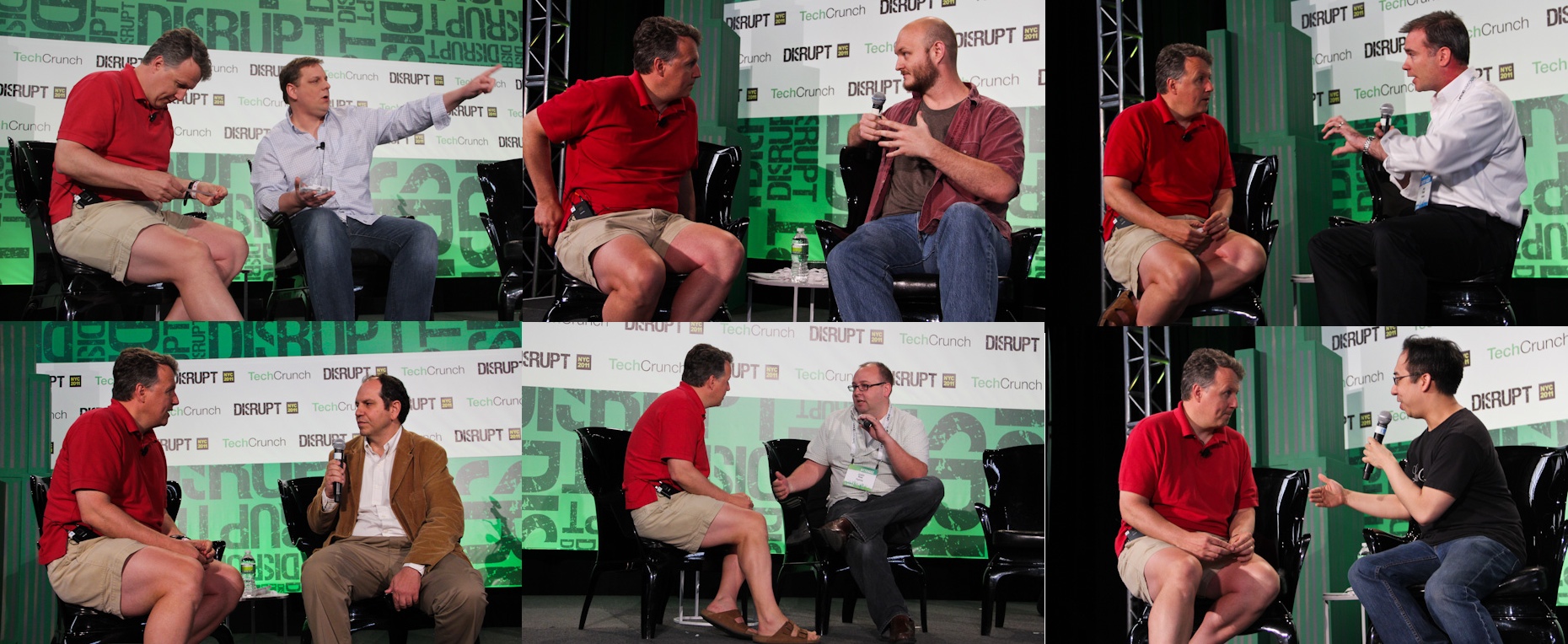
Since this was our first Disrupt of the year, we wanted to try something new. To our delight, it actually proved to be one of the biggest hits of the whole event: Paul Graham’s ‘Office Hours’. The goal was to reproduce the sessions Graham and others hold with each of the startups who participate in Y Combinator. For these sessions at Disrupt, six startups were randomly chosen out of the audience to come onstage in front of a few thousand people to pitch their idea to Graham. If you haven’t seen it yet, be sure you watch the video below. It is a must see.
Paul Graham (Y Combinator) tells 5% of the pitches he hears to "start over – OUCH!" #TCDisrupt— Todd Beals (@toddbeals) May 25, 2011
Paul Graham's Office Hours at Disrupt: fascinating to watch but also incredibly uncomfortable. They get so nervous on stage + around @paulg— Brad Dickason (@bdickason) May 26, 2011
Okay terrific. So now we have a real treat For everyone. Paul Gram who was here yesterday. He started off with an interview of Charlie Rose is going to conduct his famous-- office hours with Michael, and Michael's going to explain how this is going to work. Paul is Why comment, one of the famous things, the office hours that all the partners, including Paul, conduct.
I love how you Kill time anymore. No you're awesome, because you're like we have no idea where Mike is so I'm going to talk until somebody finds Mike. But this time I was actually very close. Will you join us on stage. Thank you. So you guys You guys all know Paul Graham. Please have a seat Paul.
Is this mic, oh good mics on. Where should I sit? Where would like to sit? On the motorcycle? No. Are they going to stand We're gonna work this out but I think that's the backup but we're gonna try to mike them. In that case, maybe here. You sit there, maybe there's more one of them, I'll sit here to be on the safe side.
You're making me nervous, here. OK, do you want some water?
Nah, it's alright.
So, what we're doing here is office hours. Can you just tell the audience what office hours are Y Combinator?
OK, office hours are where the YC partners talk to the startups about what they're working on So were going to try and simulate that. But, it should be a pretty realistic simulation because these start ups are much like the ones we invest in. Except you don't do office hours in front of thousands of people.
Right. So the unusual thing is these guys' secrets are all going to be discussed in front of a whole room full of people, so we'll see how they feel about that.
It's an Well we warned 'em.
And they've asked for this.
Yeah.
So 130 companies have applied. And raise your hand if you're one of the people who've filled out the application. OK, and we're gonna pick by random, we've made a short list here of a few, I think there's 15 or 20 in And we're going choose them random, all at once. And get them lined up, and then you're going to have 10 minutes with each one.
I think eight So what I'd like is if we pick you, I'd like for you to immediately shout out so we know you're here otherwise we'll move to another one. And then I'd like for you to come up and sit at the front row here to my left, to your right, in the very very front, and then our sound guys will get a microphone on you.
Do you wanna do the honors? Okay. Ben Lavender of Dydra. Dydra Is Dydra not here? Shout out if you're in here. Not here. Alright. Okay, let's put that one aside. if you know these people and they're out in the hallway, yell. Go ahead.
OK, whoa this is a hard name him to pronounce. Sairam Chilappagari neighbourly? No, alright. From neighbourly, neighbourly OK.
Go ahead. Phillip[sp?] Sip man[sp?] of Data Curious.
You here? Alright. You're up.
Alright. Right place. Right time. So, just go ahead and set up there the sound guys will grab you. And let's do these in the order we're calling them for you guys just to sort of line up. Jody[sp?] Presty[sp?] of VidAppy[sp?]? Are you here?
Is that a yes?
That's a yes?
OK, come on up. I was getting worried, I said, what happens if none of these people are here?
We can just have a fireside chat.
We just talk, yeah.
Sixty companies in this batch, by the way.
Sixty-two. You're just letting anyone in at this point. No, no. Francois Laberge[sp?] of Motley. Motley? Emotley. Emotley, oh-- Oh I like this one. You do? Is he here? It's not that I don't like the other ones, but I remember Emotely[sp?] was kind of cool. No. Is Emotley [sp?] here? No, man. That's too bad, I was hoping to hear you give him advice.
Whose in charge of this? event?
Heather. Hey well, Ariana, I'm lost. Alright, Wow. Heather Rachna Singh and Vivek Handy of Hatchee Labs.
Hatchee Labs.
No.
No Hatchee Labs? You know what, they're out there, eating lunch. And they're not, they're going to, what did you just do?
This is a blank one.
Oh, that was a trick. That was the one where I got to say anything I wanted. I was going to pick these out. That's.
David Amsalem, a TV track or TV tack.
TV tack.
TV tack, is that you? Yeah, okay. OK, he's coming.
Make a noise. Like really make a big howling, like.
That's him. He's waving.
OK, he's going to be a quiet one. Alright. How many is that, by the way?
That's three, including TV Tack?
How many should we do, five?
Let's do five, and then if we have time, we'll pick one more.
Alright. Justin Riack of Flytivity?
Flytivity, come on up. Alright.
One more, right?
Yeah. Zubin Wadia of Secret Social. Secret Social here? Apparently not.
Here is the next one. Joel Fan, of LuckySheik.com? Okay, he's here. Oh, this is the one that didn't quite make it. We'll have this one, if you have more time.
That's the back up.
That one's the back up. That's the one that's sort of unfolded. I'm gonna leave them for you. I'm going to leave you and then, if you guys have mikes? Do you have mikes? Nothing. OK, first guy. Okay, so come on up stage. I'm going to leave you. Okay. Yeah, I tend to try to be the center of attention.
I'm going to not be here and just tell us who you are again, and what's your company and you guys do your thing.
Okay, here-- I'm Ben Lavender with Dydra, we're here pitching a cloud-based graph database graph data base in the sense of like graph theory graph? Yes, exactly. Or cartesian graphs? Graph theory database. Ok, so who uses it. Well, great question. People who use it are two main segments. Startups are talking to us about it for a social network analysis and more traditional segments are talking to us about it for things, like finding similarities between customers and product, where all of the aspects of a given Product, not know in advance.
So you guys, I assume, it's for searching gigantic graphs, or something like that. Is that the idea? Not even necessarily for searching gigantic graphs. A lot of people have smaller datasets, they're simply better represented as a graph.
Hmmm.
And even these can be much more efficiently computed.
Can you give me an example like, of all the people in the world, who needs you the most right now. Like, what problem most needs the software you built I really hate to use a name from somebody who presented here, but I'll say somebody like Rexley, for example, who was here yesterday, social music discovery Basically, what kind of music might I like, based on what my friends are listening to, what they're doing?
Okay, so some kind of collaborative Right. That's the low-hanging fruit. People who need to do collaborative filtering What the core at social network analysis, right? And social network analysis looks like a graph of friends and how they connect to your friends, and so if you want to see what your friend are doing, you can build a database that represents that natively and computes that, say, before the heat of the universe. but who has trouble with this problem now?
Who wants to do computations that would otherwise take too long? lots of people. I've been here for the last few days. Social is changing a lot of start-ups. Maybe 3/4 of the people in Start-Up Alley that I've talked to are doing something related to a graph.
Yeah. Your advantage probably is that you can run the queries faster, right? It's also much more easily representable for a programmer in a traditional database query language, something that might take 6 or 7 joins and be very difficult to tests really difficult to comprehend, really difficult to maintain can be represented much more simply in a graphic interface.
So people are going to run your code on their servers as a of their apps, is that how it works?
We're cloud-based on the Heroku model: database as a service.
OK, so you upload all the data into this great big sitting somewhere on the net and then you send it queries. Exactly. Is the latency going to be a problem? We're looking at that. The default standard protocal is over HEDP and that's about 15 milliseconds But we have a couple customers who want to test over other protocols that are much faster.
Fifteen each way shouldn't-- be a huge problem.
Cause I was thinking one thing you could use this for--one thing where you'd wanna do a ton of queries and get the answers back really fast as if you were using social graph type stuff to target ads. Right? Because like your just about to show an ad you're showing the page, what ad are you going to show on it?
You need the answer really quickly, right?
That's exactly a target market that we're talking to. We talk to e-commerce people who need to find similarities between customers. This old customer converted, how are they similar to this new one? So, what do I show them in the shopping cart to try to up sell them at the last second, for example.
Yeah, so is there anybody who said, "yes"? Is there anybody who actually wants to use this software now?
We have a couple of big testers developing products on it, yeah.
Okay. So these like aren't you friends?
No. These are not people I've met before.
They're people you don't know, who actually need to use this and do.
People who emailed me and demanded to use it, actually.
After reading some article in the press or something like that After examining their problem, realizing they needed a graph database No, but how did they know about you? Because we're the easiest.
No, no, no, they must have read about you somewhere, for example.
We got a little bit of buzz in our little segment, yeah.
OK. OK, so, can you tell me who the beta users are? In real office hours that's what I'd want to know. Who are they?
I'm allowed to talk about one in the real world. It's an Australian company that's trying to build a sort of competitive rap to plug into a CRM, say, so that you might be able to do something like, have a salesperson following up a lead who a competitive graph?
Right. So a prepopulated CRM, so you might be tell a salesperson that the CTO of the the company they're trying to get a lead built into a customer on used to work with the CEO of a competitor you need to be careful with bits of information. Oh, this is like LinkedIn. This is like what people use LinkedIn for.
Right? To find your friends of friends. To find the contact to reach somebody. LinkedIn is in a graph database, for sure.
So but why wouldn't they just use LinkedIn? Why do they need you? That's what I'm trying to figure out, what's special about you? lots of problems getting the graph databases, lots of business applications that are core to a specific business, business logic that's specific to you, need to be represented in a graph database.
If linked doesn't build an API that you can plug into your CRM, then you end to build your own.
I see, so that's the problem: LinkedIn has the data in it but it doesn't have an API that lets them run the kind Query they want and so they have to get the same data into you. And they have the data already about all of the connections of all their customers? Well, that's this particular customer's business, their building that database.
I see, I see. And building the interfacers that make it accessible to N users. Oh, I see. We're just the engine. They're sort of building a linked in competitor and they're going to use you as a component. I wouldn't call it a competitor. It's about, Sort of similar.
Yea.
Somewhat overlapping product, I see okay.
But it's just one use. I said, it's infrastructure, it's a steam engine . It's what you plug into it that makes. Are any of these people ready to pay you yet? Some of them very much want to pay us. They do? Oh they want to pay you because they need the product that much. So if they wanna pay you, are they paying you?
We're more concerned about engagement. We have about four more months in private beta, as we estimate.
But it seems like it would be good to take their money because you never know if they're serious until you try to get it.
Fair enough. And me and my competitors have had nice discussions about this. And I'm sure they're giggling about Right, and it will impress investors too. right? If you're actually making some money versus none. Cause investors--it's not so much that they care about the money--they care care about the money as evidence that people really want what you're building. Cause an investor's gonna hear graph database, what's that, right? and they are going to worry if you describe it that way actually they are going to worry that this one of the solutions in search of a problem when someone like things I could build Graph database would do these searches really fast by doing a bunch of interesting stuff in parallel.
Actually, when I came up here I was going to ask you about gonna pivot our marketing, which is the feedback I've gotten from Yeah.
many of the people I've talked to in here. Would you focus on a segment focus towards start-ups which are doing something like, social network analysis? First, or would you pivot towards something more established? The way you decide that is who is actually going to start using your software In production first right?
Above all, you need to get people actually using it. Because you won't really know if you're--you won't really know if it's good until they're actually using it right? I mean, good in the sense of actually helping them out. It could be an interesting piece of hacking, right?
Right, right, right.
So so like the way to figure out who is going to use it first is a combination of how desperately they need you and how quickly they make decisions, right? Cause even a giant company, even if they need you desperately it will take them six months before they can get Their shit together and actually have you running in their stuff, right?
So who is going to start using you the soonest? Obviously a startup, so you would say pivot that way? No, no Depends; its a combination of how fast they move and how desperately they need you, right?
Well start ups are known for moving quickly.
I know, I know. But are they also the ones who need you desperately?
Some of them. Some of them have problem It's the one I just gave you, their core problem Okay, so they desperately need you?
They need somebody like us, and they found us and decided we were.
Because they can't do what you're doing themselves. At least not well enough, fast enough.
Well they Rather not host on of the other databases. They'd rather just buy a service.
Yea, how we doing?
His office hours are over so Oh okay, let me, let me Yeah, boy that went sour. I'll be the bad guy here and I'll keep everything moving. Do you have any other things you wanna say to him?
Okay, my last words are. Like, find out who those users To use, and then describe, like figure out what kinds of problems they're solving and when you're describing yourselves to investors, describe yourselves more as solving that kind of problem, than as a graph database, right? Alright, sorry, that was only eight minutes.
Okay.
Thank you.
Thanks a lot.
Alright, bring it up, yep. I've also changed it to 6,so that we can actually get everyone.
Okay, everybody's got to eat lunch. Oh, it's got a timer, how good. Alright, 5:58. Hi, pleased to meet you.
Nice to meet you.
Okay, so you guys, I read descriptions of some of the, of all the start-ups in advance. I think you guys are making the thing for people to apply for jobs by video.
Yeah.
Great. And the idea is that from most jobs like, not very highly paid jobs, you don't need a resume. You just need to see the guy talking and see if they're like.
Yeah that's it. So like great big industries, right? Like retail, grocery, food services right?
Right.
Hiring managers will tell you that all the applicants look really similar on paper.
How do they hire people now? They don't use videos in interviews?
Walk-ins, right? It's Craigslist, it's, you walk around the mall and you've got 25 applications.
And the problem is, walk-ins don't scale, or something like that?
Well, walk-ins are massive interruption of time, so if I manage a Radio Shack let's say, all of my applicants come in at noon on Saturday and guess what's going on at noon on Saturday? The place is booked. I'm dealing with customers, etc. A really well-dressed, well-spoken applicant leaves my store, walks down to Zales: gone.
So instead of having my day interrupted by potential candidates, huge industries with massive turnover, Right?
When you need people, you just check into your website and you can click through a few people's applications.
So forget the idea of, what's your work history, where did you go to school, etc? Because it's not relevant for the job.
You just wanna see if the guy is a reasonable person.
You know in fifteen seconds whether or not you and I can work together.
Yeah.
So present me with a basic question like, what's a good reason to be late for work today? Or, tell me about yourself.
How do you know what questions you are going to ask them?
Well we've got ten years of domain expertise.
So you guys already know the kinds of questions that the hiring manager would want to ask. What are they?
They're simple and they're portable. So, tell me about yourself . Is it ever appropriate to lie to a friend? A customer left too much change on the counter, what do you do? So how you answer those questions are character revealing, maybe. Not necessarily skills based. So, you know, if I want to take an application that, or an interview, say.
And see I've got these basic questions. I want to apply it in my job at Radio Shack, Best Buy True value, etc., portably and asynchronously, right? So. It's good for the people applying too, right, they just do it once. There's so many inefficiencies in this system that haven't changed since I worked in fried chicken, right?
And still have not, to this day--so what do you do--you apply to a job on Craigslist?
Well, part about what you're doing is you're trying to create a marketplace. Like, one you're established, and all the people who want jobs know that this is the place to go, all the people who want to hire people know--then you're set, but how do you get there? It's always so hard to start.
I think the marketplace exists, right? We just want to organize it a bit better, right? Big players like Monster.com, right? Well, yeah. They're built around professional communities. That there really isn't a retail grocery application for what they're doing. But how do you get all of the--whose, first Well which one is the harder quantity to get; the people applying for jobs or the people hiring?
So, I think the people hiring have the need. Right?
Yeah, but who's hard to get?
Who's harder to get to?
No, who's harder to get on your site?
To get on our site are definitely going to be the people applying for the jobs, because there's effect involved.
Really?
Absolutely, right So jobs exist. But they're maybe hungrier. Are you sure? Well I don't either problem is insurmountable. I think you have Which one is more difficult, it's for sure going to get people to come to the website because they got to exhibit some effort, right? It's not just here's my resume, drag and drop in an email thanks, so long.
It's you have to answer some questions And two different minutes in our site.
Is this thing launched yet?
Well, that's one of the questions I had for you.
No, but do you have any users yet? Is anybody like?
We released it in a private beta to some big names that I can't necessarily mention. Big names, big retailers.
Big retailers. Right, so thinking mall stores and things like that. And so they came back to us and said tighten up x, y and z. And we're looking at the product being in the space Space, like job boards forever. I want to build this absolutely elegant beautiful solution. Maybe the way you get this started is to go to some of big retailers Hire people and say just tell people, go to this URL to apply, right?
And essentially their job applicants become your users. So, they probably won't ask you, hey There are these people that are going to apply to other competing retailers with the same application, right? Here's the thing. If they do then maybe You can make a special version where that one video is only limited to them.
Here's my question to you. There are big anchor retailers like say Home Depot. and everyone walks in there to get a job, right? Because there the benefits are great, right? Its a quality employer. But they're not going to hire everyone who walks in the door. But they're great collection for all of these potential candidates because if you're good for Home Depot, are you great for True Value?
Well you know what you could do; I don't know if you want to do this, but here's an idea. What if you let other stores pay them for their unused leads.
That's a great idea.
Right?
Yeah.
You can create, it could literally be like a marketplace.
Right.
Where, whoever can generate applicants, Yeah.
Like, anyone and they don't hire. They can just sell and you take a cut of the transaction, right?
Or as if you would have met my largest problem of getting people to come and interact, right? I zero cost of acquisition if I take the ones that Home Depot or Walmart don't want. And I turn them over to the rest of the retail public, right?
Who ever thought though that they could use recruiting as a way to generate money.
Generate revenue, right? Brand awareness, right? It's socially and economically important to help people get jobs, right? So don't just walk through a mall and collect All these applications, right? Apply at one place, if you're not a fit for there, let the other folks have at you.
Well eventually what happens is, people go to you, right. If you become super successful they don't think they're applying to Wal-Mart. They just like. They put their video on Vid-Ape [sp?] and like people hire them. Right?
It's world domination.
Yeah. I mean you could get there fairly quickly.
Sure.
You just have to get it so that someone who is thinking of getting a job knows you exist.
Right.
Right? You have to get to just like people now like AirBnB is. Got a marketplace and they're now in the happy position where they've sort of crossed the threshold and people kinda know about them already.
I agree, that surprised by challenge, with only 10 seconds left, I don't wanna be rude, but when do I launch? Right? I've got a platform. I have folks that are interested in using it.
I would launch now in the sense of having your website actually work if someone goes there. But initially, juice it by going to these big retailers and acting as if you were just a sort of outsourced video interview from and for them right? But just make sure that when people sign up to give an interview, they're doing it, they become one of your users right, they're like user base.
So use these big anchor tenants to grow your user base. That's what I would do.
Super helpful. Thanks a bunch. Bring on the next one. Please introduce yourself. And you can walk up on, while he walks off. Incidentally, this is a lot more like real. Real office hours, they you would realize, we've just accepted 62 new start ups for the summer. The first conversations I'll have with them, the last time I talked to them.
Interview half the time, I won't even remember who they are. So the first conversation I'm having with everybody right now, it's like what are you guys working on again? Oh yeah, let's see what if you did such and such? I prepared all these questions, but. What are you working on? Which one are you?
It's called data curious.org, my name is Phillip . We're here in New York. You do data visualization? Data visualization. Okay. So who needs it? It's a trend-site for investors. Okay.It's pretty basic.
Is this day traders? Not day traders. It's more long-term investors. But individual investors, or are you going to sell this to companies? Individual investors, I want this to be public. Individual investors who use your software to generate graphs stock market stuff?
No. Potentially it could be a revenue source sort of kind of like consulting revenues for us. What we are hoping to do is create a Wikipedia or Investigated for numbers and transform hot companies that are the next year or two, Zynga, Facebook, Linked in, all those folks. And you're going to have research reports on them?
Essentially profiles okay. So it's not something where the individual investor uses your software on the fly to say, "oh let's compare, you know, [xx]." Revenue versus the weather. Or something like that. Yes, so they can look at each one individually so we're starting off. But are they going to do queries on the fly and generate Yes, exactly.
OK, but it sounded like you were gonna pre-generate research reports. Are you gonna do that as well?
Pre-generate pages on each one so you can go go to direct special.
OK, so there's gonna be a page without a company, and then you do queries on the fly about that company. And what kind of queries What do you think is the most common query that people do?
I think the most common ones are gonna be iOS versus Android growth and phase a number of users versus Google scope. Right. And I think people want to compare them both and so what the raw statistics that you have are about all the growths of these different things and people are gonna generate Graphs, comparing the growth of one thing versus another?
It's essentially like Google Finance, but instead of looking at stock tickers, you can compare other data trends. I worry. I worry that this is going to be, this is not going to have big enough sort of gravity well, to stay up in the top of peoples' heads. That it would be the sort of thing that someone would do occasionally, right, and then never come back.
So I guess my target is info junkies, and people who are making a lot of investment decisions. They don't have to be day trading. Not necessary, but they have to be, I have some Apple stock and some Google stock. My portfolio is very small, but, I'm just really curious about what's going on and that kind of like how fast they go.
But you would be trying to do some kind of analysis comparing. And it's got to not the like the kind of queries you can do on Google and Google Stocks, whatever they call it.
Oh yeah, you can't do a heck of a lot on there. If someone were to come back over and over, what queries would they be running when they came back over and over?
Well, they could compare, you know, obviously these companies the news cycle is very very fast. The tech crunch pumps out all of this new information about them.
Yes.
All the time. So the information constantly gets updated. And my charts are always getting updated.
Right, what charts? What charts are people going to be looking at?
So if I want to say, number of apps in the App versus the Android Store.
That's going to be another statistic you've got.
Sure, right, exactly. It's always changing, sometimes one is going faster, sometimes the other is.
I wonder how many investors there are, who are, you know, that sort of ended digging into statistics, or are going to want to come back, over and over again, and look at a graph of Apple stock price versus the number of apps in the App Store or something like that. I mean, I can see wanting to do it once.
The big worry I have is, people aren't going to want to do it over and over again.
Well, I think it's a question of making it really interesting. I think that's where the user experience has to be very, very compelling. Right? It's sort of like how many times would somebody want to use Square, right, or a Twitter, right? Like there's something.
Well you've got to use Square. Like Square and Twitter are good counter-examples, right. You use Square every time you do a transaction, you'll use it all the time. You use Twitter every time you want to send out a message or something like that, you use it all the time. But doing these queries, they're not the kind of thing you're going to want to do over and over again.
Time the market moves. I think it's new information that you can say, "Okay should i sell the stock or buy the stock? Right?" That's a decision that you have to [xx] i worry, you're just not going to be able to find enough, because you're a start up, and people will pick out the start-up if it has something that they desperately need but unless they desperately need it they sort of won't hear about you know.
create [xx]. It's sort of--the information is there, right, they could go
Dave the reason i ask day traders? Cause they do need to do queries all the time, they're sitting there trading all the time, right? Long-term investors only think about their investments occasionally. Sure, but let me, let me tell you this. A) journalists are always thinking about this, right? So they always have to kind of look at these--Journalists?
That's not a very big market. No, no no they're not buying. In anything, right?
No, there's just not many of them.
Sure, sure, but they could have used it as a source, right? So there's other way to get comparable out.
Yeah, but you can't start a company with where it's just journalists. no no no hold on hold on. But also,i mean info graphics are becoming really, really popular. So,u know I just stopped talking to themselves . The first graphic I did where one Number one on Y Combinator, right? And that kind of stuff really drive your traffic.
So you don't have to wait for people kind of get to you, right? There's other ways to generate that interest, right?
I see, you can use info graphic spam to generate those users.
Well, not spam but it's useful. I mean, it's useful information One last question? Alright. If this was real office hours we would keep talking longer because I feel we are still sort of at an impasse. here. Okay. So far as it goes, I'm worried. You're worried that's it's not big enough? Right. It's not going to be Have a big enough attraction to enough people, to overcome your obscurity and get people to come to this site... Yeah, we'll I think in the next few months we'll see... Okay, okay... Good Luck.
Good Luck. Thank you. Okay. So please go on up. Introduce yourself. And he's got a demo for you. I don't know. How the rest of us are going to see it. Hi I'm. Hi Paul, pleased to meet you. What are you working on? My company's. What does it do? We are launching enough that makes every television interactive.
It makes the television into what? Interactive. Every television interactive. So how? You are sitting on your couch. You see something interesting on television. You point the TV with your iPhone. Oh this is the thing. In one second we are able to recognize what show or commercial you are OK, so where is that going to be most used?
Like if you imagine,like a year from now, you've launched and your successful and people are using this. a lot, everyone who has a business like that, they can always say, "Oh, the biggest single case of people using this is for blank." So what is going to be the biggest single case of people using it There are, the idea is to be like the info button on the TV.
So let's say you are watching news You are going to look for other content that is related to news. I am watching a commercial you might be interested. during the commercial.
Now, what one does, what I do anyway, if I'm watching TV and I'm curious about something like some actor that I see and I wonder, "Where else have I seen that guy?"
You search on Google Or . Or something like that. Right. So you have to replace the Google Search. Let's say you are interested in a commercial. What do you do? You Google about the product that you just watched on tv. Right? Occasionally. Ya. Usually. So you get hundreds of brands. It's a Mercedes commercial, you ride luxury car, then you can get all kind of different brands.
You know The call to action on TV it is very difficult. I worry that the kind of stuff, you're going to decide what to show me when I click on the thing, right? When I do a search. If you're looking at a tv, tv show, or movie, or something like that. I decide something I want. Right. And often it's something obscure.
Like if I were looking commercial and do a Google Search. The search is probably not going to be for the actual product. Commercial is going to be for some peripheral thing like the actor who did the commercial, right. Where it was shot in some weird place and I'm like curious like more about this.
Little town or something like that, right? You know, Fubar, Texas and I'm curious. Is there really a place called Fubar, Texas? Right, and I'll like do a search. It's that kind of random stuff-- that I do. So unless you give people the same thing they're searching for, unless the information you're giving people is the stuff they're doing searches for, then they're going to look at this and they're going to say it's not right.
Right? Because you're controlling what they go look at. You're essentially doing a search query with the query predetermined and unchangeable. What if it's wrong? So now what would you do? Well, I would test this on some actual people a lot. Right-- makes see if you can, if you have your friends and family, make them use it.
And see if you can get them to the point where they won't watch television without having Unless you can get your friends and family they have to err on the side of being charged for this. Towards you, they will give it a shot, you know. But unless you can make it stick on them, it's not going to stick on other people.
Cause this is supposed to be. mass market thing, right? It's not for some kind of weird subset of people...
Right. who have some sort of special interest, right? It's for everybody. So Make it stick to your friends and family. And if you can't, you've got to change something or it's just going to fall flat when it launches. You what you could do? You could try Making the advertisers drive the adoption. Right. You have this underlying technology for like Recognizing a t.v. show or a movie or whatever.
This doesn't have to be the way you use it. There could be other ways to use it besides being this thing that every consumer is just sitting there clicking on. You could, for example, you could use it, you could invent some kind of Nielson rating-like thing. Where a TV show, you know how radio shows say the first hundred callers get something or other.
They do that to drive up some number that show's how big their audience is, right? Maybe you can get some kind of TV shows to put something in them or to encourage people who are watching them to like check in. You could use this to check into your TV show, right?
Right.
You can prove your there,right? You can have some Iphone app and like you can say, they can run sweepstakes to get, to drive users to watch their thing, right? They would be gaming the Nielson ratings, which is, that's what everybody wants to do. They want to game the ratings system. They'd be gaining the ratings, right?
Exactly.
Check in by proving your watching the thing by pressing the app and then your technology isn't so much figuring out what store, what show they're watching in order to give them information, but verifying what show their watching, in order to enter them for the contest. How about that?
Actually, we have a lot of
And then you don't have to be useful for the consumers, right? Because if the advertiser Where the show producers would be useful for. I would try that. At least in parallel with what you are doing now. Go talk to some people who are producing shows to see if they would be interested in something like this.
And what about the next, afterward? That if is they are interested it works, then we have someone that is, if you get people like, if you get some big show to run some contest where people have to check into the show using your app, they will have to install your app in order to participate. That will get you possibly millions of installs, right?
So then you have a user base. Somehow you have to encourage them to keep using it. I think though if this thing worked. If it did actually work, to cause people to check into shows then allot shows the users. Right, why wouldn't they? If they can get more audience that way. Instead of the iPhone being this distraction that's getting attention away from them, it can be a method by which they get people to watch [x] right.
You know, a dying industry, fighting back using the new industry. Um, we could ride that for a long time. [x] Are we running out?.. You are out of time... okay... alright, alright... that was interesting... That was cool... Remainds me of into now a little bit... Yeah... [xx] vary. Sometimes all we do is beat our heads against the wall, and sometimes we have interesting new ideas for doing stuff.
Although OK. Are you the thing that introduces people in airports?
Absolutely.
OK, so the idea, let me see if I Remember this. The idea is your travelling in an airport, and you tell people who I should want to talk to Absolutely Is in the same airport so i can talk to You know business travel - not social. You sit in a lounge you don't talk to anybody.
Yeah cuz i don't want to.
Our concept is It's a sales dude and I'm not talking sales more an executive type play. But, if you knew that somebody was here that you could see their profile, their LinkedIn public bio, and say, "Oh, that guy looks maybe I do want to talk to him. Otherwise you're just gonna sit there with your back next to you staring at CNN.
It's more general than just airports though. It's really when you're some sort of, when you're in some different place than you usually are, and there might be other people there too. Like here, probably somewhere in this place is somebody I've been meaning to talk to for a long time and I don't know they're here.
although that's not what you tell me. You tell me about people who are friends of friends or something.
No, no, no. It's breaking outside of your connections, it's not really who you know but who you might want to know.
So who do you decide who I might want to know?
Based on some very simple 3 profile questions that you answer when you sign up Like, what do you read? You will only introduce me to other people who are already users of the system. Yes. That's tough, right? I know. You'll go. And that's one of the questions I wanted to ask you. How do you chicken and egg problem.
Well, the way to beat a chicken and egg problem is to find some tiny subset of the market that is small, but much more driven than normal. Is frequent flyers top status level people, that subset, could that be that subset, you would look at flyer talk. No, I don't think so. I don't think so. Because all those people have in common is that they fly on planes a lot, right?
That doesn't mean they want to talk to one another. One could be a sales dude and one could be like an engineer who has to fly all over the place to service obscure equipment. That, I feel like airports, it's the danger of calling yourself too. I know it. Your name. us to the airport. Really we are looking at, you know, everywhere along the business trip.
The airport and in the But the real underlying technology is for introducing to people, people to other people around them its sort of like push LinkedIn, right? Because in LinkedIn, the data's there, you can figure out who Yeah, we're tapping into that.
Oh, and you have to know where people are, so I guess they have smartphones.
You can trip it, it's like a tripit LinkedIn. so somehow you need to get a whole bunch of people to sign up for this because they want to meet one another, right?
Right.
I mean, that's the whole problem. If I were you, I'd be spending all of my time trying to figure out, don't think of anything except who this tiny market, even if it's just a couple hundred people, who really want to be introduced to other people who are in the same area, who is that, right? Well, Looped.
We funded a company that made something like this. Looped connect, right. You know, it kinda works. There are others out there, and our premise is that But you've got to do something different.
People actually do want to talk to each other, they just don't know what to talk about. They don't know how to approach somebody... I don't feel like airports is the secret... No?.. No, cause airports collect people together randomly... I feel like almost any... any other way of collecting people would be better.
For example, a convention. All the people, something like disrupts. Traveling to a convention? We're, this is just like an airport except we're not waiting But it's all these people that came here from somewhere else, and they are all in the room together. We are much more likely to want to talk to one another than people in airports Airports are the worse case.
I mean the worst cases. But I'll tell you that I saw somebody here that I saw in the airport. Yeah. Monday morning. Had I known that guy was going to be here, I would have talked to him. Well, if you had Geo-location in the future, then you'd be set. But if you had Geo-location in the future, there's probably even more valuable things you could do with it.
You just don't know, you don't know where people are going, unless you expect them to tell you all the time. And initially, you won't have the power to do that. So, you have to find a subset of people who really super want to talk to one another enough to seek out and sign up for some new thing that they're not already using, right, and use it.
I don't know, if I were you, I'd start over. How much time have you spent on this?
60 days.
60 days, alright, fine. Plenty of companies start over after 60 days. I mean, I don't think, I think the amount to repair this idea. It would require like 98 percent new stuff, right? You might as well just start with something different, right? So, what I would do is like, ask yourself, the very best start up software All the problem the founders themselves have; so I would ask yourself.
The trick is to say, "what do I wish somebody else would start a start-up to do for me."
Right .
Right? What is the worst problem in my life?
This is where I...
This is the worst problem in your life? That you don't know who to talk to in airports?
I travel 250,000 miles a year. I...
Whoa, and that's the worst problem. Who to talk to in airports. You waste people, you feel like your wasting your time when your sitting in the airport. I'm profiling, that guy looks good, I'll talk to him, wait, I should have talked to him.
Don't you just check your mail or something, when you're waiting in the airport? Yeah, but you've gotta do it anyway, that's what I do. Is this really? Well, maybe, maybe then, maybe it isn't so crazy, if you, if this is really honestly is, one of the biggest problems in your life, that you're sitting in airports and you want to know who to schmooze with, then maybe you're not the only one who has it, and maybe you can find, the question is, do the people you want to schmooze with want to schmooze with you?
No, but it requires, see, if you merely signed up all the people, if there were a bunch of people like you you who are sitting in airports and thinking, what missed opportunities, I can be schmoozing with all these people. If those people are also the people you want to schmooze with, then you're set, because you have both halves of the marketplace.
But if you don't, if you want to schmooze with people and the people you want to schmooze with Don't want to, they want just want to check your email and it won't work.
Yea by sending the message they don't respond.
How are you gonna get this thing? How are you gonna find like some little substance the market to get this thing started in. I don't know, I don't know, I don't know how to do it.
Something All right, all right, we're done.
We've got one more Somewhat of an impasse Can you handle it? Are you Oh, I'm ready. Are you guys doing OK? Is this interesting? I have no idea Okay, come on up. Last one, I am not trying to be I'm acting like this is really office hours and I'm trying to figure out how to make these guys look good on demo day pleased to meet you.
I am Jolthan from luckychic.com. We are a social shopping network for women.
I think I remember reading about you guys, and you already make a lot of money right. Well no, we don't make a lot of money. We make revenue top line, but we don't make bottom line. We are a [xx] so we have hundred thousand members, women. You'll see. Where did those hundred thousand members come from.
What drove them to you. A lot of hard work. Barter deals and ad words. This is good. What I am thinking is, ah scrappy not hapless. Right. Well scraps, definitely scrappy, yah. Ok. So what do you do for them when they get to your site? Well, you know the way that we're disruptive is [xx]. We looked at what Facebook does.
Facebook has profiles and a development platform that you can build a lot of apps on. And we've done the same thing for shopping.
So do people old apps on top of your platform?
Right now, just us. We build apps and game apps on our platform revolving around social commerce, so a lot of Did you say game apps?
Yes, gaming applications. Really, so these 100,000 users, what they do on your site is that they play games?
Well, we call them games. But because everyone talks about ramifying e-commerce and so actually does a typical user do? A user shows up at your site and what do they see on the screen, and what do they do?
A user shows up on our site, and they see a variety of ways to interact with shopping, all the way from discovering, trends.
What's the most common thing they do?
The most common thing they do right now is, bid on items and peek at prices, which they don't So you have an auction site?
We have an auction component. But in our model, we think of an auction as a single game on our site, a single model.
Is this a penny auction?
We do have a penny auction component, but we have other components of our site that we've built on our platform.
What's the biggest driver of traffic?
The biggest driver of traffic are the products that we offer on our site.
No, wait. What, is it penny auctions, is that the biggest driver of traffic, like people come to the website and they see, here's something you can buy for such and such, and it's going to stop him, like 30 seconds or so?
That is a big trouble driver for our site, but let me clarify this, what we have done is We have built an entire platform, and we have 9 experiences on our site right now. We have social profiles Yeah We have something that we call lucky look, which is fashion trend, game that you can rate other members, do you essentially break even on the penny auctions? We essentially break even. Ok Well, what we've done is we have bootstrapped a member base that's very targeted.
This is sort of a grim way of, I know you're trying to describe your start-up in a nice nicest way possible, right, but if this were actually office hours, we would be talking very candidly here, and I would be saying essentially what you have is a penny auction site with 100,000 users.
No, that's not true.
But in a nice general architecture with a platform underneath.
No, actually not, because I think the concepts how you think about your business is incredibly important, right, whether you are a telegraph company or a communications company Yeah And I think that what we have built is a platform. And we have a lot of ways for people to play that are not just oriented around paying. Like we have whole point system.
So far this is the one, that they actually use is the penny auction.
So that is how we started, yes, but, but just because you start in a certain area doesn't mean.
Yeah.
doesn't mean that's what [xx]
You kinda want to grow into other areas right? You started out as this popular penny auction. Can you break even? Can you grow users and break even, or does it cost money net?
We can break even but the issue is that of my ambition, as an entrepreneur, has always been to build company with true skills and true scale.
Yeah. And is it just too hard to get these fist hundred thousand? I mean, a hundred thousand users is a lot. How, what do you count as a hundred thousand users? Is this monthly?
Registered. Registered users.
On a given day how many people use your site?
On a given month it is about 7 to 10%. We have about 7 to 10% active users.
So, 7,000 in a given month.
7 to 10,000 in a month, yes.
Do they return, or is it just?
We have a certain amount of churn, but part of our message has been that by introducing additional experiences, shopping experiences and social discovery experiences, that the users will go from one experience to another.
What's the growth rate like?
The growth rate is basically flat to say, about ten percent to twenty percent growth. But that said, we have spent a lot of time on building out our platform. So you are in what we know, what we technically call the trough of sorrow. There is like spike of interest when you launch and then this thing where you are sort of bumping along the bottom flat and then things start to turn up.
Yes, the challenge is definitely creating that lever that is going to get us that exponential model.
At least you're not starting from nothing.
No.
The advantage, so far, you haven't got the product that's going to make you a star, but you've at least got something that gets you 7,000 people a month, right?
We have data, we have data, we have behavior, and we have profiles of people.
So you know, here's an encouraging example. You know who else was in this very same situation? Groupon, back when they were The Point, they had the very same kind of thing, this thing that, they had some number of users but it was flat and when it was originally. The point was this thing where people would get together to do some sort of group action like a protest or something like that and after a year of bumping around along the bottom they decided they would start doing group buying and it just took off, and Groupon had been one of the things they'd been seeing people organize through The Point.
So what The Point "What got them in retrospect was that they got a base of users so that when they did find the right thing, they had some people to launch it on." so, it got them some experience in looking at what people did. Because I'm sure it wasn't coincidental that Andrew's next thing with "It's like these group buying things, because he had seen people organizing group buying on Groupon.
So you should figure out, what are you seeing people trying to do?" you're wanting to do among your users. There's 7,000 people, right, statistically significant size of sample. What do you see them trying to do that you're not really suited for yet? Or that no one really gives them? Is there anything?
Well, We know that they're coming to the site for various purposes. We know that they're coming to save, and we know that They want to save money.
They want to save money, and we know that.
We about to be done?
We're done.
OK. We are done, the time's out.
I'm sorry. I have another question for you.
Yes, how often do you tell entrepreneurs to scrap their idea and start something else?
You mean what percentage of start ups we fund? Do I tell them that?
No, no. When your doing Office Hours refurb in the ideation stage.
Yes. She told me to forget it, should do something else I think this worked really well.
May be 5%, they are more likely to realize.
We are done now.
Should change what they are doing now. going to give away the motorcycle Are you going to give away a motorcycle?
OK, guys, we're done.
Thank you.
No, but Paul, I need you to stay on stage for this.
OK. You guys, that was pretty cool, right? That was awesome.
That was very cool. Thank you so much. Stay on stage.
You're going to be a special judge. Don't worry its not going to, only one
One last favorite moment was when Michael Arrington sat down with Google’s Marissa Mayer. With Mayer having been to all of our events, she’s a pro who is always ready for any hard questions. After revealing some key numbers and stats on Google, Mayer said she expects traffic on Maps for mobile to exceed those on the desktop Maps.
Wanting to know more, Arrington tried to get Mayer to name what percentage of total searches are made with mobile devices, which is a number Google hasn’t given out yet. Arrington jokingly tried to coax it out of her by threatening to tweet out her cell phone number. Asking if she’d rather he tweet out her cell phone number, or reveal the mobile search number, Mayer told Arrington he could tweet out her cell phone number. Of course Arrington never did, but it was a hilarious exchange to watch between the both of them.
#TCDisrupt @marissamayer : 20 percent of the searches now seen on Google are for local info. Mobile, that number is more like 40 percent.— David Z Beitz (@dzbeitz) May 25, 2011
Make sure to watch the whole interview below and continue to scroll down for some of our favorite pictures from Day Three.
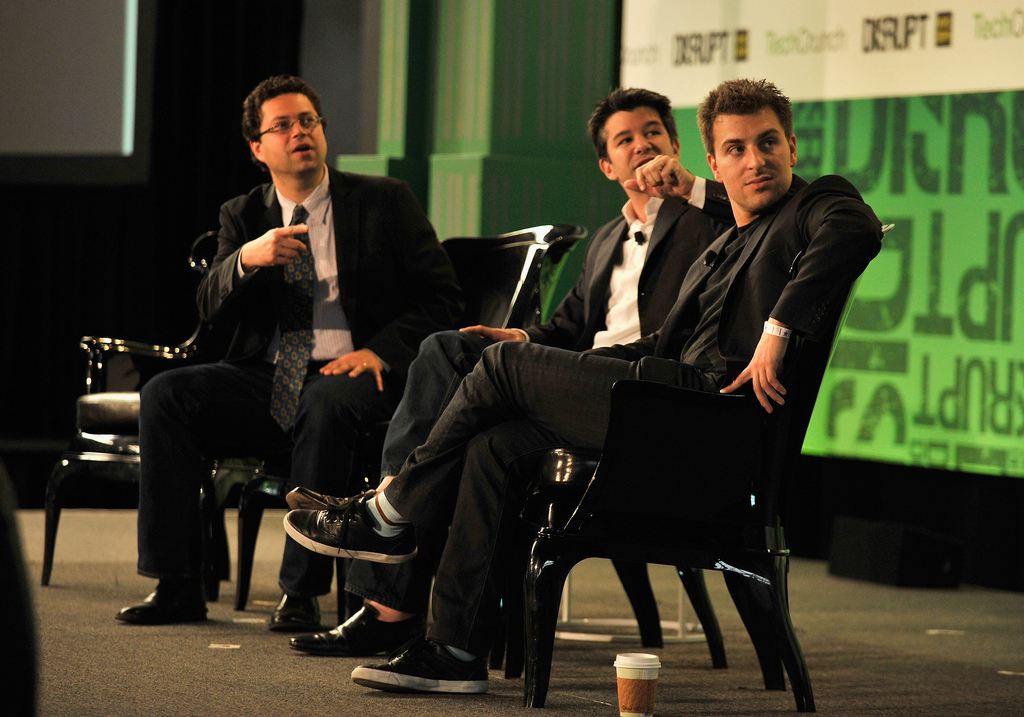
maybe we can actually have a fire back here. But I love the fact that he duct-tape to his hand
Marissa, Please come up.
After you.
Hello hey, how are you ?
Nice to see you, I'm doing good. Thank you for coming.
Good to see you.
Look at this; getting ready for the finals.
Yep, right after it. Right after this is the break and then the finals.
Okay, welcome to this rack.
Thanks. I'm glad to be back.
You've been, I think you've been at every big conference we done.
I think so, The Defcon 14, The Defcon 15 last year, San Francisco You judge many startups and you've been on stage with me many times.
It's really fun. I'm excited to see what we've got in the final, in the final away I am particularly excited about this group of finals, I always love all the companies, but there's just there's someone here I am already addicted to. So, we have this, I don't think you know about this We have these motorcycle, the selected motorcycle. It's like Tesla.
Sure If you like it go for ride on, I almost got kicked out of my own event, security like swarmed me when I was like don't wreck but it's kinda cool so.
I'm a really bad driver and I haven't ever driven a motorcycle so that's probably not a good idea.
The first time I was ever on motorcycle; I just thought I could have ended badly, probably good. So we, I've interviewed you more than anyone else. And I like interviewing you, because there's always one or two things you'll give me, but you won't give ground on anything else. I never know quite what it is you are going to give me until it's all over, so, I tend to push pretty hard if something happens, so you know, I want to talk about the products you are working on, I want to start with more general stuff, if that's okay?
Sure.
As a outsider I'm fascinated by what Goggles like now that Larry's the CEO sorta stepped aside "You know what are the changes, how does it feel?" You know that kind of thing.
Sure I mean I think that you know google are always gonna really focus on the user. And Larry So, I think that gonna spend big, even bigger focus now on products, on users and on the building great technology. we had some projects that started out small like Chrome and Android but over the years they've grown really, really big and those now feel a lot .
I want the control, to be a lot safer, I think it's rather a great change.
What's the general mood on the campus, do you say it's the same it's great Better, worst?
I think that it's really optimistic. I think there's a lot of optimism. It's clear we're providing a lot of value to users and we want to understand how we can even do.
More with that and so, I think that there feels like there's always been a lot of energy. I always joke like Google's really kind of almost twitchy place. Doing something, Yeah watching something, going somewhere, and there's even more of that now, so I think the energy is great.
You know, I've found in my career that the times that I've had real Petition and things weren't going to easily, there was a pond when I was most productive in doing my best work. Is it good that there's somebody actually doing good things out there, Facebook. But other, you know, being doing good things in search.
Right, I know, it's like sort of. But is that good, do you think?
Yeah, we've always had the philosophy. The rising tide floats all boats. But when there's increased competition or increased activity, right now there is in start ups, you can see that here today. And, you know, technology and search the Web, whenever that kind of thing happens, it causes one everyone to pay more attention.
So it's easier to get users and it's easier to get awareness. But it also causes everyone just to work that much harder and get much better. And you see that in a lot of the products. It's important then not to over focus on competition. With that said, healthy competition is really good for everyone.
It's clearly good for the end user but I also good for the companies.
Do you mind if we jump into.
Sure.
You are, what is your title? What it is.
It sounds more glamorous as VP of Product Management, but I'm VP of Maps and Local.
Ok.
So I some criticism or questions I guess, Did you see my April fool's joke?
I did.
So, in my April fool's joke, I suggested that places which is one of your properties has happened accidental categorized as a spam by a search team and removed from the search indexa And, I found it really funny. I really found it funny.
It didn't actually happen, though.
It didn't, no.
Watch as this big quote of mine ripple all through the press and having to answer all kinds of questions from people inside and go "Why did I say that when I had this headache?"
Yeah .
I did send you a message that said, "I'm sorry."
Yeah, it was good.
I was waiting and didn't expect for it to happen at 2 pm on March 31st?
Well it was April 1st. You know, our feeling is the International Date Lines are somewhat, you know, but fluid but if you look that my best- In my opinion my better April Fool's Jokes have had just a grain of enough truth in it that people sort of thought it was sort of funny.
I sued Facebook for privacy one year. That was when their privacy officer threw a latte at me, and actually people were saying I should sue him.
But there is something to be said here where you have control of a page now that if you do a search for a Starbucks at a certain corner, whatever, it has a map, which is yours, it has some database information about the company which, you own that, have you bought a company to have it?
And then you have, among other things, you have a lot of reviews and a lot of them are from Yelp and City Search or whatever you have. And there have been people who said that you're scraping that content nd that's a bad thing. What's your response to that?
Well our view is that for local, it's really about search. And so when people come to Google for search They expect it to be authoritative, they expect it to be comprehensive. And today, over 20% of the searches we see on Google are for local information. And when you go onto the phone, that jumps up even higher.
It usually looks almost like 40% of what people search for on the phone is about local information. So, we want to get people really good data when they do a search for that local information, so these pages that you're talking about really aim to be the comprehensive overview of all the different things about this place that are being said on the web.
And we have pointers follow them, we send lots of traffic all over the web to other local review sites, and it's really meant to be a directory. So, if you look at it there's a lot of information on the Place page, but there's really not enough information for you to make a decision.
Yup.
But where we see a lot of it, is people getting there, they get the open hours. They get the overall neighborhood Yeah.
And they jump in to some of these review sites.
One more time on this, then I'll let it go. Yelp used to be first, and now Places is first, and Yelp results are in there. And you send a lot of traffic to them through the Places... They freely admit thatbut is there a thought that you get your own, you take your own reviews, what you have enough, those other third-partyreviews go away, and they're kind of gone for good.
How do you respond to that?
Well today we aren't getting a lot of long form of reviews, we get some ratings through things like google places, which are meant to help generated social recommendations and they are from phones and so they are going there if you look at the flow and when they going to end up on a place page. They end up on a place page when they've done a search for local information.
They may end up on places search or the may end up on place pages and the expectation and the promise we feel we need to meet to the user is to be comprehensive and authoritative and show them everything. And you feel like when you go to Google you get everything on the web about on a particular topic.
And so we're giving that to them, and then sending them on to those sites.
Alright. Another sort of not pleasant question, but there's some good stuff at the end. You have all these brands, I mean we were talking backstage, and my business is to understand this stuff, but there was stuff like Latitude oh yeah, and Latitude. And there's Places and there's social, there's local.
You told me that back when Maps first launched in 2005, it was under a tab called Local. I'm confused. What are the brands that matter going forward? What are we supposed to pay attention to?
Sure. So, there's been a lot of brands, and actually when I moved over to what we call Geo, Local and Maps last fall, that was one of the big first challenges, was looking at all these brands. Because we had Maps and latitude and navigation and places and HotPot and local search, and places search, and place pages, and you get the idea.
And we're really trying to streamline that. So, Places search is, just search. Place page is really about search. We had HotPot, which was an experiment, it's now a part of places, HotPot doesn't exist anymore. We had some local monetization products called tegs and boost, and we've unfunded tegs, we took Boost and made it part of the adwords family, so now it's called Adwords.
You're starting to confuse more at this point.
It's gonna be called Adwords Express. What we're trying to drive to...
It's called average at best.
Adwords Express. What we're really trying to drive to on the... Really two sides of the coin. There's maps and there's local. And maps is the geospatial exploration of a place, and we think it should be personalized, and it should tell you these were the businesses on the street that you were going to find really interesting, and give you a lot of information beyond just the map, which we already are doing today.
We show you things like latitude think as you know altitude should be a feature of maps, and then
Altitude is also your feature sort of how you gonna check in the place as well, okay.
and places is well local side of it. It's were you do a search and you get textual descriptions and photos and a good answer to that local search piece. So we think you need to have both. You need to have the textual, the descriptive side of it, and you need to have the geospatial side of it, and as I said earlier, when we first launched maps on the home page, if you look back at the internet archive, we called it local.
And the funny thing was, people came and they did a lot of local searches, category searches bakeries, pharmacies, and they didn't really know we had maps, and then and we named it maps, and then we kind of forgot that we had local. But those are really the two big pillars in this space, and that's what we're really focused on and how to make some of these brands and interesting features [xx] were done part of those two cores.
How are things going? Particularly, so much of, so much of what you do is mobile, and you talked about, you've mentioned mobile a dozen times already. You know, how are-how are things going on the mobile side with-with your properties?
So the Mobile 5 is growing hugely. I actually can announce a new mile stone today which is that we, just crossed the 2 hundred million installs of Goggle maps for mobile. So it's been something, it's beehuge tear.
It's installed and active, I think. Right?
That's active. Active and installed.
Yeah, yeah.
And so Google maps for mobile, we were lucky enough to win a crunchy back in-in January for best mobile app I think And with that much of momentum it has continued for us, so it's huge. The other thing is back in March we made the observation that of about 40 percent of our traffic was for mobile, which is really high. I mean something that was born on the web like maps, to be seen 40 percent traffic, you know that's really, really huge. And now what we're seeing is that it's crossing over on weekends.
So on weekends we have more mobile maptraffic than desktop maps. And it looks like it's going to cross permanently in June. At which point in time we'll always have more maps traffic than desktop traffic. Best top maps will always be important. But maps on the phone that in fact knows where you are and can actually help you figure out how do I get from where I currently am to where I'm going.
Those types of things that makes it a real killer app.
Navigation is also part.
Yeah.
That is my favorite. Yeah. So, that's the news. The two hundred million instals is inactive, that's new, that's never been disposed, right? Clearly one of, if not facebook, might be it' s one of the if not the biggest of their mobile apps.
One of the biggest mobile apps in the world. We're very proud of that.
And then the crossing over in June? You're pretty sure it'll happen in June?
I think it'll happen in June, yeah.
And you said that 40%, you said 20% of searches are local. What percentage of searches are mobile at this point?
We haven't actually disclose that number. It's been growing, it's been growing suddenly.
Right, so what is itSo 20% backs and 40% back on the front one but I can't give that sorry.
I really want to know. No?
Sorry.
No? Alright. The crowd is cheering that you are not giving information. Okay, so one more question on your day job. What is your goal? What is your goal next year to be successful, do you think?
Sure, y goal is to help people find where they are going and figure out, how do you get there efficiently, where are places you should that you never knew about. So can we get you great recommendations, and that really means getting a lot more users interacting with information. Getting them doing ratings, getting them checking in on latitude, really enhancing our data, really helping to figure out where people should be spending their time.
And on very far reaches I'm starting to look at what I call contextual discovery which, you know, I've always loved Search, I worked on Search for a long time and contextual discovery is, can we do a search without someone doing a search? So can we figure out from your context you know, where you are a little bit of where you've been?
What you've been doing? What we can pick up on? Can we give you just the right piece of information? Can we tell you your friends are right around the corner? Can we tell you, if you were a tourist somewhere, an interesting factoid about that business? Can we tell you, if you walk in to a restaurant where a friend was last week, what they ordered and what they thought of it?
So you know whether or not you should order it. Those types of things are the things we're starting to get very focused on.
You know there's are a couple of start ups that launched in the battlefield that aren't in the final group that you'll be judging. They're this close. One is that Leoda and one is Spot On. I think both of them those things you are going to want to copy.
I want to make sure you have the chance to meet them if you can. Are you guys, you know. I'll introduce you separately.
Yeah Yeah. It's just really cool stuff going on. That's alright, I said to copy, I'm mean.
Personal life. You, suddenly your name keeps popping up in investments. You know like, "Marissa Mayer is an investor." And so we know about Square, and we know about One King's Lane What else have you invested in?
There is a few of them. I really love entrepreneurs. I love investing. I love learning about new companies. That's one of the things that make me really excited about TechCrunch. One of the issues is that Google's business is really vast, and so there's a lot of times where there would be a conflict of interest, but there's a lot of companies like Square or like One King's Lane.
I'm also an investor and maintains, I have a friend who has a genetic company called Gene Security Network, and I've invested in that. So, I've been active as an angel now for a little while, and I really think it's fun. It's great to see. You know, I got to be at google when we were just 20 people.
Meeting them when they were just 8 people, and get to be there through that growth phase. And I love watching how the companies go through that, seeing if I can help people go through that, and I just think it's really exciting. Right now is a particularly exciting time in Silicon Valley and here in New York as well and I just think it's really great to see all the companies starting, how easy it is, and just the technology going in places that hasn't ever gone in before.
Do you work with anyone? People, if they want a investment from you, do just have to find a way to get to you or do they, I know you said you obviously. funds as well. But is it- you just try to keep that low key? Or are you an active investor?
Well I'm not an analyst or anything like that. So people generally do have to find me. But I'm findable. I mean, my first- my email's just my first name at google.com. My GMail is just marissamayer@gmail.com, so I'm pretty-
OK, what's your cell phone-
If you take a guess, you can find me.
What 's your cellphone number so people can text you?
That is one thing I will not put out there. But if you want to know.
So, I have your cellphone number. So would you rather tell me the percentage of Google searches that are mobile, or for me to tweet out your cell phone number? Which one would you rather have happen?
Well, I think you can put the genie back in the bottle if you give out my cell phone cause I could just get a new one even though I'd be really annoyed at you, but I can't put the genie back in the bottle if I tell you the mobile search number, so I think I would have to take the risk with the tweet.
Alright, thank you so much.
Thank you very much.
Yeah, alright. You'll be back out on stage in a minute, but thank you for this, alright.
Yeah, thanks.
Thank you.
Thanks. Man I'm exhausted.
Yeah it was really hard.
It was, she is a hard interview.
She is hard. It's like pulling teeth.
It just there's good information in there but you have to ask the right questions the right way to get it.
You got someone to get the 40 percent maps. So we're going to take a 15 minute break. And when we come back to the battlefield in the sixth
Again, we wouldn’t have been able to do any of this without our partners, sponsors, and volunteers. A huge thank you to: Ustream for providing our live streaming video, Parlor.fm for helping us network on-site, GroupLogic for putting files on our judges’ iPads, doMen (.ME) for giving us a new directory, Oyster.com for providing wonderful hotel discounts, New Atlantic Ventures for showing us exciting new startups, EventBrite for hosting registration, Business Only Broadband for keeping us connected, VCorp for providing printing and PR services, and DailySteals.com for offering giveaways.
If you’d like to become a foundational part of the Disrupt experience and learn about sponsorship opportunities, please contact Jeanne Logozzo.
And of course we couldn’t forget to include this in as one of our favorite moments from Day Three. Congrats again to Disrupt NYC 2011 winner, Getaround!
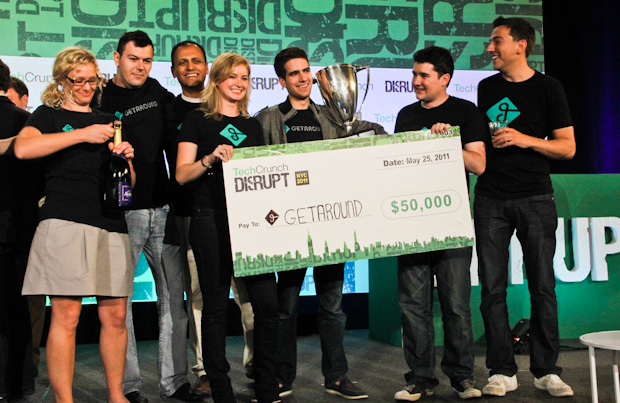
Until next time.
best moment of Disrupt for me: when security swarmed me while riding the motorcycle thru startup alley and almost kicked me out.— Michael Arrington (@arrington) May 26, 2011
What was your favorite moment?
If you would like to attend Disrupt SF, September 12th – 14th, extra early bird tickets are on sale now.