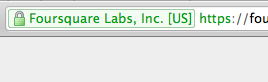
 Over the past year or so, we’ve seen a major push by a few of the large Internet companies to move towards SSL encryption — that is, HTTPS instead of the standard old HTTP. Undoubtedly spurred on by tools like Firesheep, this is slowly but surely making the web more secure. And today Foursquare is the latest to make the move.
As they tweeted out this morning, all of Foursquare now defaults to HTTPS. The company tells us that this means not only the main website (which is less important for Foursquare usage), but also the mobile site and most importantly, the clients. “We’re moving to HTTPS proactively to increase the security of all Foursquare accounts,” PR Manager Erin Gleason says.
Again, solid move. And not the easiest one to make. One of the main reasons that every site/service doesn’t turn it on is a simple one: it means a performance hit. While Google began defaulting to HTTPS last year for Gmail, they only did so after the China hacking incident. And they still haven’t done it for Google.com — though they have been testing it. Facebook only began defaulting to it this year after hesitating because of yes, the performance hit it brings. Twitter also still doesn’t default to it, but added it as an option last month.
It’s good to see Foursquare making this move across the board in the name of security. Remember, they had issues of their own once.
https://twitter.com/#!/foursquare/status/55652457027604480